🌊 Testing the Waters: The Initial Stage
초기 단계: 탐색과 오리엔테이션
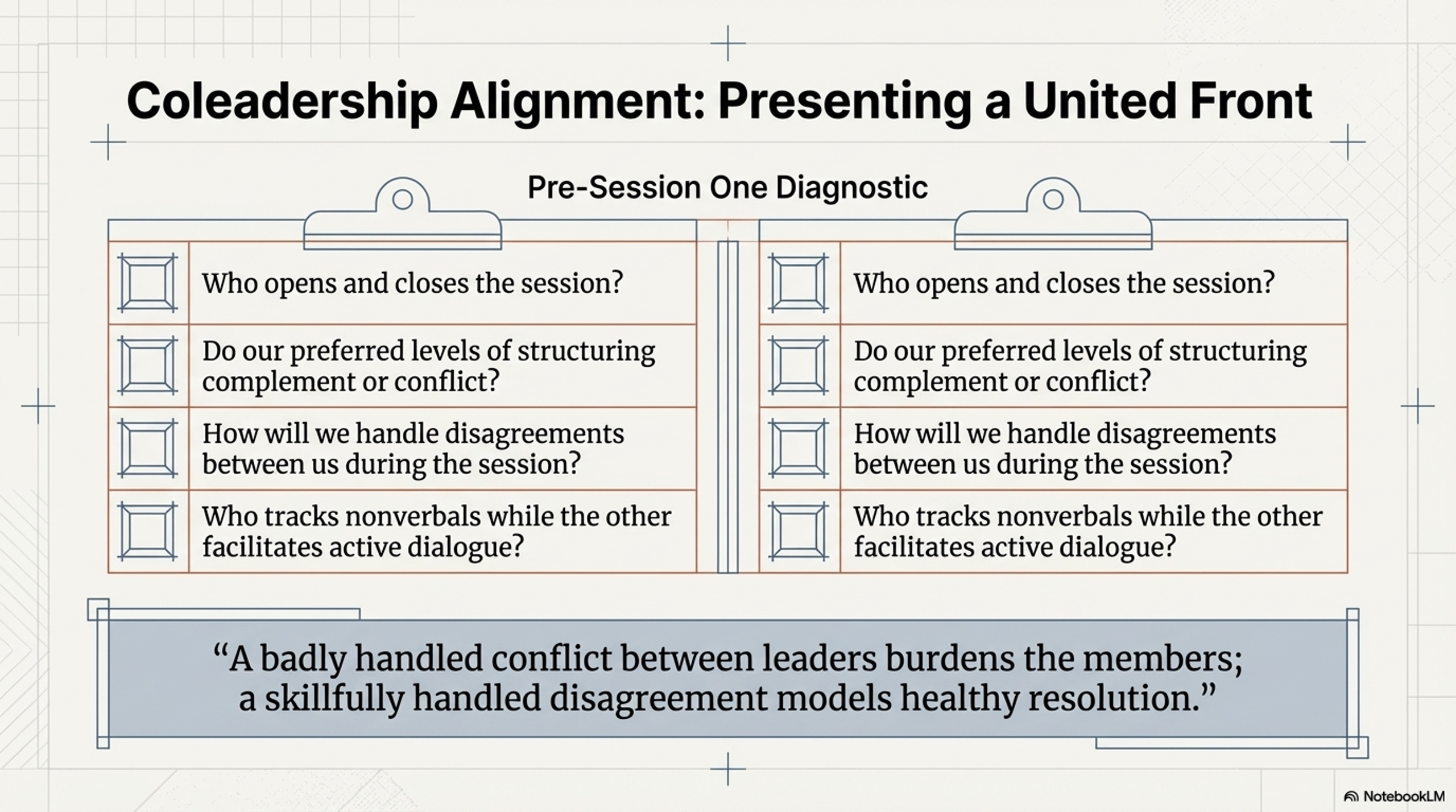
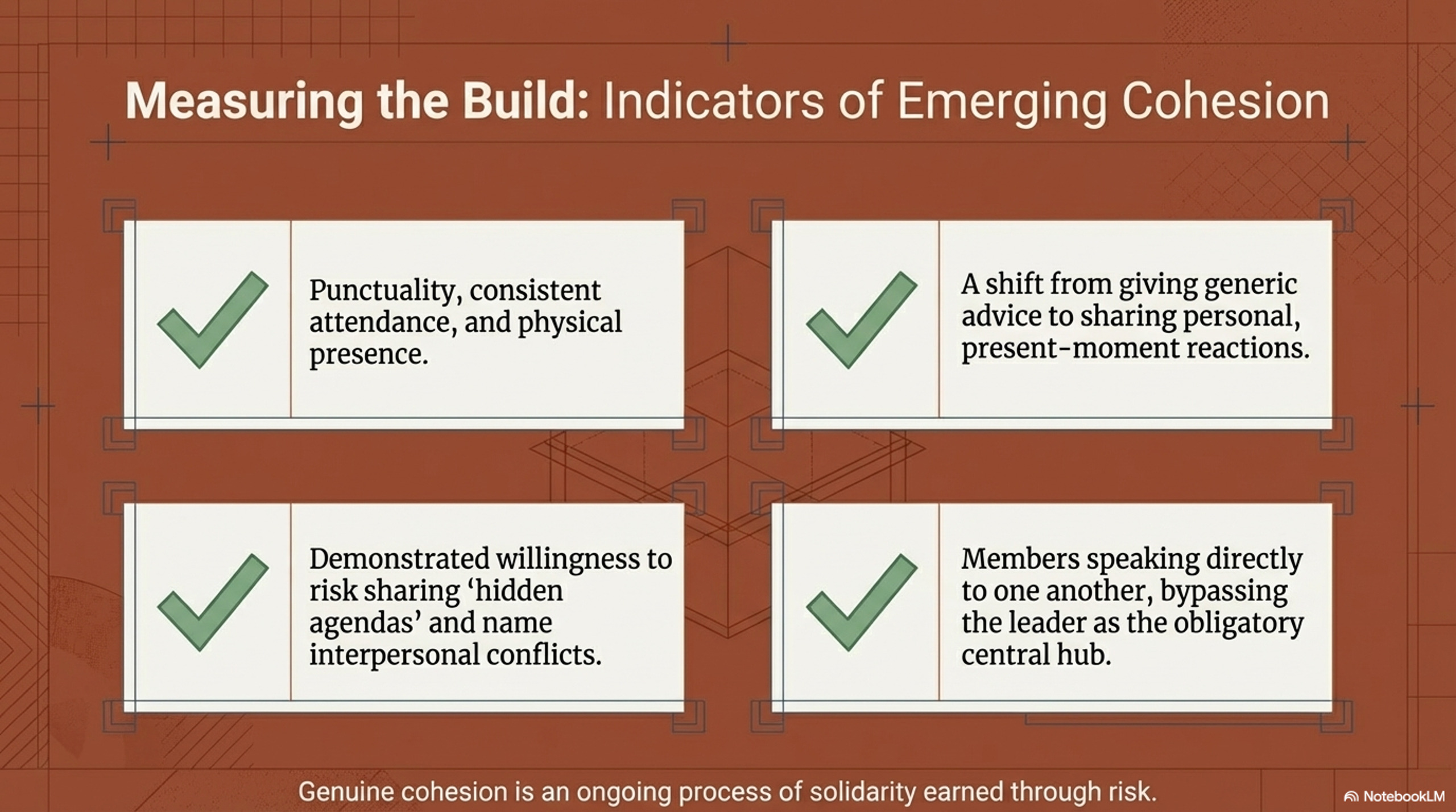
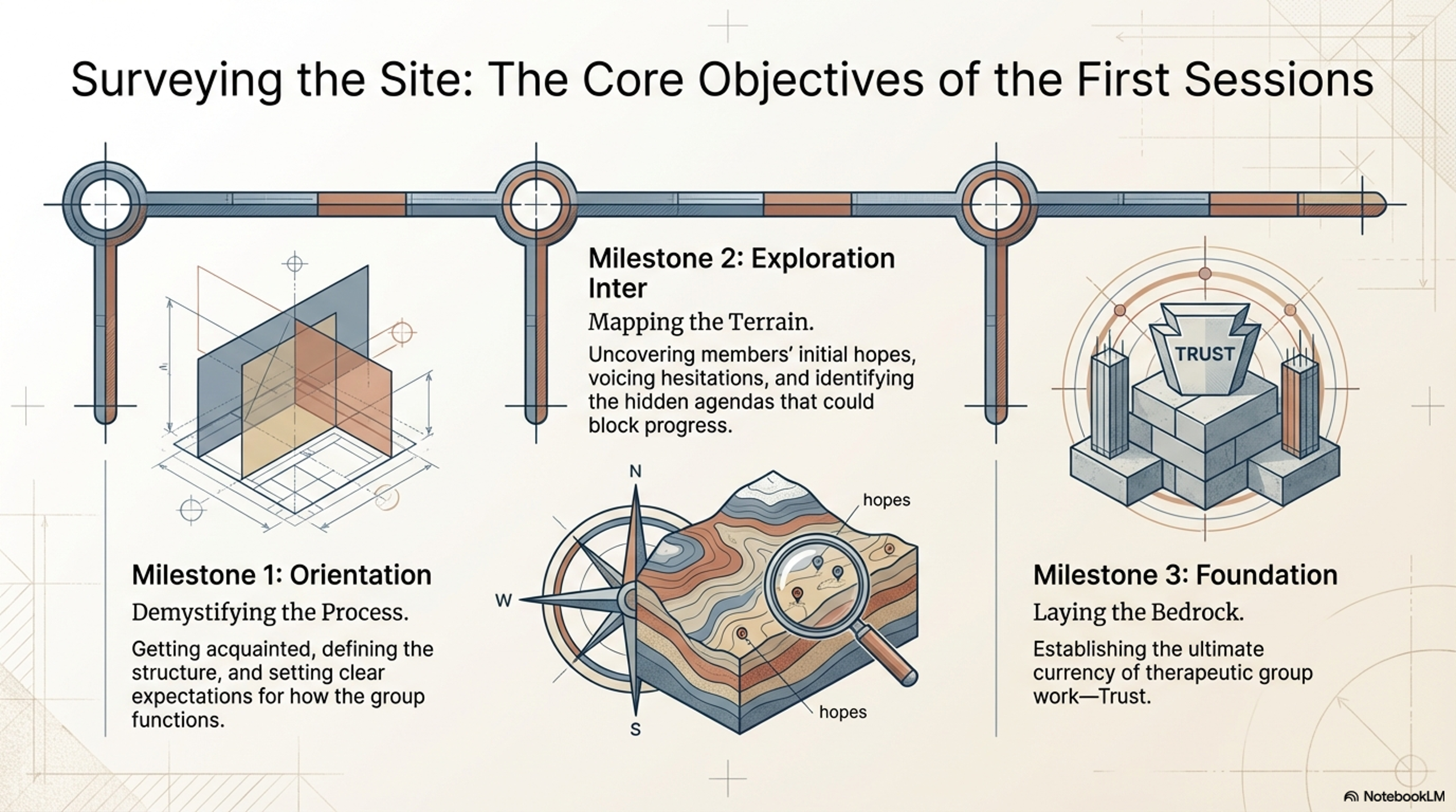
The first few sessions are defined by "Healthy Paranoia" (건강한 편집증)—a protective vigilance where members audit the leader and each other for safety. Success depends on navigating three constructs: Climate (분위기), Cohesion (응집력), and Alliances (동맹).
1. Trust vs. Comfort (신뢰 vs. 편안함)
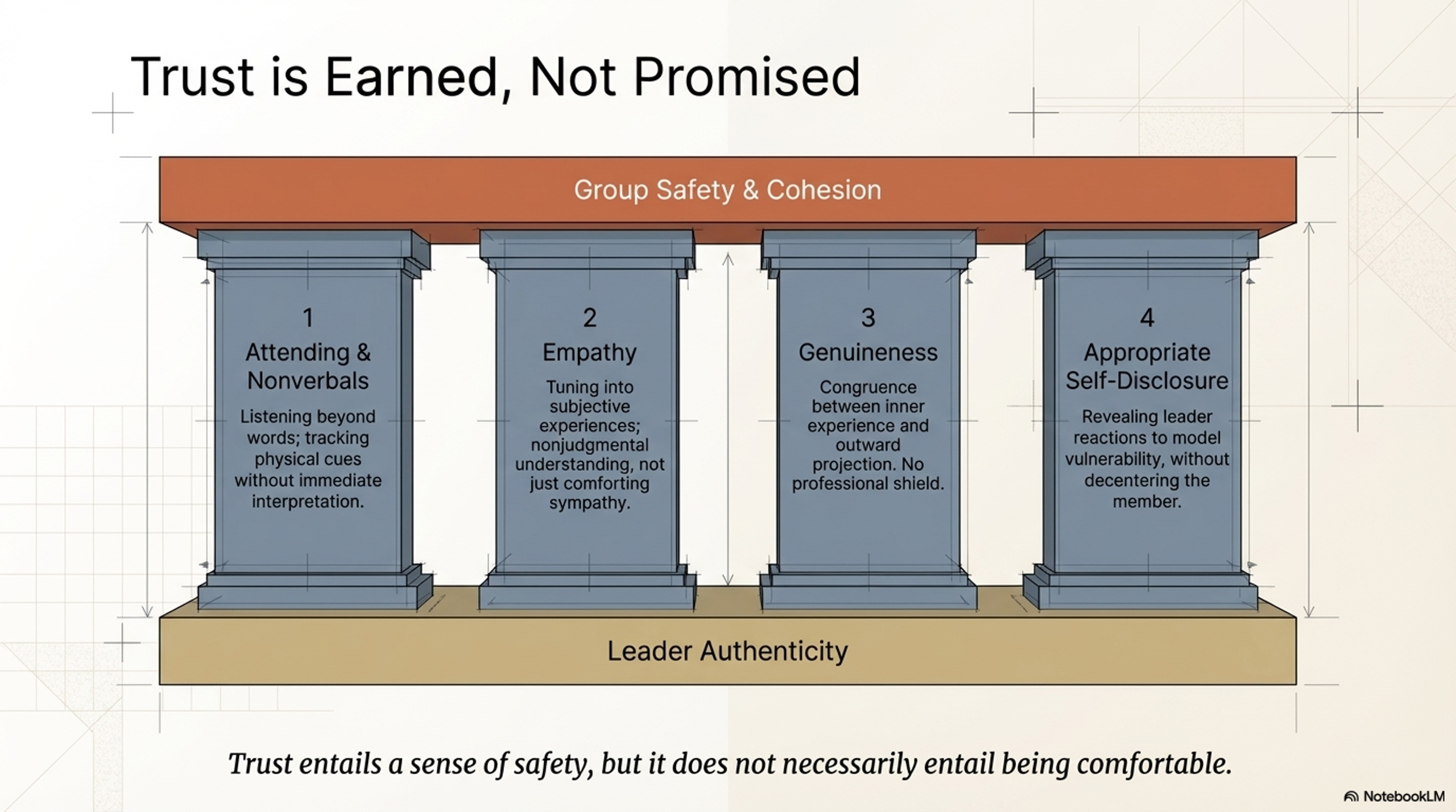
Trust is earned through interpersonal risk, not the absence of anxiety. If a group is too "nice," it may be stuck in a defensive posture.
신뢰는 대인관계의 위험 감수를 통해 얻어지는 것이지, 불안의 부재가 아닙니다. 그룹이 지나치게 "나이스"하기만 하다면, 그것은 방어적인 상태에 머물러 있는 것일 수 있습니다.
- Warning Signs of Mistrust: Intellectualizing (관념화), Vagueness (모호함), and Rehearsed Disclosures (준비된 자기개방).

2. The Hidden Agenda (숨겨진 의제)
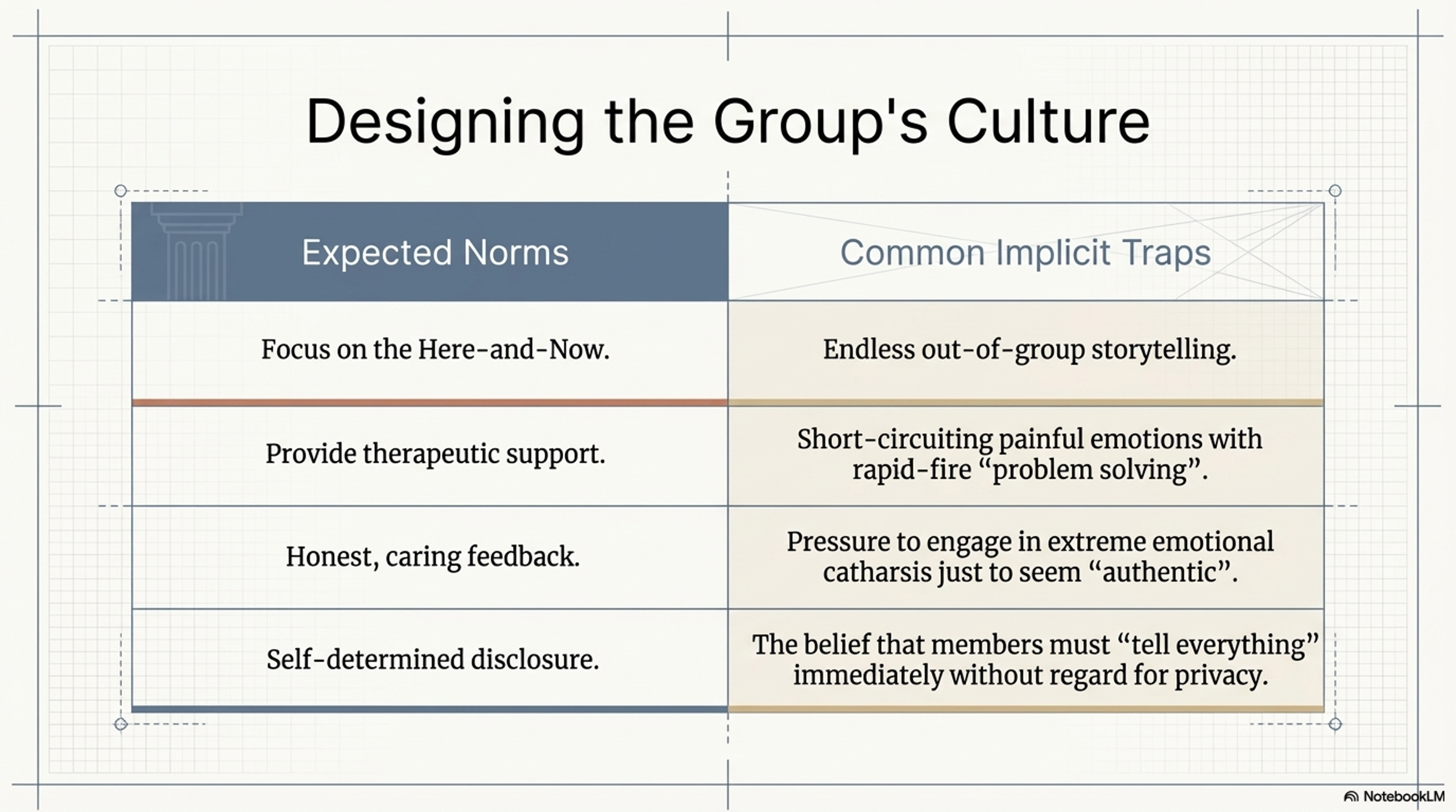
The "Hidden Agenda" is the unspoken tension that immobilizes growth. Whether it’s a fear of judgment or a felt pressure to perform (e.g., "I have to cry to show I'm working"), these undercurrents must be named.
"숨겨진 의제"는 성장을 마비시키는 무언의 긴장입니다. 비난에 대한 두려움이든, 성과를 내야 한다는 압박감(예: "울어야 상담 효과가 있는 것 같다")이든, 이러한 저류는 반드시 표면으로 끌어올려져야 합니다.

3. Advice-Giving as a Defense (방어 기제로서의 조언)
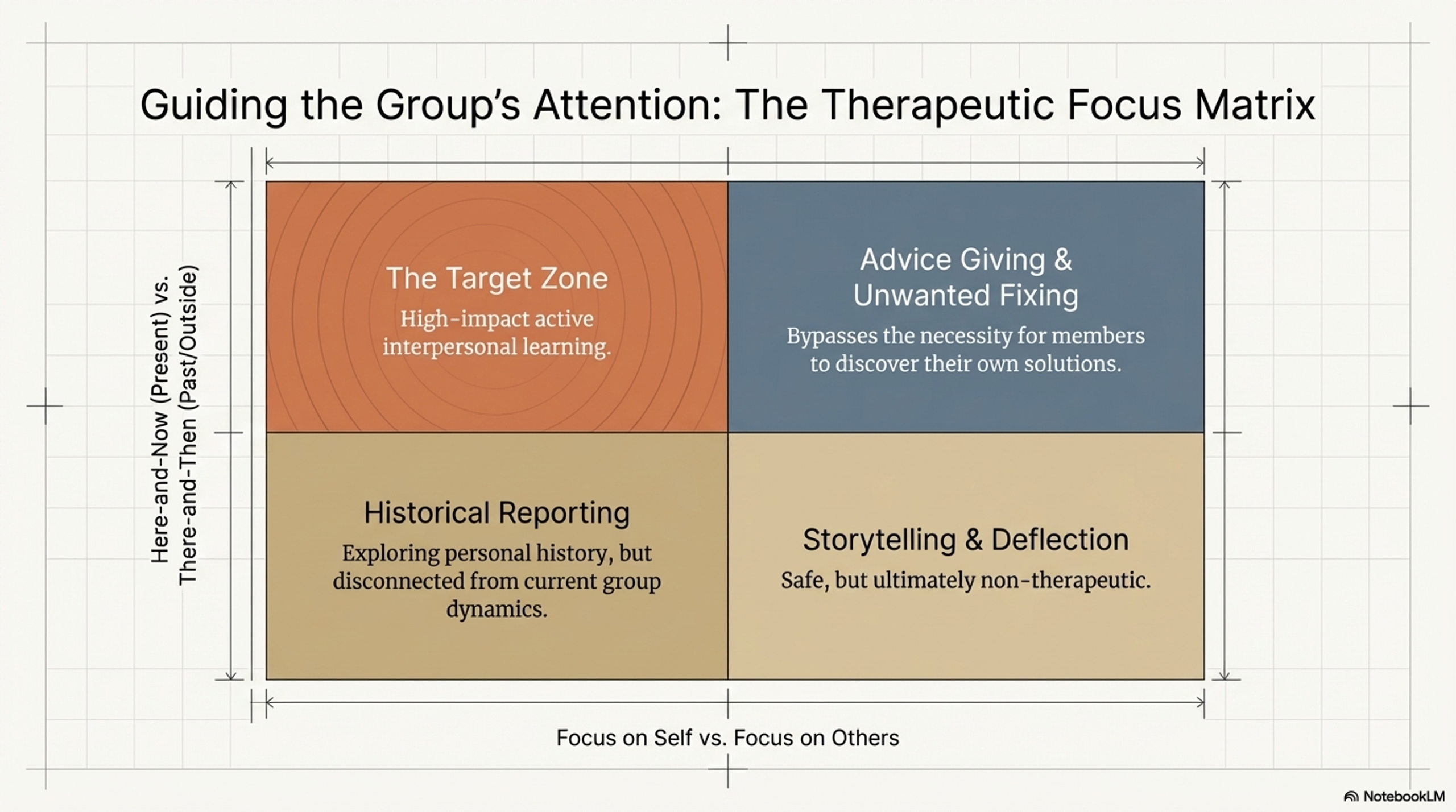
Early advice-giving is often a defense mechanism for the giver. It’s an attempt to shut down another person's pain because that pain makes the listener uncomfortable.
초기의 성급한 조언은 종종 조언을 하는 사람의 방어 기제입니다. 타인의 고통이 듣는 사람을 불편하게 만들기 때문에 그 고통을 빨리 멈추려 하는 시도입니다.
- The Shift: Move from providing solutions to providing space (공간).
4. Silence as Culture, Not Resistance (저항이 아닌 문화로서의 침묵)
Silence is often a logical response to systemic factors or cultural values (e.g., machismo, family privacy, or history of marginalization). A leader must adapt (적응) rather than pathologize.
침묵은 종종 체계적 요인이나 문화적 가치에 대한 논리적인 반응입니다. 리더는 이를 병리적으로 보거나 "저항"으로 낙인찍기보다, 그 문화적 맥락에 맞추어 조율해야 합니다.
5. Conflict: The Secret Sauce (갈등: 응집력의 비결)
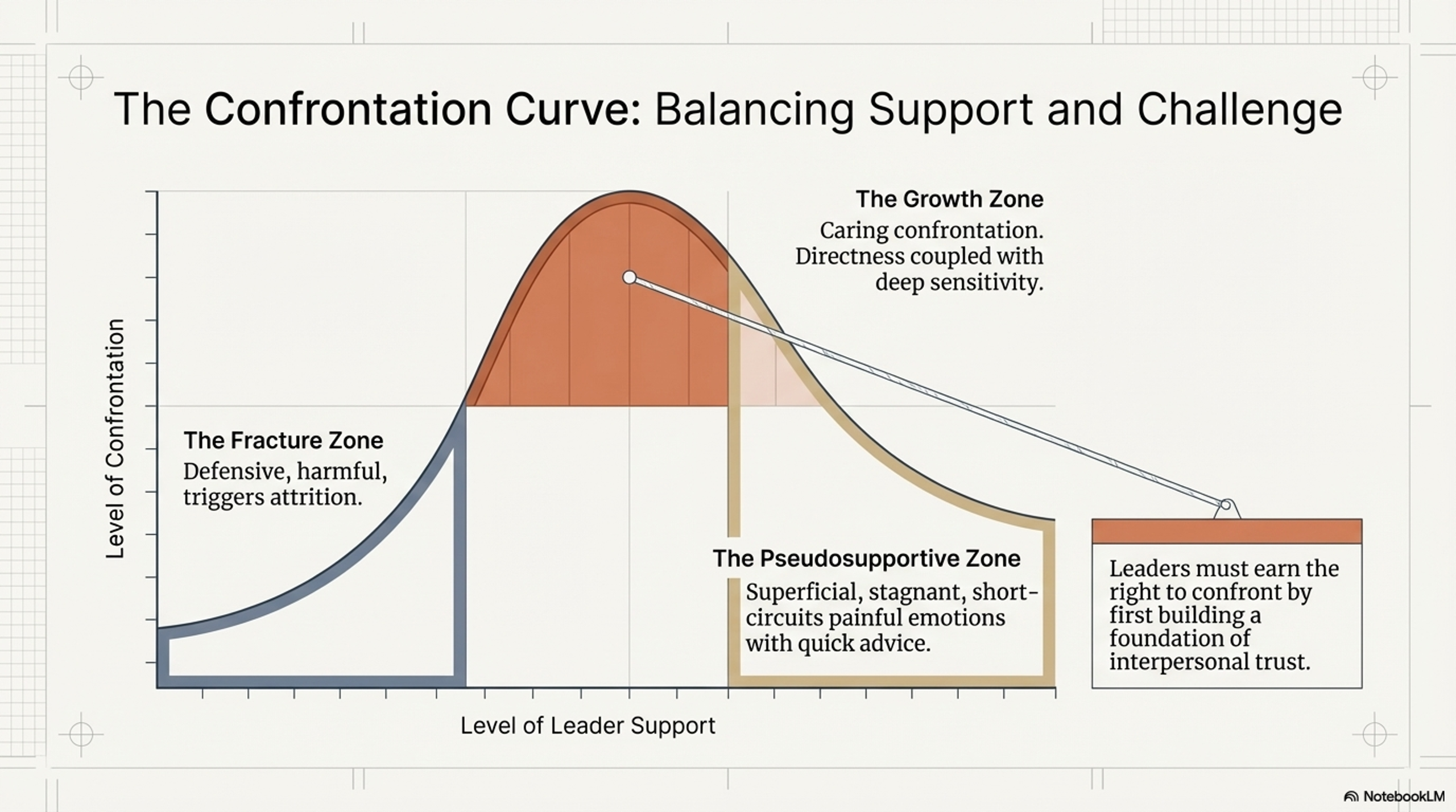
Conflict is not failure; it is an opportunity for Nondefensiveness (비방어성). When a leader handles a "heated interchange" with genuineness and caring confrontation, they model a level of safety that "smoothing things over" never could.
갈등은 실패가 아니라 비방어성을 보여줄 기회입니다. 리더가 격앙된 대립을 진솔하고 애정 어린 직면으로 다룰 때, 단순히 상황을 무마하는 것보다 훨씬 높은 수준의 안전감을 모델링하게 됩니다.
🔍 The Group as a Microcosm (소우주로서의 집단)
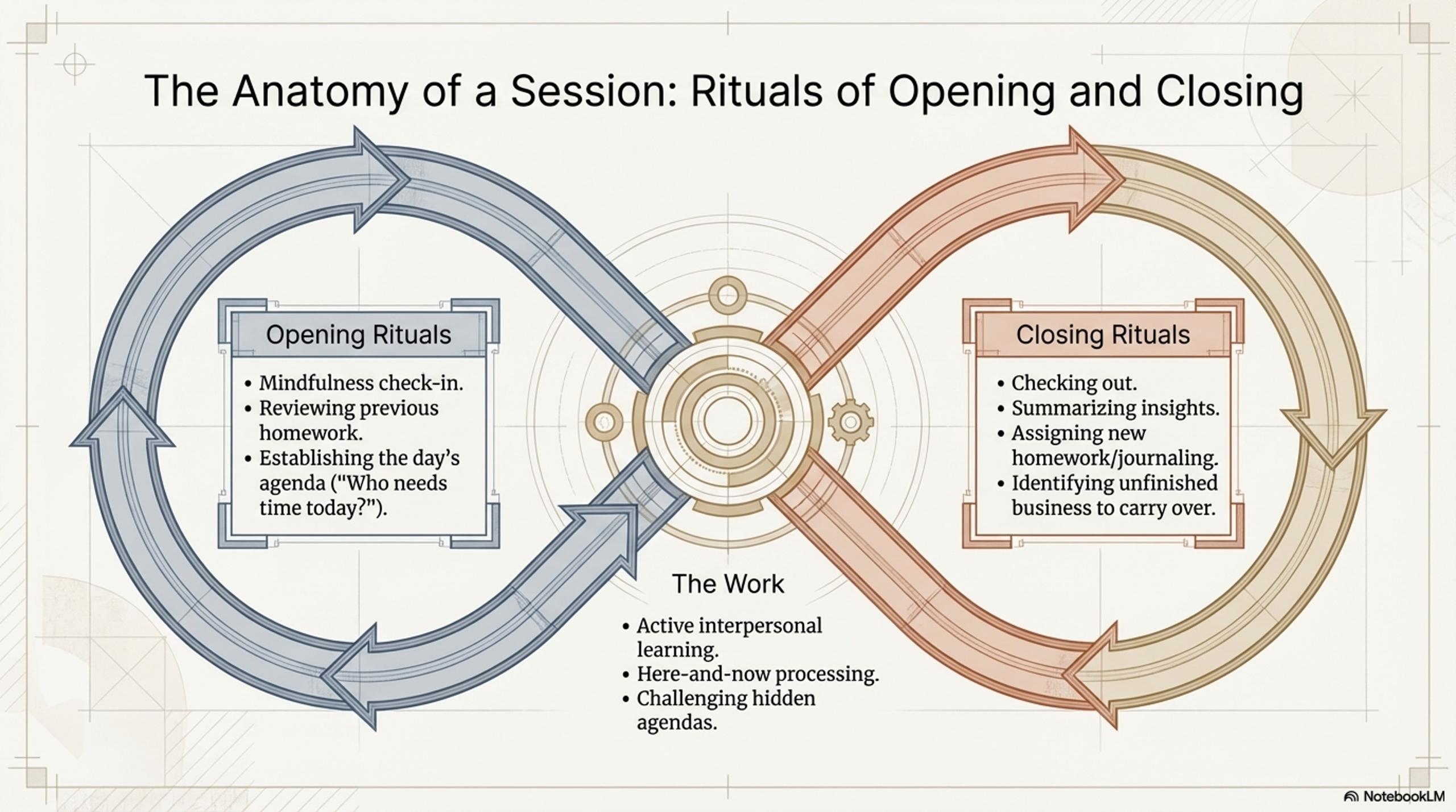
Your behavior in the group is a reflection of your life outside. To bridge this, we use the Check-in/Check-out method:
| Phase | Purpose | 핵심 목적 |
| Check-in | Naming goals and current emotional state. | 목표와 현재의 정서 상태를 명명함. |
| Check-out | Translating insights into "outside world" practice. | 통찰을 "외부 세계"의 실천으로 번역함. |
✨ A Reflection for Your Practice
As you move forward in your clinical counseling journey, you might encounter members who use intellectualized language to keep you at arm's length.
How might you shift your own response from "offering an answer" to "creating a space" where that member feels safe enough to drop the abstraction?
✨ 성찰을 위한 질문 (Reflection for Your Practice)
상담 수련 과정을 나아가다 보면, 상담자와의 정서적 거리를 두기 위해 **관념적이고 지적인 언어(Intellectualized language)**를 사용하는 집단원들을 만나게 될 것입니다.
그럴 때, 상담자로서 여러분은 단순히 '답을 제공하는 것'에서 벗어나, 해당 집단원이 추상적인 방어막을 내려놓고 안전함을 느낄 수 있는 **'공간을 창조하는 것(Creating a space)'**으로 어떻게 반응을 전환할 수 있을까요?
상담자로서 여러분은 집단원이 '머리'에서 '가슴'으로 내려올 수 있도록 어떤 마중물 역할을 하고 싶으신가요?