The Unwritten Contract: 5 Surprising Lessons from Couples Therapy to Redefine Your Relationship
성문화되지 않은 계약: 관계를 재정의하기 위한 커플 상담의 5가지 놀라운 교훈
Most couples arrive in my office trapped in a repetitive, exhausting loop. They focus on the "what"—the late arrival, the tone of voice, the forgotten chore. But as a clinical strategist, I’m not interested in the "what." I’m looking for the "why."
대부분의 커플은 반복적이고 소모적인 굴레에 갇힌 채 저를 찾아옵니다. 그들은 늦은 귀가, 말투, 잊어버린 집안일 같은 "무엇(What)"에만 집중하죠. 하지만 임상 전략가로서 저는 "무엇"에는 관심이 없습니다. 저는 "왜(Why)"를 찾습니다.
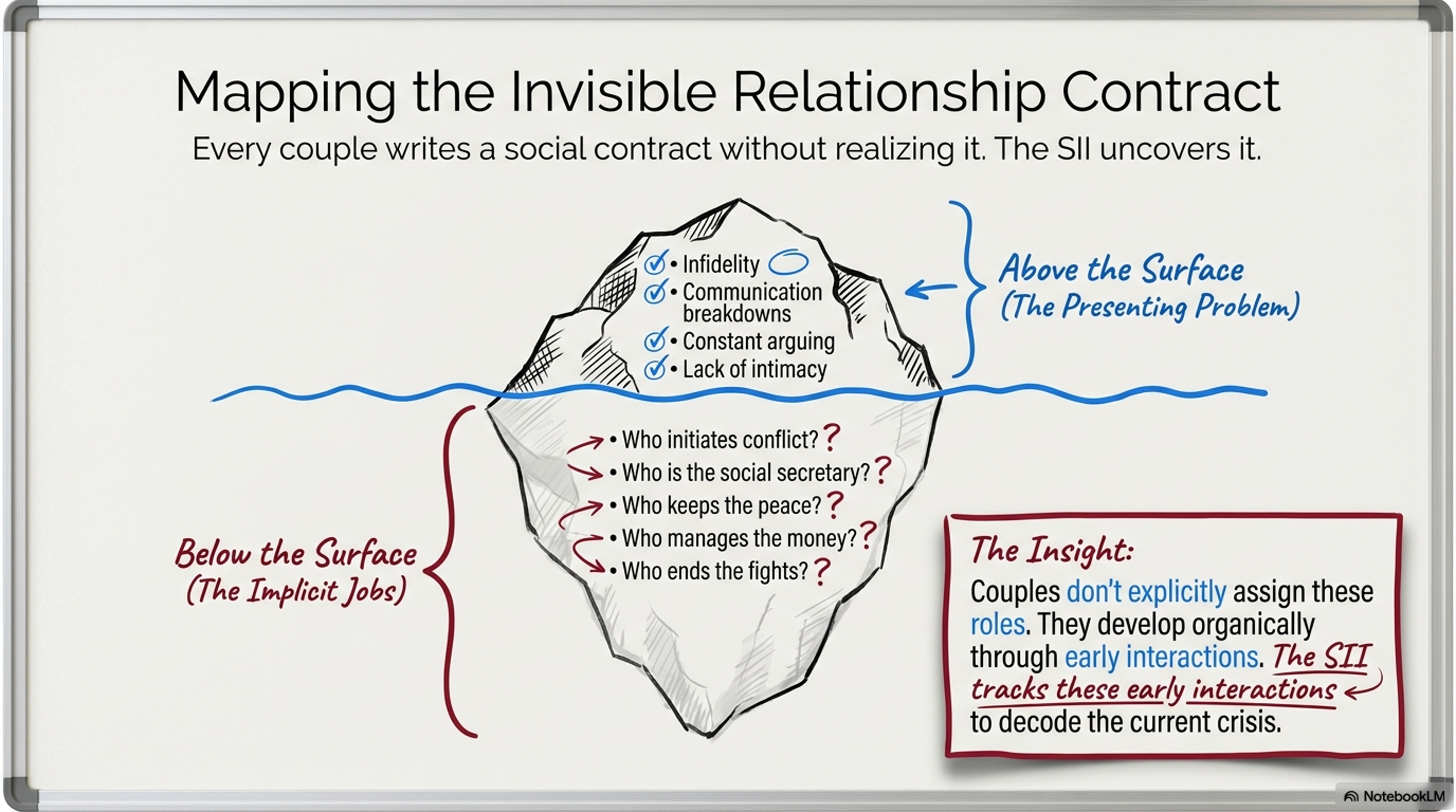
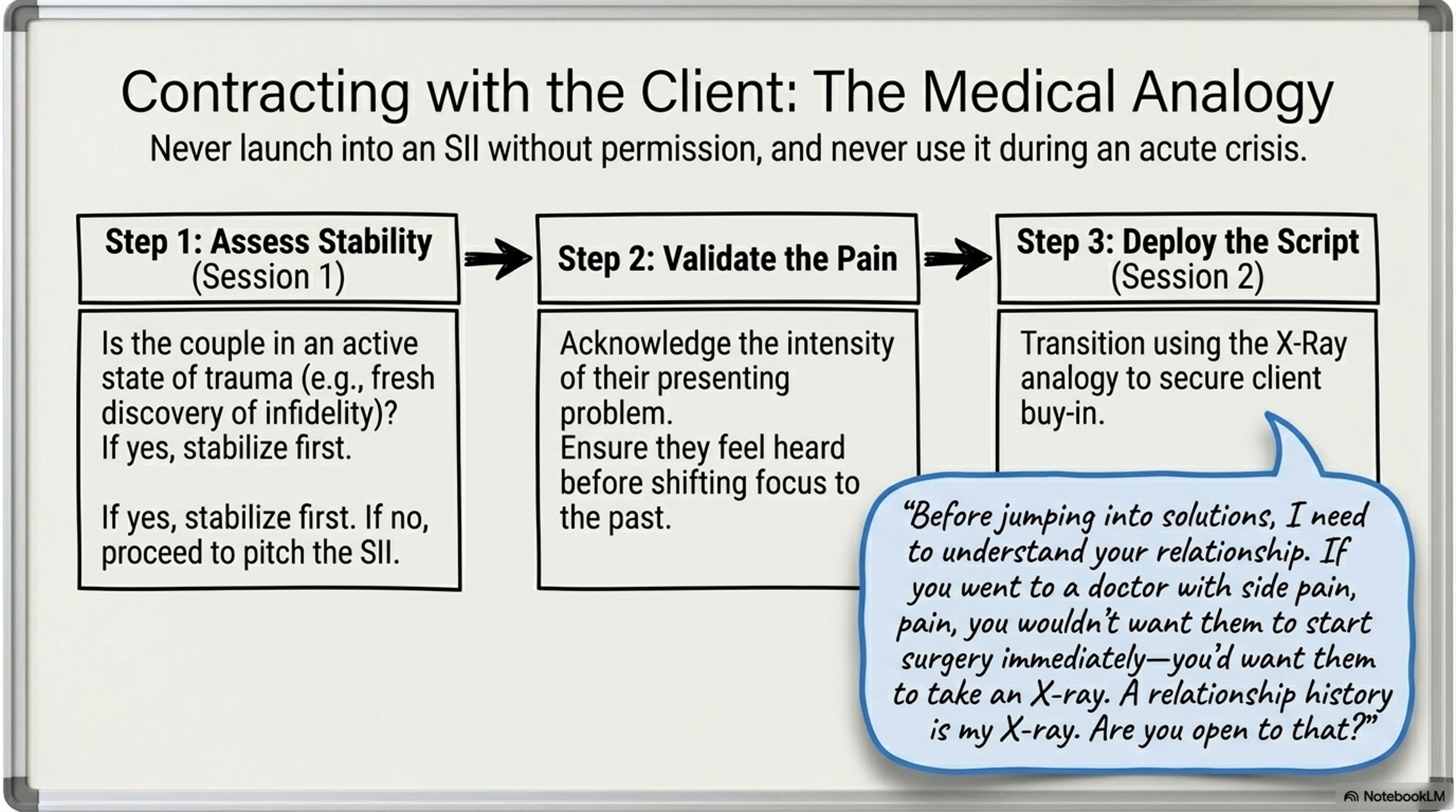
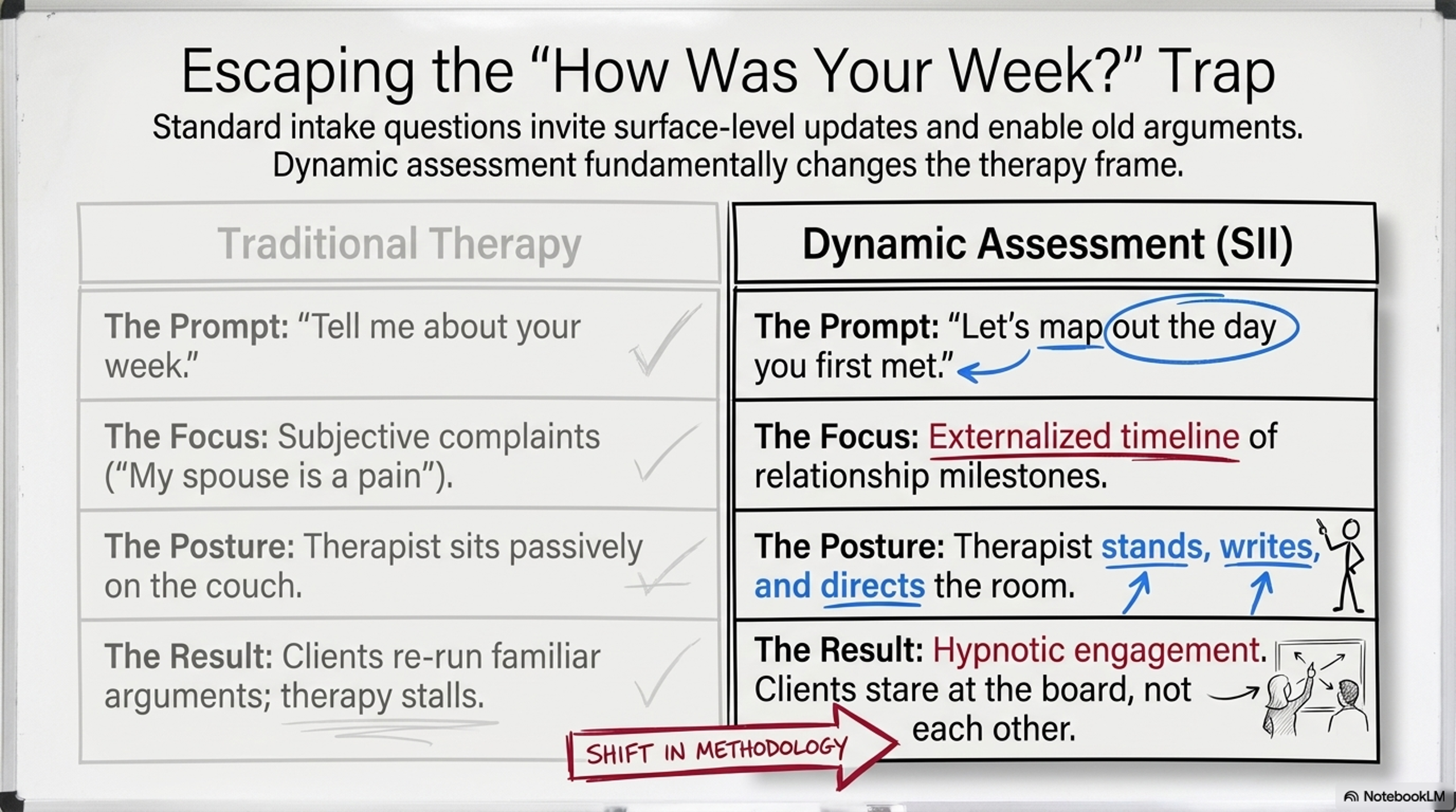
To find it, I use a tool called the Structured Initial Interview (SII). I often describe this as an "X-ray" for the relationship. It scans the history of the partnership to uncover the "skeleton"—the hidden blueprints and invisible rules that govern the relationship.
그 원인을 찾기 위해 저는 **구조화된 초기 인터뷰(SII)**라는 도구를 사용합니다. 저는 종종 이것을 관계를 위한 "X-ray"라고 설명합니다. 이는 파트너십의 역사를 스캔하여 관계를 지배하는 숨겨진 청사진과 보이지 않는 규칙인 "뼈대"를 찾아냅니다.

1. You Signed a Contract You Never Read
당신은 읽어본 적 없는 계약서에 서명했습니다
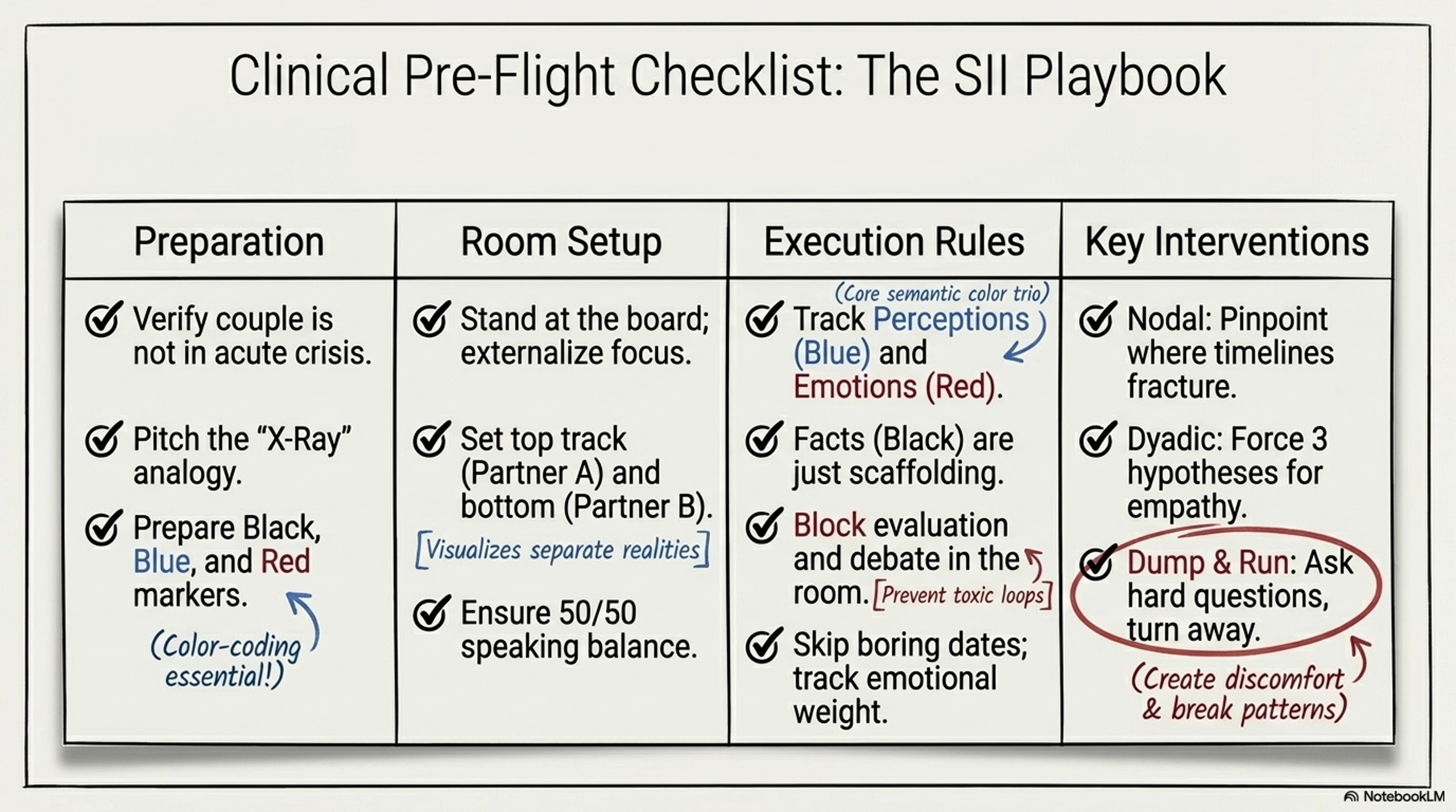
Every couple operates under a "Relationship Contract," but it’s rarely a document they sat down and negotiated. Instead, it’s a series of social subcontracts written through tiny, early interactions that eventually harden into permanent roles.
모든 커플은 "관계 계약" 아래에서 움직이지만, 앉아서 정식으로 협상한 문서는 거의 없습니다. 대신, 초기 단계의 아주 사소한 상호작용들이 사회적 하도급 계약처럼 쌓여 결국 고착화된 역할로 굳어진 것입니다.
Consider the "Laundry Incident": one partner ruins a delicate sweater and is told, "Never touch my laundry again." A contract is signed. For the next twenty years, they do laundry separately—not because of a formal agreement, but because the system recalibrated around a single reaction. Realizing that your current "stuck" points are actually old clauses in an unread contract is the first step toward renegotiation.
"빨래 사건"을 예로 들어보겠습니다. 한 파트너가 섬세한 스웨터를 망가뜨렸을 때 "다시는 내 빨래에 손대지 마"라는 말을 듣습니다. 그 순간 계약이 체결됩니다. 그 후 20년 동안 그들은 빨래를 따로 합니다. 공식적인 합의가 아니라, 단 한 번의 반응을 중심으로 시스템이 재조정되었기 때문입니다. 현재의 "교착 상태"가 사실은 읽지 않은 계약서의 오래된 조항이라는 것을 깨닫는 것이 재협상의 첫걸음입니다.
2. Perception is Your Only Reality (The 3-Color Rule)
인식이 곧 당신의 유일한 현실입니다 (3색 규칙)
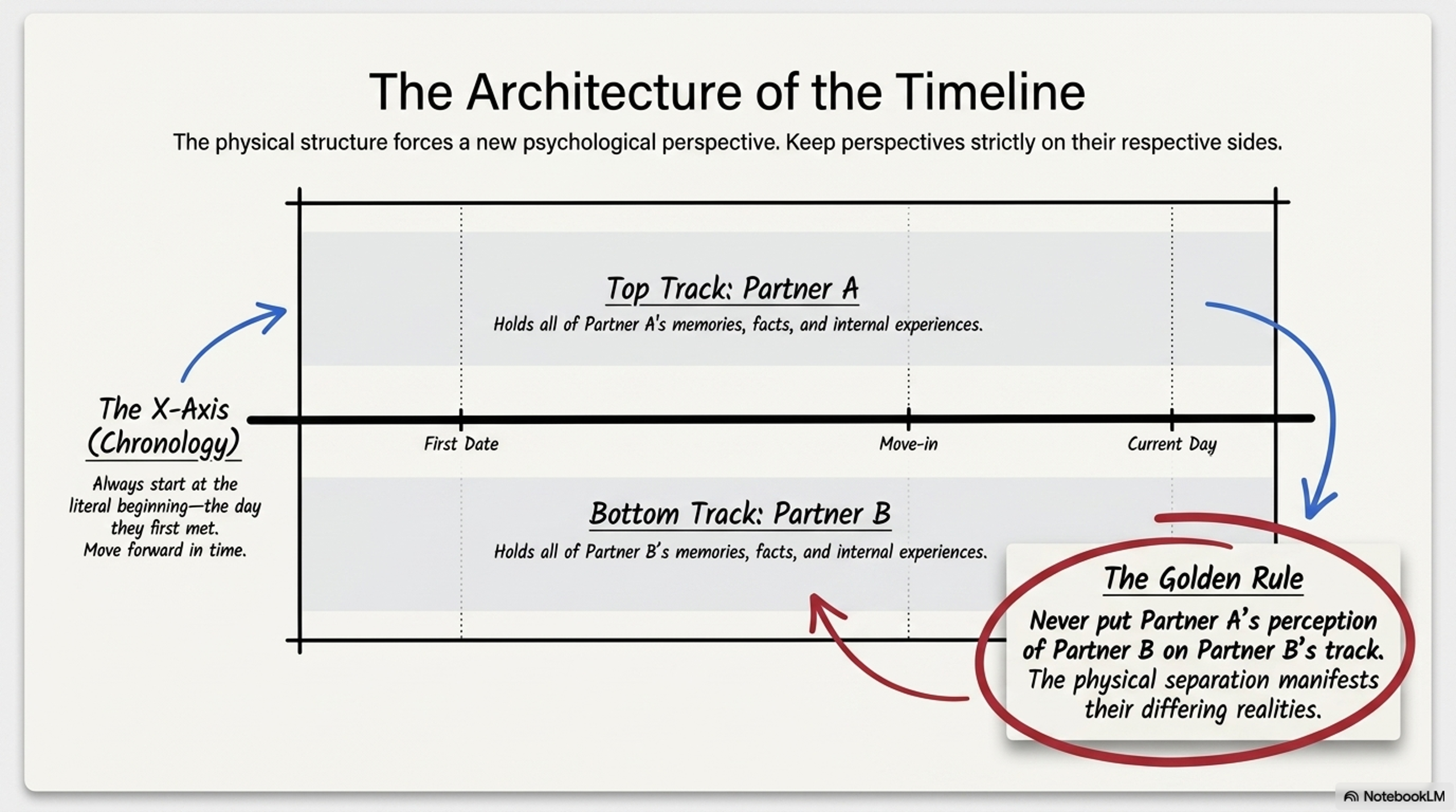
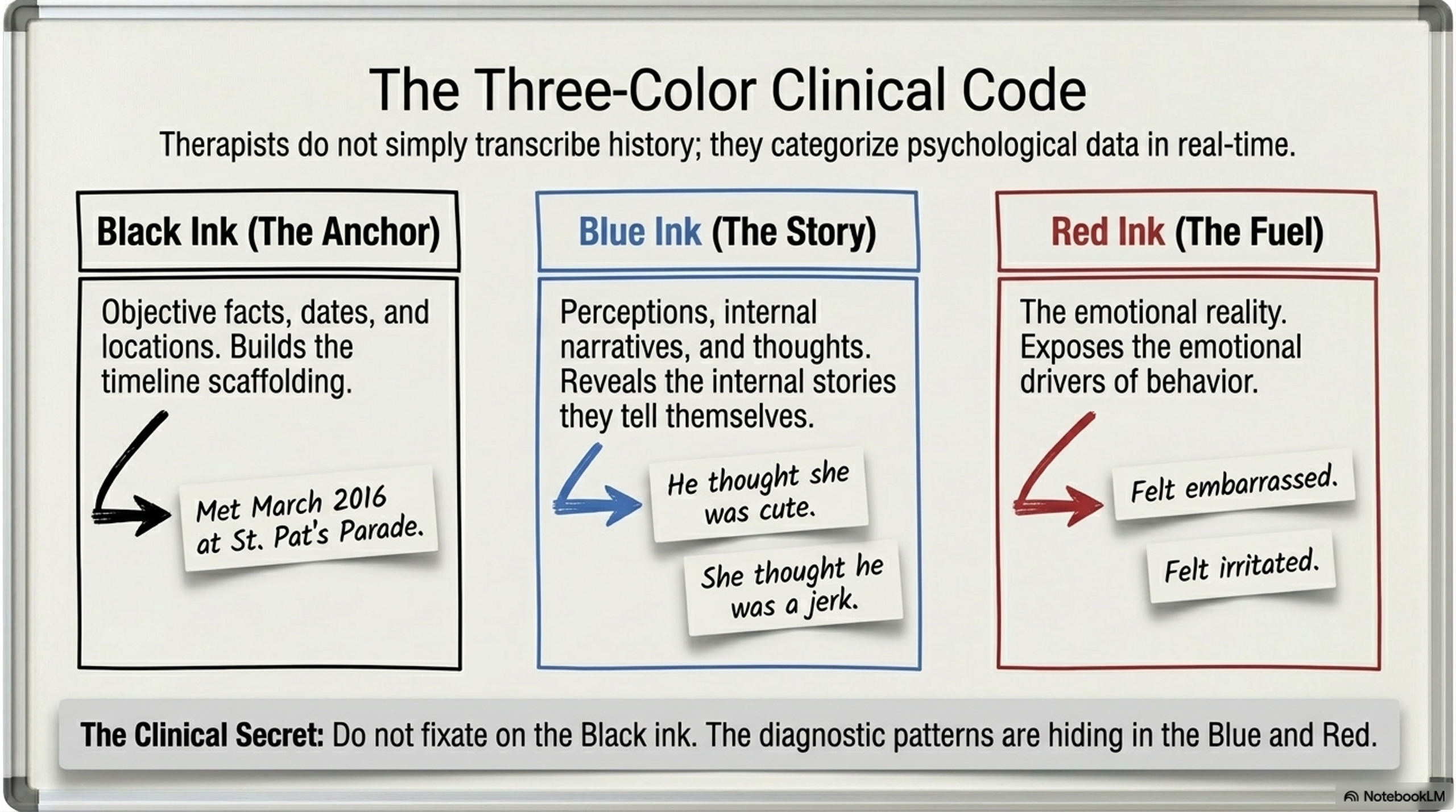
During an SII, I track a couple's history on a whiteboard using three colors: 상담 중 저는 화이트보드에 세 가지 색상을 사용하여 커플의 역사를 기록합니다.
- Black (검정): Facts and dates (e.g., "We met in 2016"). / 사실과 날짜 (예: "우리는 2016년에 만났다")
- Blue (파랑): Perceptions and impressions (e.g., "I thought he was a jerk"). / 인식과 인상 (예: "그가 재수 없다고 생각했다")
- Red (빨강): Emotions (e.g., "I felt invisible"). / 감정 (예: "존재감이 없게 느껴졌다")
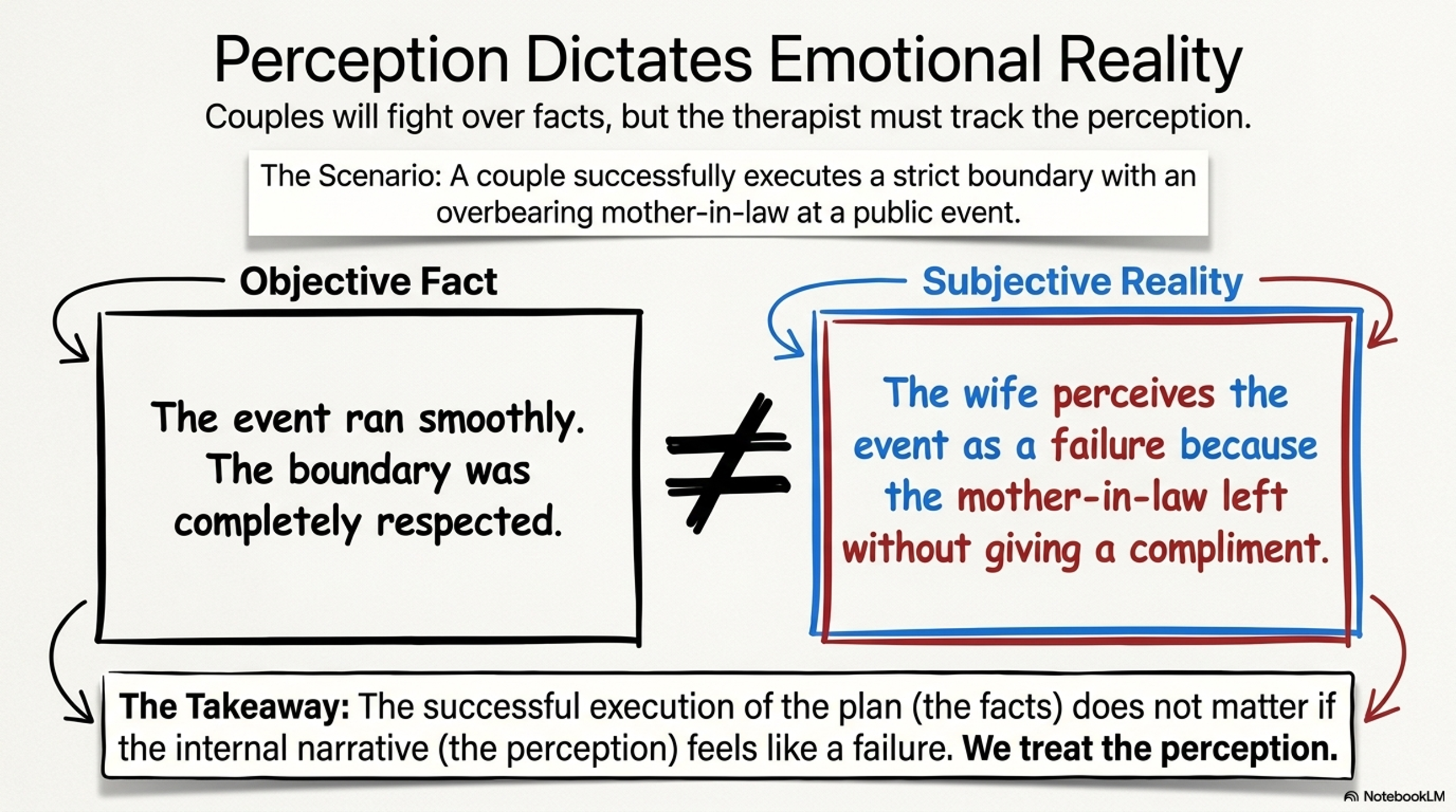
I eventually stop looking at the black ink. The "skeleton" of the relationship lives in the Blue and the Red. Both narratives are equally valid because perception creates the story. The value lies in understanding the why behind the different perception, not in litigating the history.
결국 저는 검은색 잉크는 보지 않게 됩니다. 관계의 "뼈대"는 파란색과 빨간색 속에 살아있기 때문입니다. 인식이 이야기를 만들기 때문에 두 사람의 서사는 똑같이 유효합니다. 가치는 역사를 심판하는 데 있는 것이 아니라, 왜 서로 다른 인식을 갖게 되었는지 그 이유를 이해하는 데 있습니다.
3. The "First Fight" is a Nodal Goldmine
"첫 싸움"은 노달(Nodal) 포인트의 노다지입니다
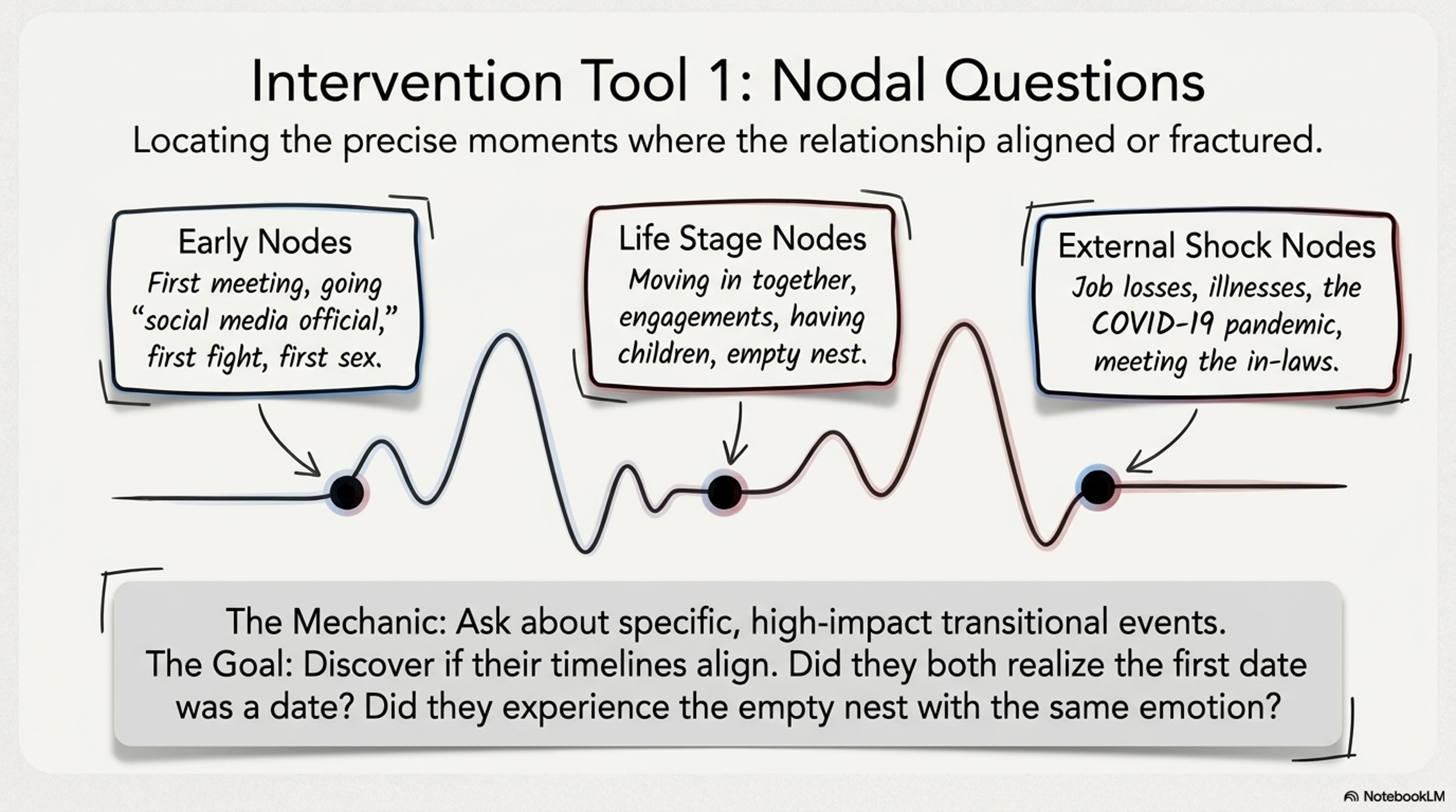
We look for "Nodal Questions"—turning points where the relationship shifted. While milestones like moving in together are important, the "First Fight" is the most revealing.
우리는 관계가 변화한 전환점인 **"노달(Nodal) 질문"**을 찾습니다. 함께 살기 시작한 시점 같은 이정표도 중요하지만, "첫 싸움"이 가장 많은 것을 드러냅니다.
- Who brought the problem up? (누가 문제를 제기했는가?)
- Who ended the conflict? (누가 갈등을 끝냈는가?)
- Was there a "recalibration," or did one person stay angry for a week? (재조정이 있었는가, 아니면 한 사람이 일주일 동안 화난 상태로 있었는가?)
If you analyze that very first disagreement, you will almost always find the exact same architecture in the fight you had last night. 가장 첫 번째 불화를 분석해 보면, 어젯밤에 했던 싸움에서도 거의 똑같은 구조를 발견하게 될 것입니다.
4. Stop Answering for Yourself (The Power of Dyadic Thinking)
자신을 대변하는 것을 멈추세요 (이인조 사고의 힘)
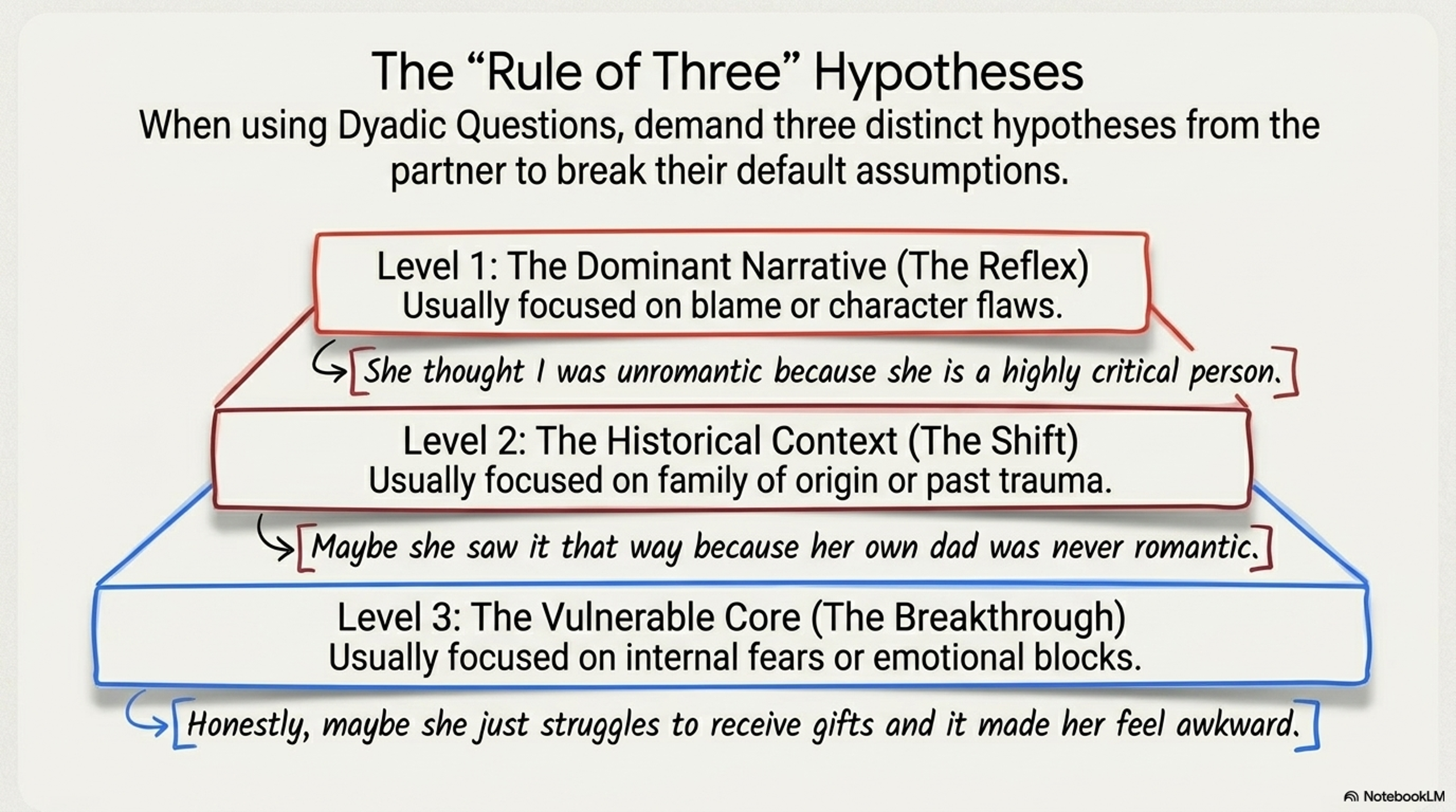
To break a stalemate, I stop asking how they feel and start asking them to interpret their partner’s mind. We then develop Three Hypotheses: 교착 상태를 깨기 위해, 저는 그들이 어떻게 느끼는지 묻는 것을 멈추고 파트너의 마음을 해석해 보라고 요청합니다. 그 후 우리는 세 가지 가설을 세웁니다.
- The Dominant Narrative (지배적 서사): The blame-based version (e.g., "She’s just critical"). / 비난 중심의 버전 (예: "그녀는 그냥 비판적인 사람이야")
- The Past-Oriented Narrative (과거 지향적 서사): Family history (e.g., "She saw her parents handle stress this way"). / 가족력 중심 (예: "그녀의 부모님이 스트레스를 이렇게 다루는 걸 보고 자랐어")
- The Vulnerable Narrative (취약한 서사): Deep-seated needs (e.g., "She struggles with receiving care"). / 뿌리 깊은 욕구 중심 (예: "그녀는 보살핌을 받는 것을 힘들어해")
By forcing yourself to generate multiple hypotheses, you stop being a participant in the ditch and start becoming an observer of the system. You move from being "right" to being "curious." 여러 가설을 강제로 세워봄으로써, 당신은 구덩이 속에 빠진 당사자에서 벗어나 시스템의 관찰자가 됩니다. "옳음"을 증명하려는 태도에서 "호기심"을 갖는 태도로 이동하는 것입니다.

5. Why "Productive Discomfort" is Better than a "Good" Week
왜 "생산적인 불편함"이 "좋은" 일주일보다 나은가
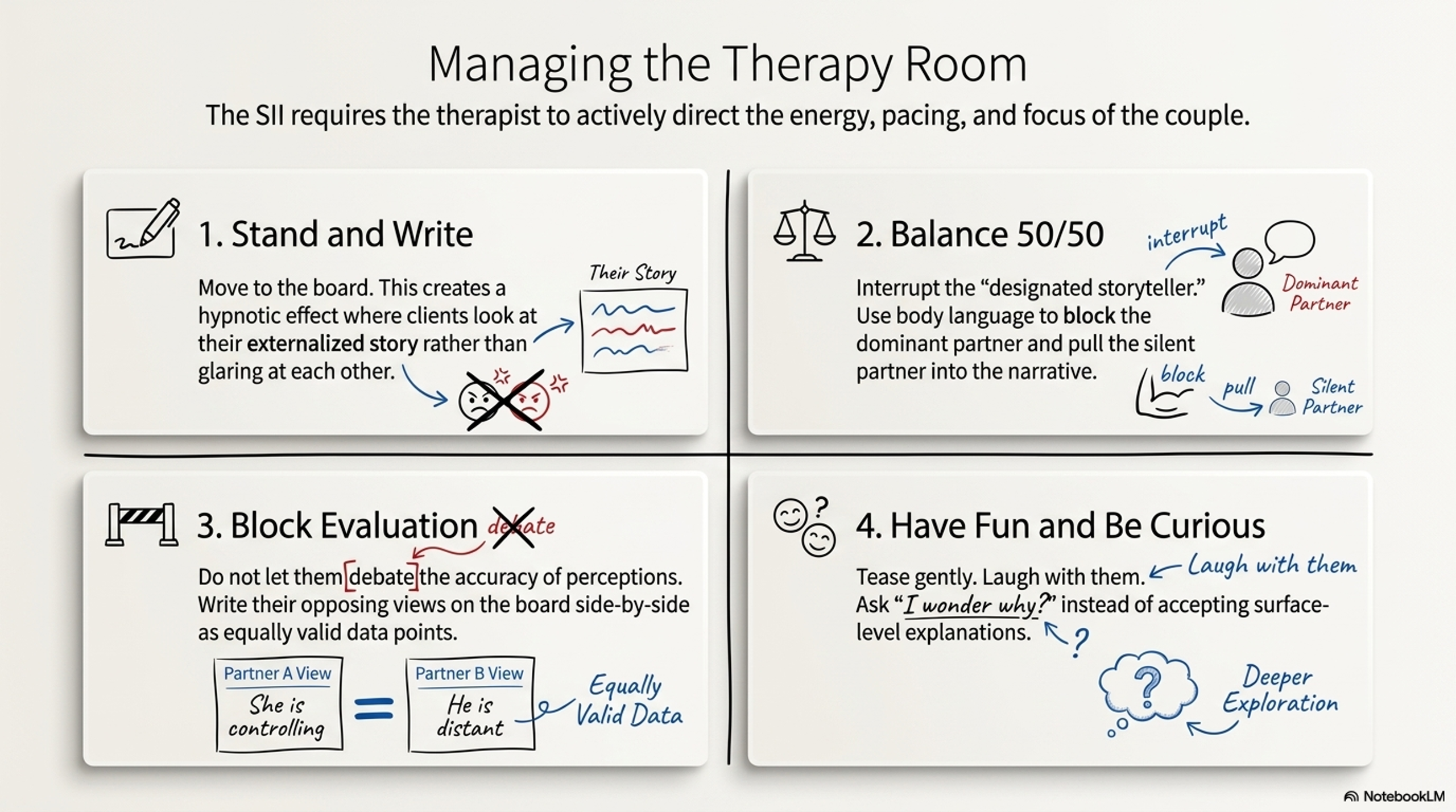
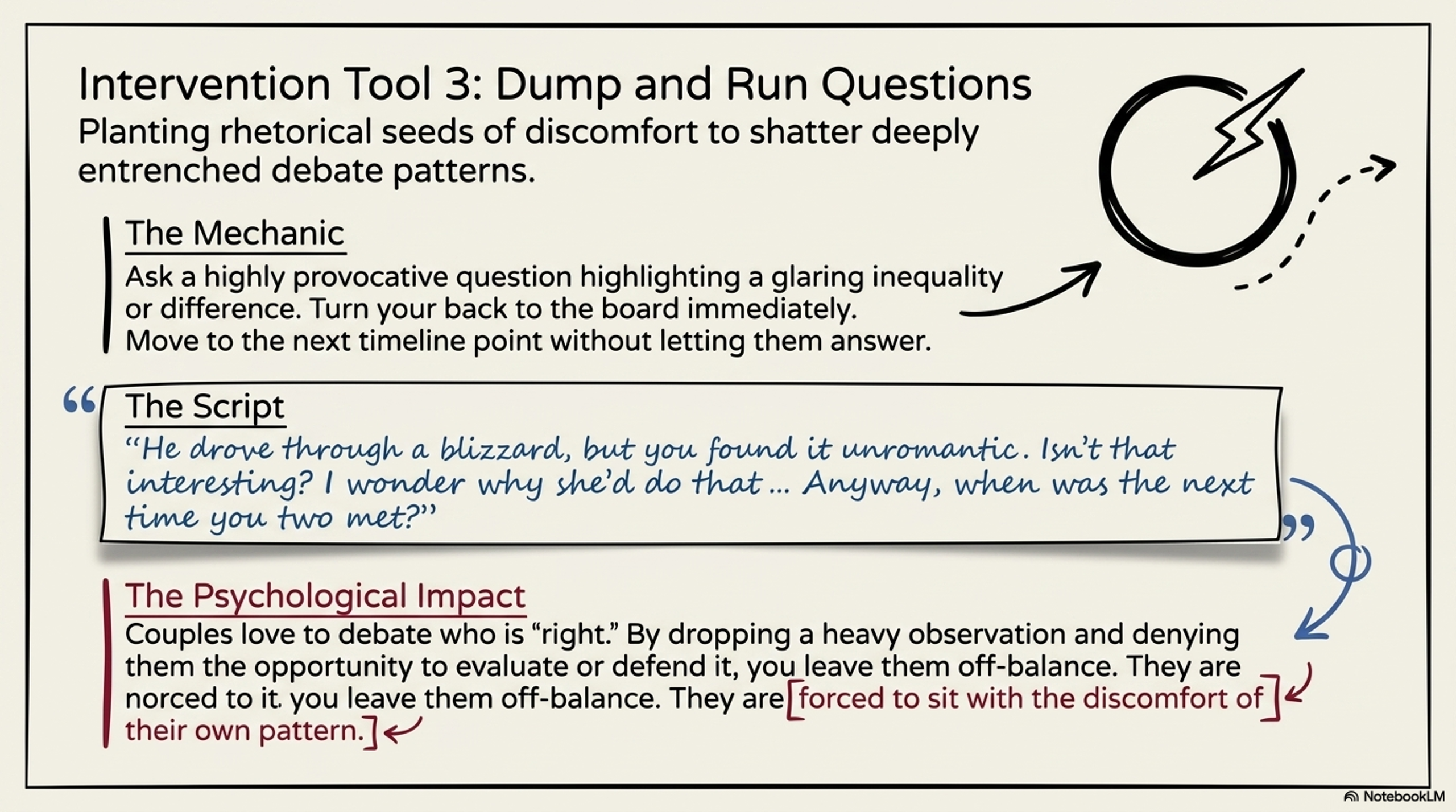
Real change requires what I call the "Dump and Run." I ask a provocative question that highlights a deep inequality or difference in perception—and then I end the session.
진정한 변화에는 제가 **"덤프 앤 런(Dump and Run)"**이라 부르는 과정이 필요합니다. 깊은 불평등이나 인식의 차이를 강조하는 도발적인 질문을 던진 뒤, 바로 세션을 종료하는 것이죠.
The goal is to leave you "back on your heels"—out of balance. When a couple is out of balance, they are forced to be curious because the therapist didn't give them the comfortable, familiar ending they expected. If it feels too normal, too familiar, the structure hasn't truly shifted.
목표는 당신을 "당황하게(back on your heels)" 만들어 균형을 깨뜨리는 것입니다. 커플의 균형이 깨지면, 그들은 호기심을 가질 수밖에 없습니다. 상담가가 그들이 기대했던 편안하고 익숙한 결말을 주지 않았기 때문입니다. 만약 너무 평범하고 익숙하게 느껴진다면, 구조는 진정으로 변한 것이 아닙니다.
Conclusion: From Archives to Evolution
결론: 기록 보관소에서 진화로
Reviewing the history of your relationship isn't about building a dead archive; it’s about changing the "frame" for your future. When you stop looking at your partner as the problem and start looking at the contract, the perceptions, and the nodal events, you replace blame with the ultimate antidote: curiosity.
관계의 역사를 되짚어 보는 것은 죽은 기록을 보관하는 것이 아니라, 미래를 위한 **"프레임"**을 바꾸는 일입니다. 파트너를 문제 자체로 보는 것을 멈추고 계약, 인식, 그리고 노달 포인트를 바라보기 시작할 때, 당신은 비난을 대신할 궁극적인 해독제인 '호기심'을 얻게 될 것입니다.