1. Introduction: The Relatable Paradox of Parenting and Guidance
1. 도입: 부모 노릇과 지침의 친숙한 역설
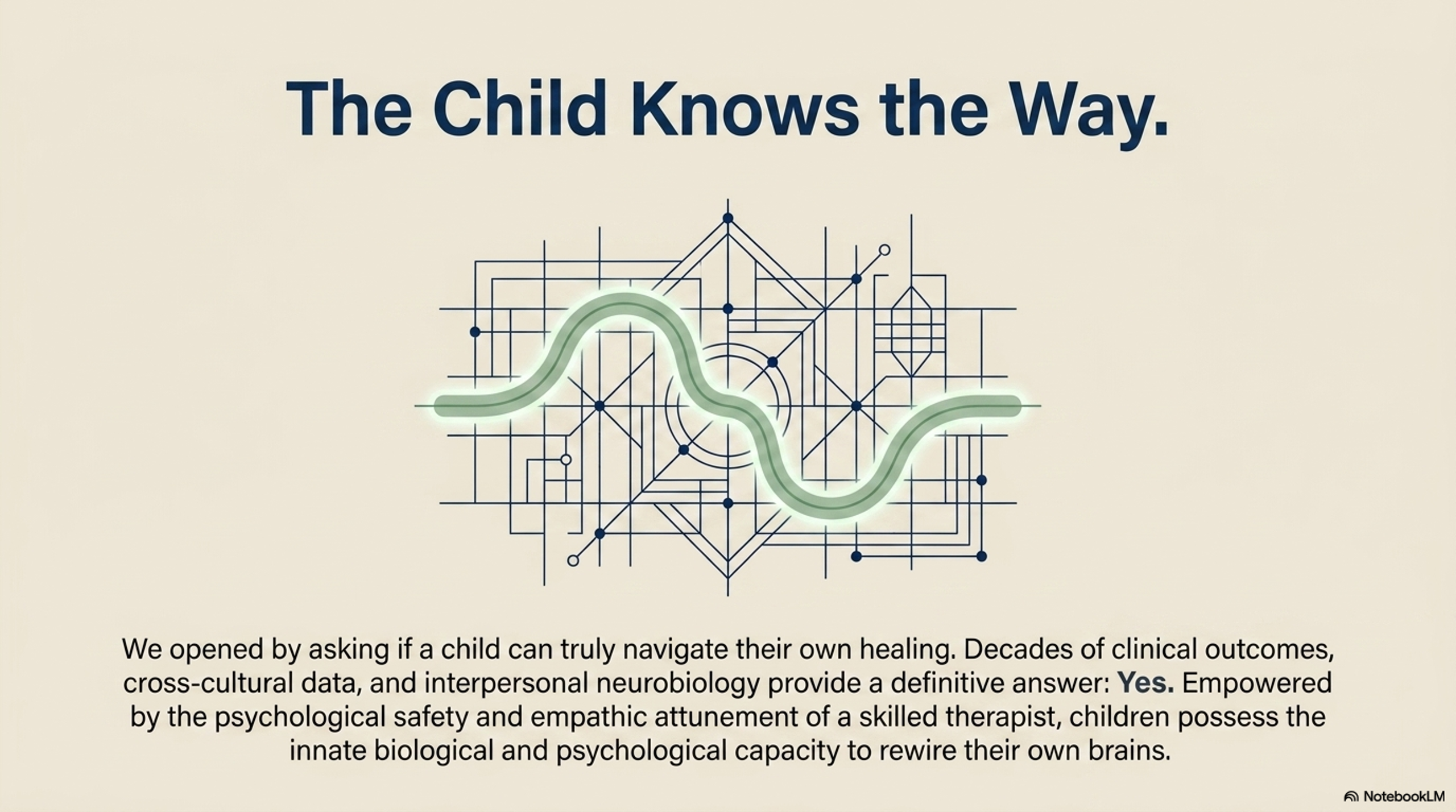
As adults, our natural instinct is to protect and guide. We feel a deep-seated urge to "show them the way," a role that is necessary for teaching surface-level skills like manners or tying shoes. However, when a child faces deep emotional distress, this traditional "top-down" guidance often meets a wall. True healing requires what specialists call an "inside out approach." This involves a profound "leap of faith"—trusting that a child possess an internal map for their own repair. While we can teach behavior, internal healing is a different domain entirely, one where the child must lead and the adult must follow.
어른으로서 우리의 자연스러운 본능은 아이를 보호하고 인도하는 것입니다. 우리는 예의범절이나 신발 끈 매기 같은 표면적인 기술을 가르치는 데 필요한 "길을 보여주고자 하는" 깊은 충동을 느낍니다. 하지만 아이가 깊은 정서적 고통에 직면했을 때, 이러한 전통적인 "하향식(Top-down)" 지침은 흔히 장벽에 부딪힙니다. 진정한 치유는 전문가들이 말하는 "안에서 밖으로의 접근법(Inside out approach)"을 필요로 합니다. 여기에는 아이가 스스로를 회복할 수 있는 내면의 지도를 가지고 있음을 신뢰하는 심오한 "약진(Leap of faith)"이 요구됩니다. 우리가 행동은 가르칠 수 있을지 몰라도 내면의 치유는 완전히 다른 영역이며, 그 영역에서는 아이가 이끌고 어른은 따라야만 합니다.

2. The Myth of the "Guided" Child (The Locus of Evaluation)
2. "지도를 받는" 아동이라는 신화 (평가의 소재)
The core philosophy of Child-Centered Play Therapy (CCPT) challenges the idea that a child must be directed toward wellness. While surface-level concerns can be modeled, deep internal "monsters"—scary experiences or vulnerable developmental gaps—require a companion rather than a director. When an adult stops directing, the child’s internal locus of evaluation begins to shift. This shift allows the child to move from external compliance to an internal locus of control, fostering a more resilient self-concept and healthier self-talk. By acting as a companion rather than a teacher, the therapist empowers the child to trust their own ability to master their environment.
아동 중심 놀이치료(CCPT)의 핵심 철학은 아이가 건강한 상태를 향해 지시를 받아야 한다는 생각에 도전합니다. 표면적인 문제는 본보기를 보여줄 수 있지만, 깊은 내면의 "괴물"—두려운 경험이나 취약한 발달적 공백—은 지시자가 아닌 동반자를 필요로 합니다. 어른이 지시하기를 멈출 때, 아이의 내면의 평가 소재(Locus of evaluation)가 이동하기 시작합니다. 이러한 변화는 아이가 외부의 순종에서 내부의 통제 소재(Locus of control)로 나아가도록 도우며, 더 회복탄력성 있는 자아개념과 더 건강한 자기 대화를 촉진합니다. 교사가 아닌 동반자로서 행동함으로써, 치료사는 아이가 자신의 환경을 마스터할 수 있는 스스로의 능력을 신뢰하도록 힘을 실어줍니다.
"The child needs a skilled therapist to be right there with and to accompany them into their inner world."
“아이에게는 자신의 내면세계로 함께 들어가 바로 그 곁에 있어 줄 숙련된 치료사가 필요합니다.”
3. When Trauma Silences the Tongue (The Broca’s Area Connection)
3. 트라우마가 혀를 침묵시키るとき (브로카 영역의 연결성)
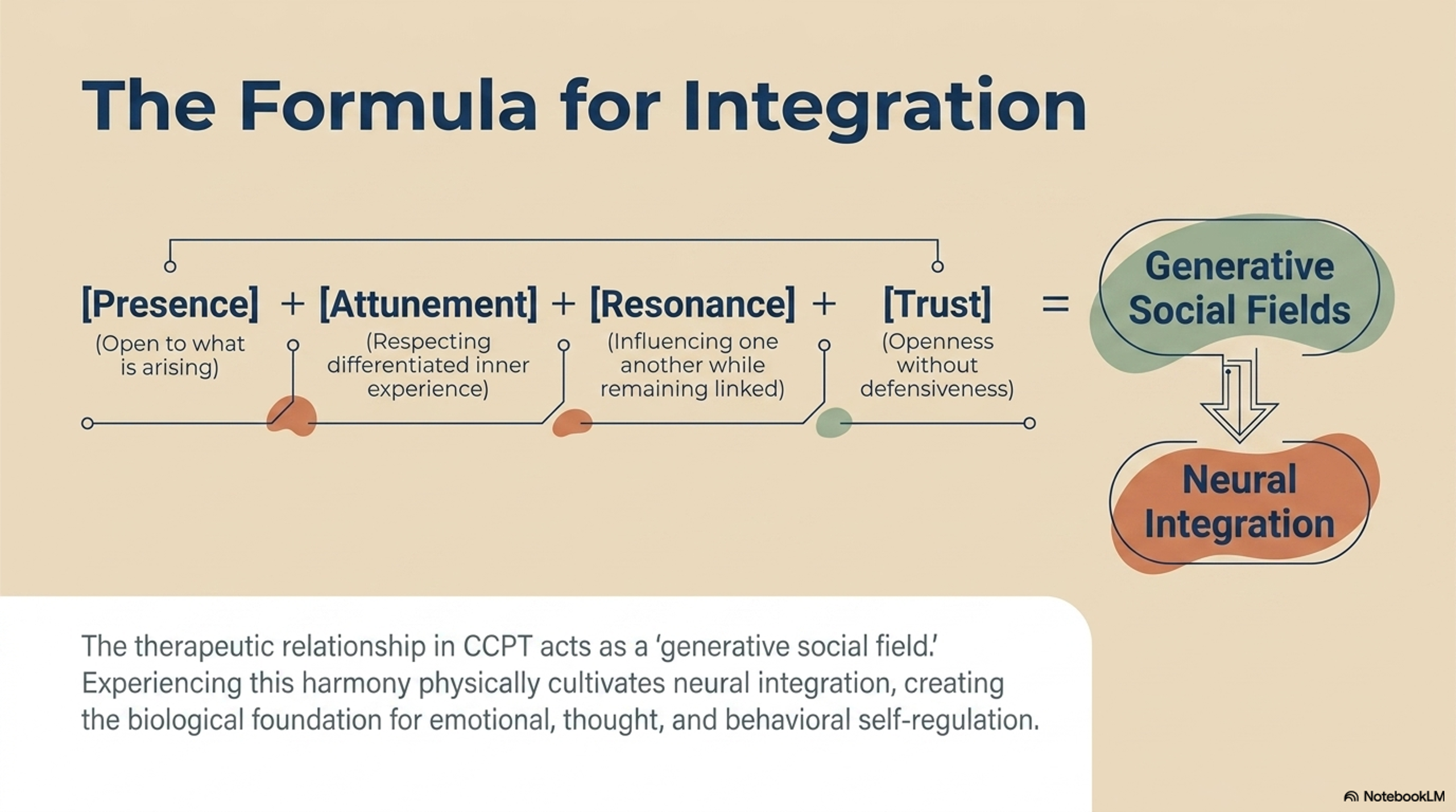
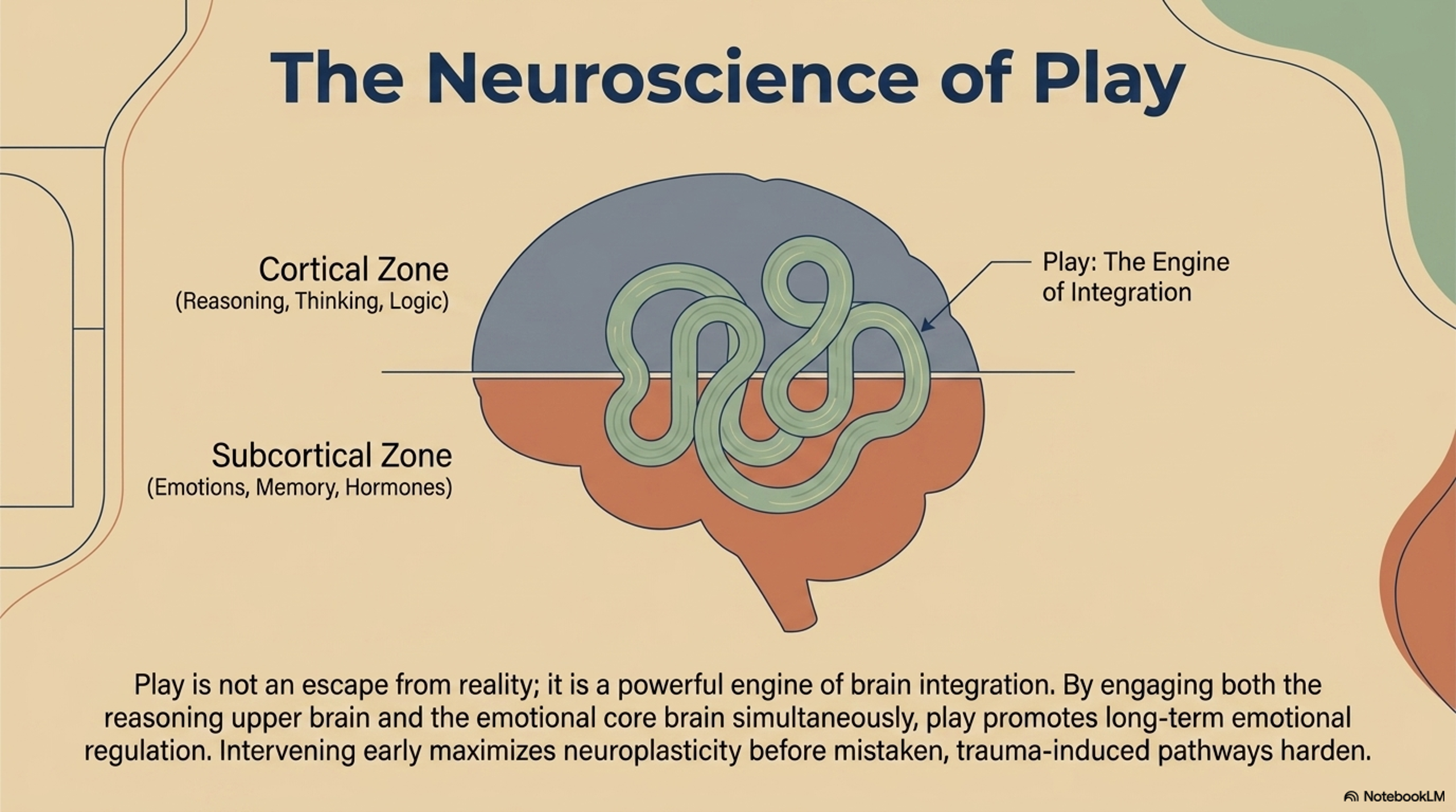
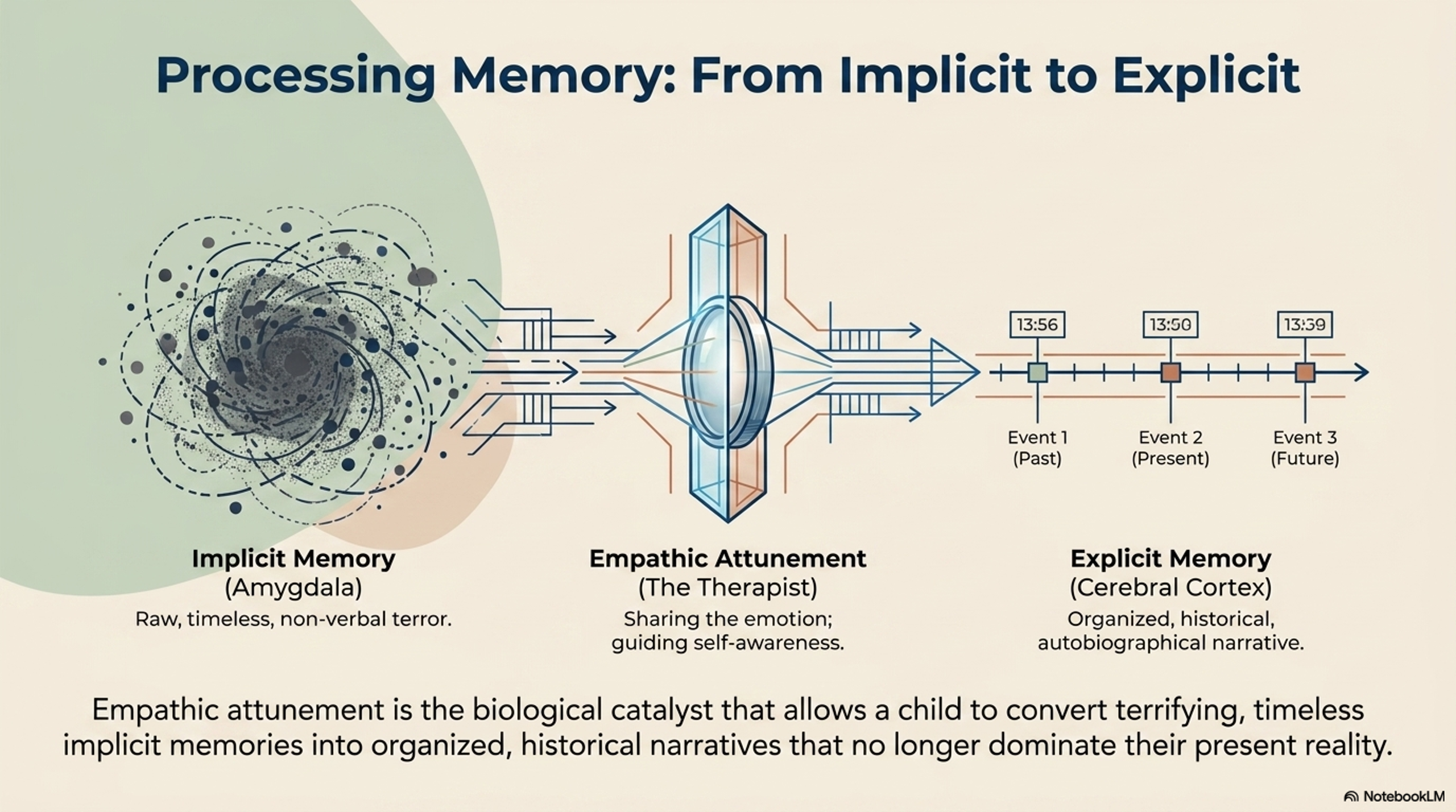
Traditional "talk therapy" is often biologically compromised for children who have experienced trauma. Neuroimaging shows that intense distress can deactivate the Broca’s area, the cortical region responsible for putting thoughts into words. When this reasoning brain shuts down, the child’s experience becomes literally "unspeakable." Play therapy provides a bridge between the subcortical (emotional) brain and the cortical (reasoning) brain. Because play is a child’s natural language, it bypasses the need for verbal labeling. This allows children to process intense subcortical emotions through symbols and toys even when their "speaking" brain is offline.
전통적인 "말하는 상담"은 트라우마를 경험한 아동에게 생물학적으로 손상되어 있는 경우가 많습니다. 뇌 영상 연구에 따르면 강렬한 고통은 생각을 말로 바꾸는 역할을 하는 피질 영역인 브로카 영역(Broca's area)을 비활성화할 수 있습니다. 이 이성적인 뇌가 멈추면 아이의 경험은 말 그대로 "말로 표현할 수 없는" 상태가 됩니다. 놀이치료는 피질하(정서) 뇌와 피질(이성) 뇌 사이에 다리를 제공합니다. 놀이는 아이의 자연스러운 언어이기 때문에 언어적 라벨링의 필요성을 우회합니다. 이를 통해 아이들은 "말하는" 뇌가 오프라인 상태일 때도 상징과 장난감을 통해 강렬한 피질하 정서를 소화해 낼 수 있습니다.

4. Cultural Sensitivity is "Baked In," Not Bolted On
4. 문화적 민감성은 덧붙여진 것이 아니라 "내재되어 있다"
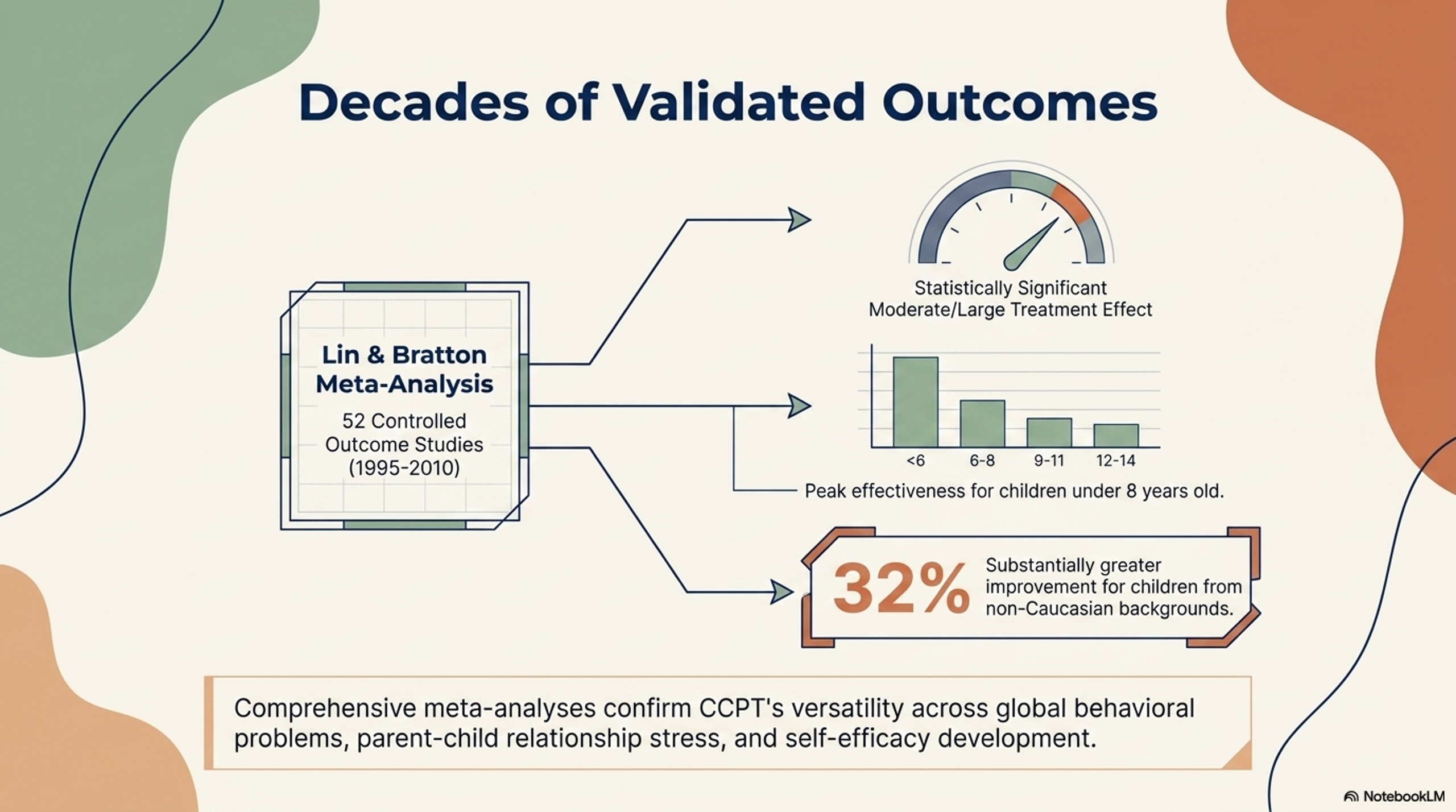
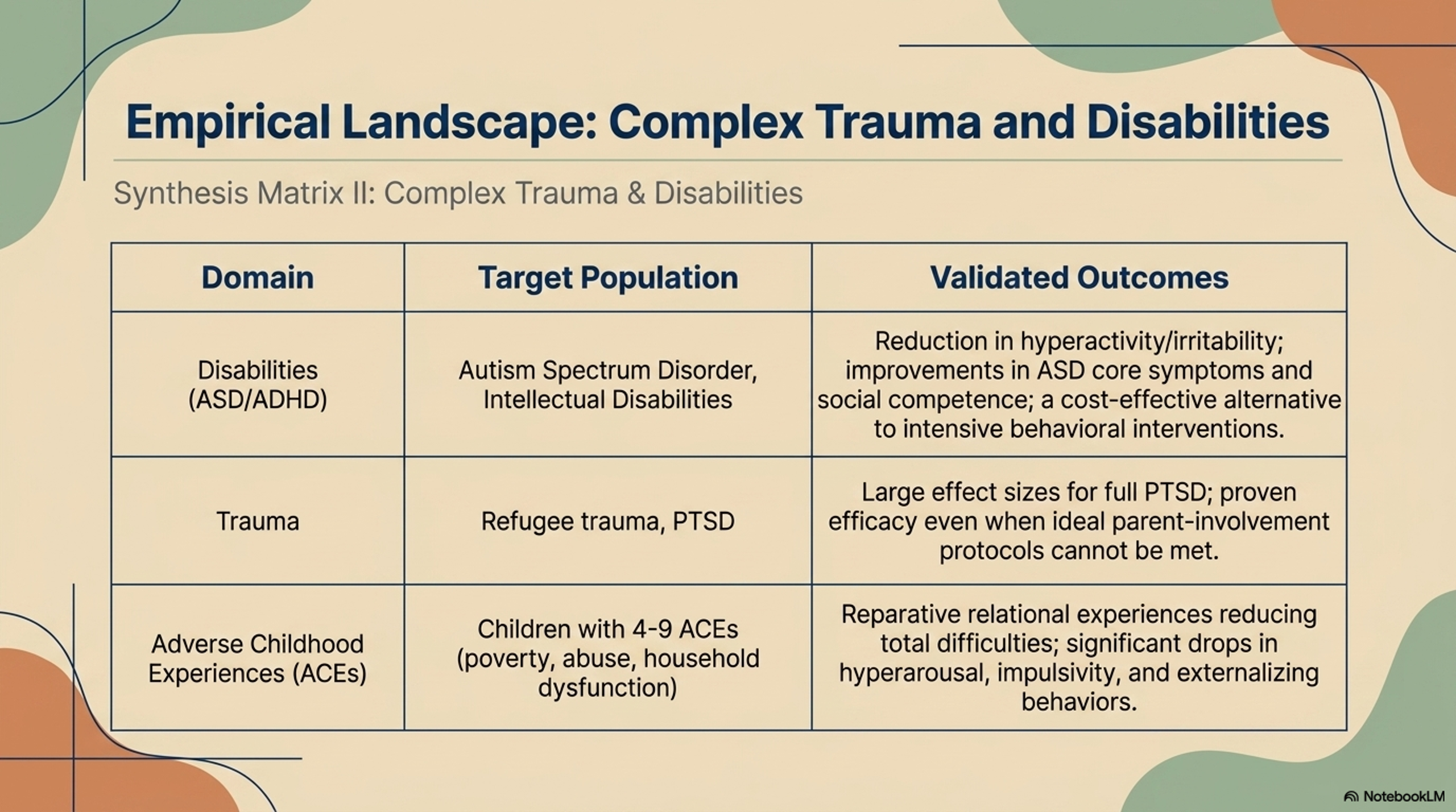
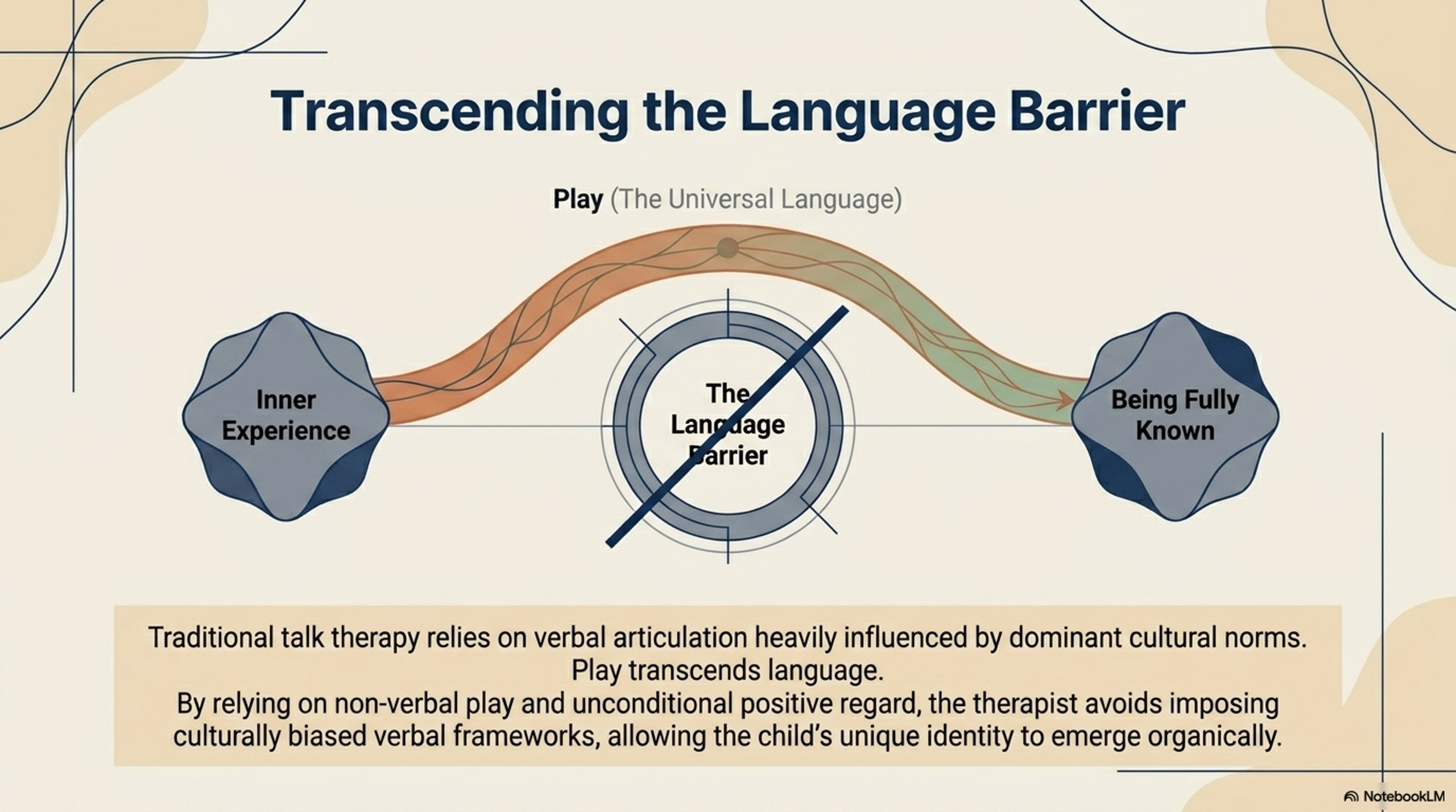
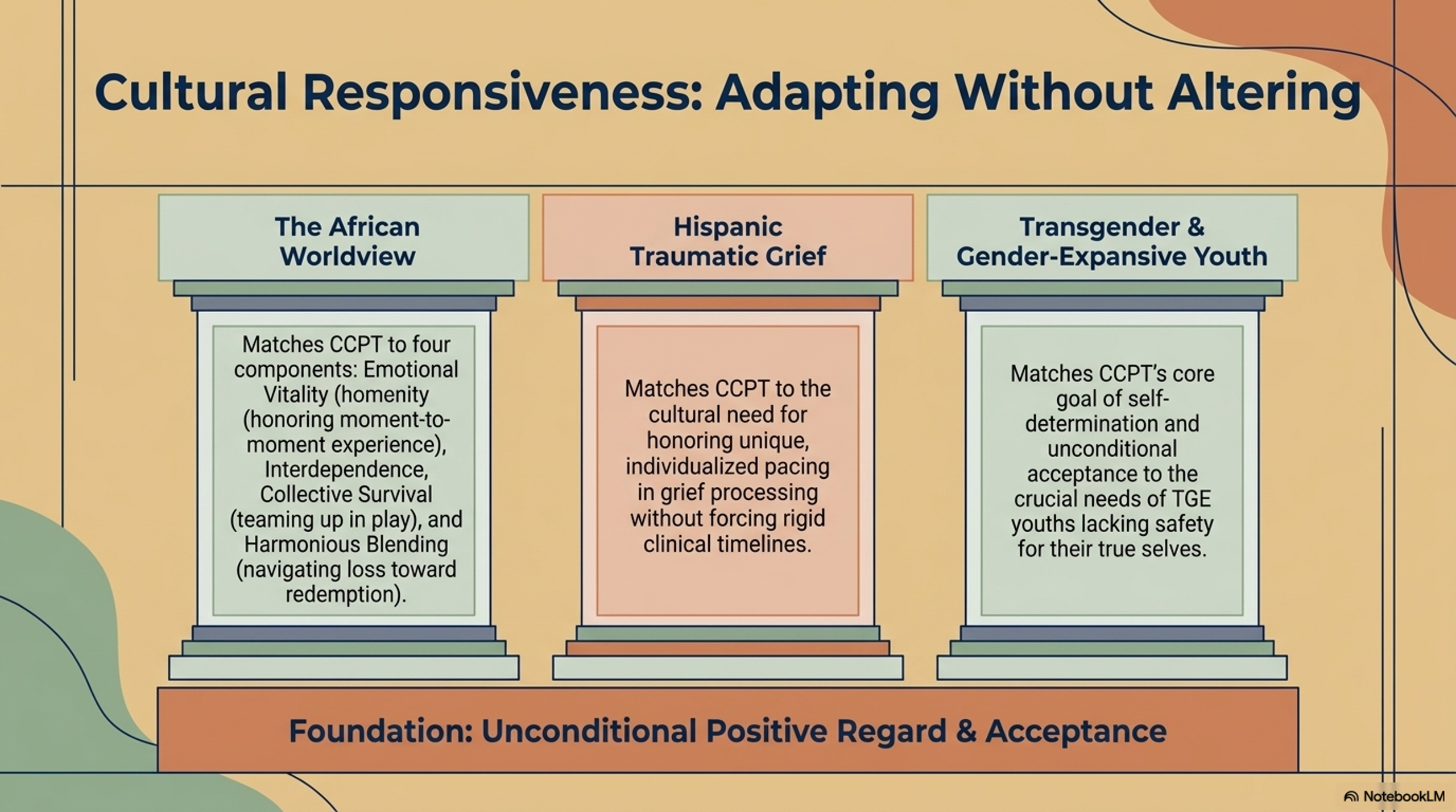
CCPT is not a "one size fits all" Western construct; its cultural responsiveness is inherent in its design. A landmark meta-analysis by Lin & Bratton (2015) found that children from non-Caucasian backgrounds often show even greater improvement than their peers. This is because play transcends linguistic and cultural barriers, allowing a child to be fully known without being forced into Western linguistic structures. The approach honors diverse worldviews, such as the African concepts of emotional vitality, interdependence, and collective survival. Furthermore, for transgender and gender-expansive (TGE) youth, CCPT provides a rare environment of unconditional acceptance. In the playroom, the child’s unique identity and scenarios of redemption are prized exactly as they are.
CCPT는 모든 사람에게 일률적으로 적용되는 서구적 구조물이 아닙니다. 그 문화적 반응성은 설계 자체에 내재되어 있습니다. Lin과 Bratton(2015)의 획기적인 메타분석에 따르면, 비백인 배경의 아동들이 동래 아동들보다 종종 훨씬 더 큰 호전을 보이는 것으로 나타났습니다. 이는 놀이가 언어적, 문화적 장벽을 초월하여, 아이가 서구적 언어 구조에 갇히지 않고도 온전히 이해받을 수 있도록 돕기 때문입니다. 이 접근법은 정서적 활력, 상호 의존성, 집단적 생존이라는 아프리카적 개념과 같은 다양한 세계관을 존중합니다. 나아가 트랜스젠더 및 성별 확장적(TGE) 청소년들에게 CCPT는 보기 드문 무조건적 수용의 환경을 제공합니다. 놀이방 안에서 아이의 독특한 정체성과 구원의 시나리오는 있는 그대로 소중히 여겨집니다.
5. The Race Against Myelination (The Logic of Early Intervention)
5. 수초화와의 시간 싸움 (조기 개입의 논리)
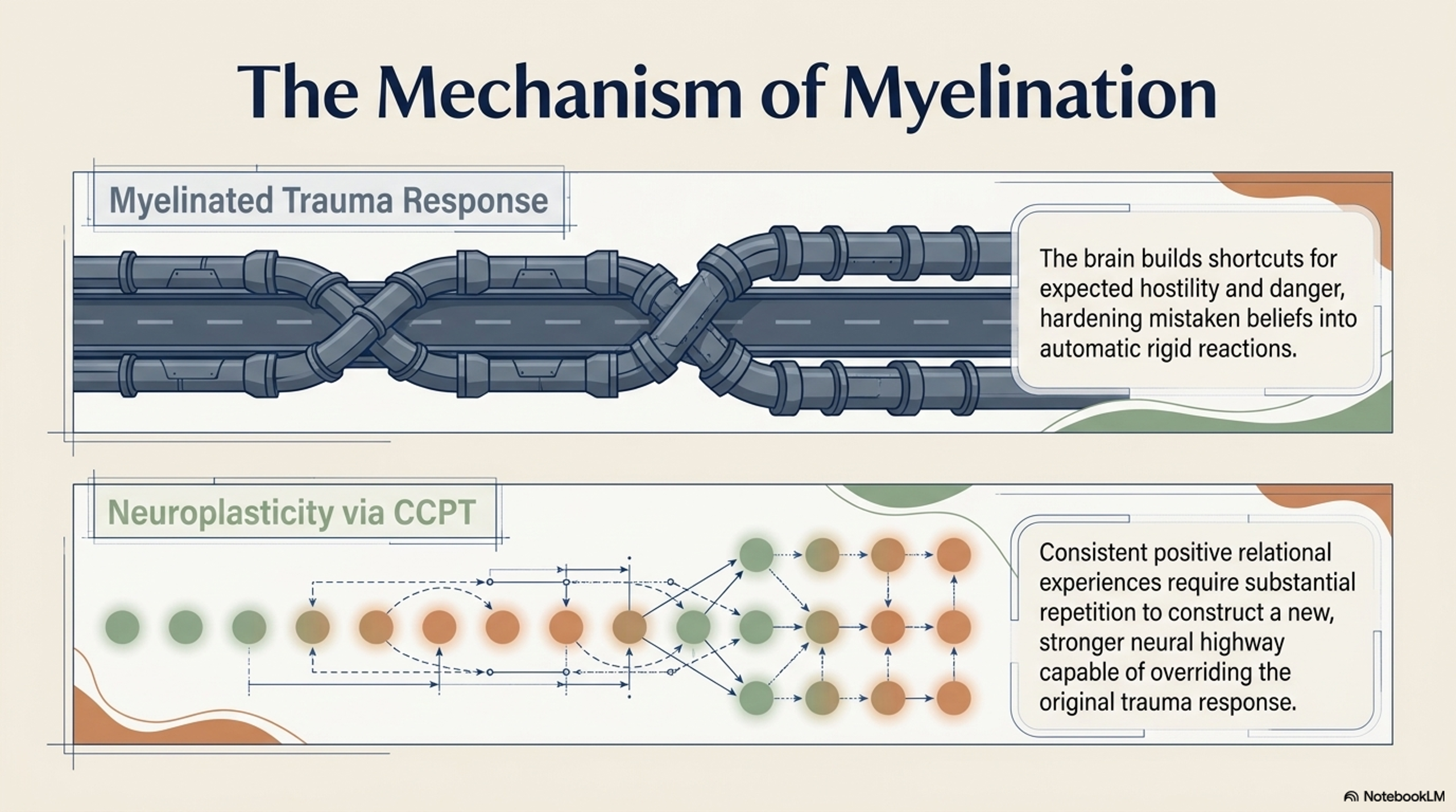
The developing brain is constantly "building roads" through myelination—a process where the brain creates efficient shortcuts for frequent responses. Unfortunately, if a child is raised in strife or neglect, the brain builds "highways" for mistaken beliefs, such as the idea that the world is inherently dangerous. Early intervention is critical because the "core brain" (the amygdala and hippocampus) develops much earlier than the rational upper brain. These danger sensors can "harden" response pathways before a child has the rational capacity to reconsider them. Intervening during peak neuroplasticity allows us to wire new, healthy pathways before these early maps of the world become fully embedded.
발달 중인 뇌는 수초화(Myelination)—뇌가 빈번한 반응을 위해 효율적인 지름길을 만드는 과정—를 통해 끊임없이 "길을 건설"하고 있습니다. 불행히도 아동이 불화나 방임 속에서 자라면, 뇌는 세상이 본질적으로 위험하다는 생각과 같은 오류 신념을 위한 "고속도로"를 건설하게 됩니다. 조기 개입이 중요한 이유는 "핵심 뇌"(편도체와 해마)가 이성적인 상부 뇌보다 훨씬 더 일찍 발달하기 때문입니다. 이러한 위험 감지기들은 아이가 그것들을 재고할 만한 이성적 능력을 갖추기 전에 반응 경로를 "굳어지게" 만들 수 있습니다. 신경 가소성(Neuroplasticity)이 정점에 달했을 때 개입하면, 이러한 초기 세계 지도가 완전히 고착되기 전에 새롭고 건강한 경로를 연결할 수 있습니다.
6. Polyvagal Safety—The Physiological "Green Light"
6. 다미주신경적 안전—생리학적 "녹색 불"
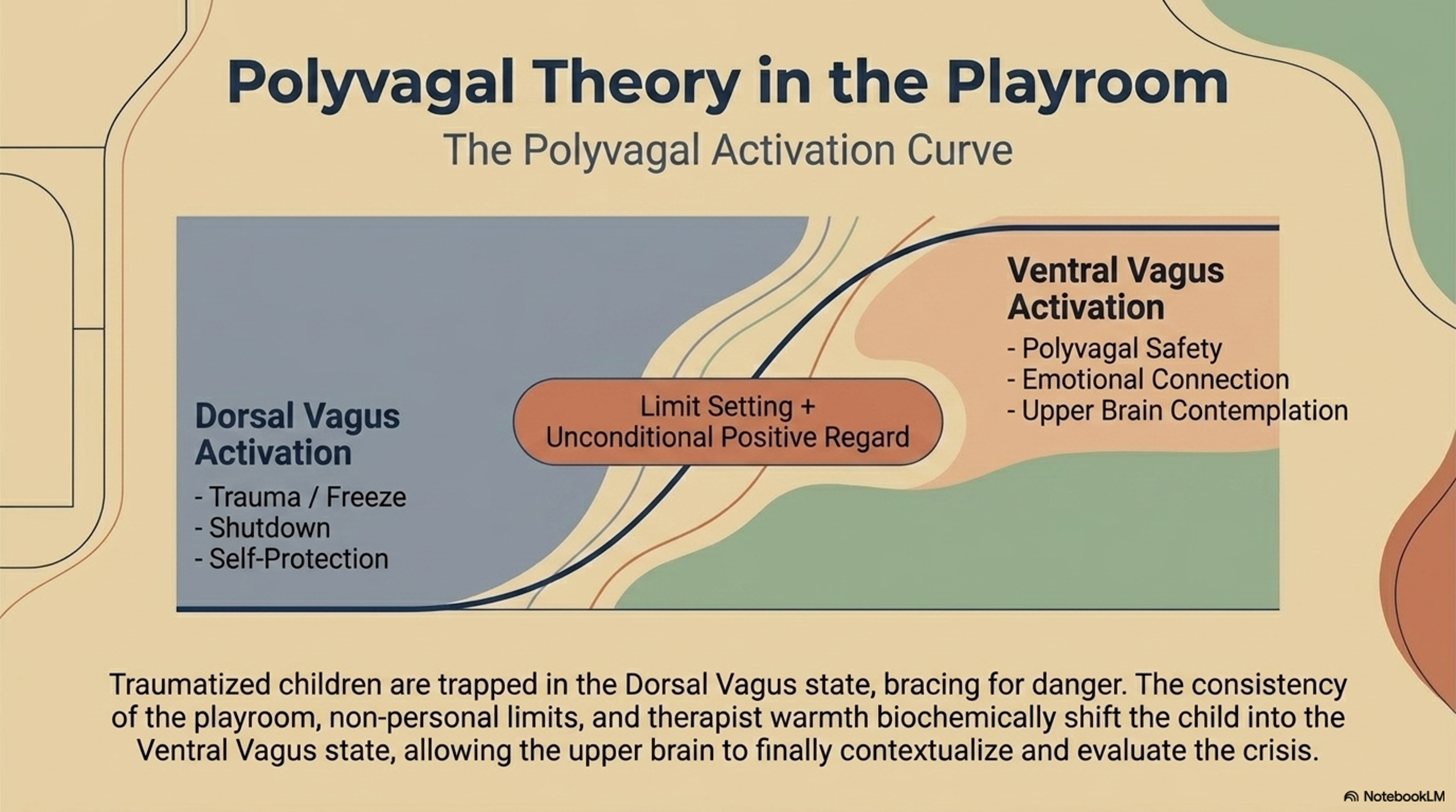
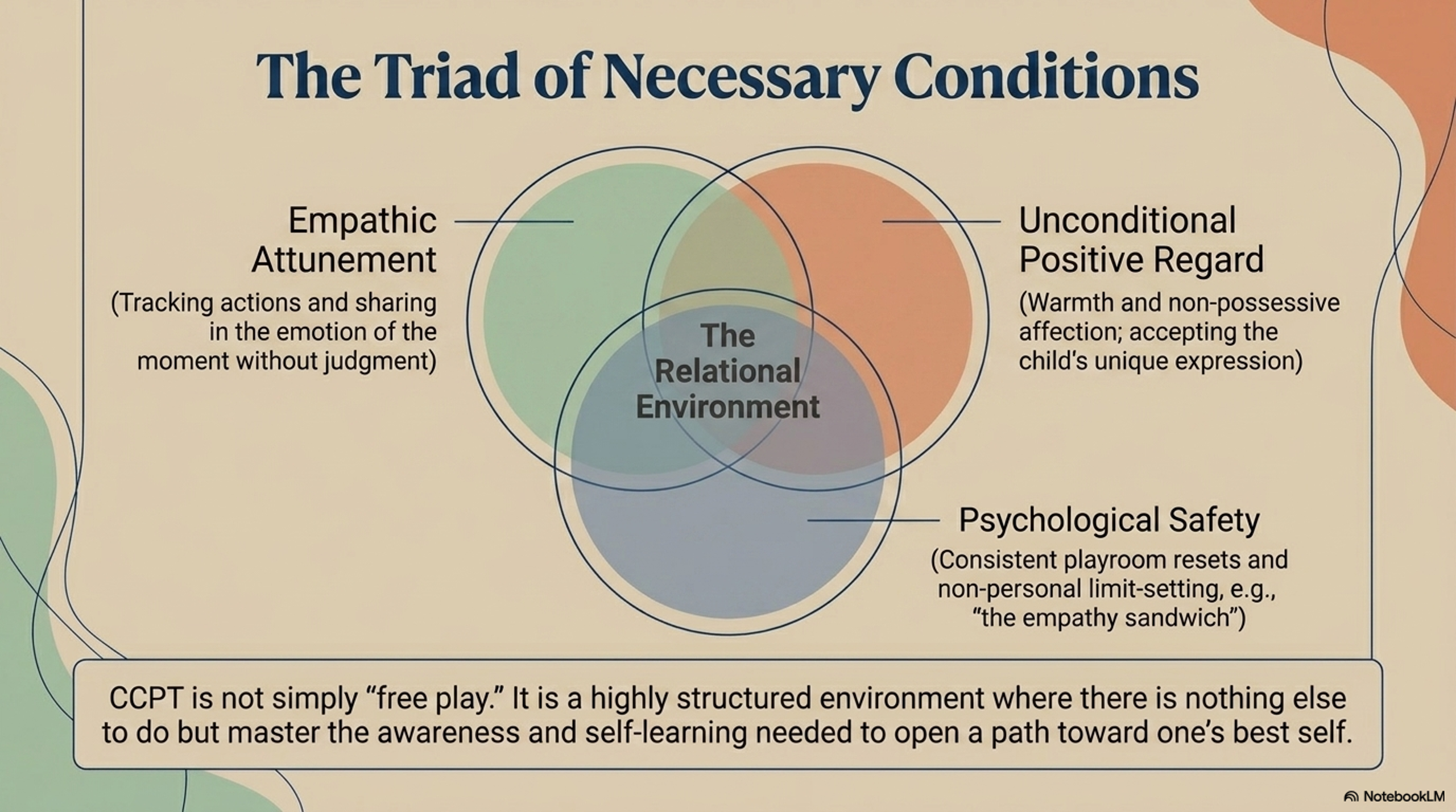
For healing to occur, a child's nervous system must switch from "Dorsal Vagus" activity (self-protection and pulling away) to "Ventral Vagus" activity (safety and connection). CCPT facilitates this state of "polyvagal safety" through a consistent environment and a specialized communication tool called the "Empathy Sandwich."
치유가 일어나려면 아동의 신경계가 "배측 미주신경(Dorsal Vagus)" 활동(자기 보호 및 물러나기)에서 "복측 미주신경(Ventral Vagus)" 활동(안전 및 연결)으로 전환되어야 합니다. CCPT는 일관된 환경과 "공감 샌드위치(Empathy Sandwich)"라고 불리는 특화된 의사소통 도구를 통해 이러한 "다미주신경적 안전(Polyvagal safety)" 상태를 촉진합니다.
Express empathy for the child's desire before stating the limit (e.g., "I know you really want to paint everything right now...").
제한을 설정하기 전에 먼저 아동의 욕구에 대해 공감을 표현합니다 (예: "지금 모든 곳에 그림을 정말 그리고 싶구나...").
State the limit non-personally so the child does not feel attacked (e.g., "But the wall is not for painting").
아동이 공격받는다고 느끼지 않도록 비인칭적으로 제한을 진술합니다 (예: "하지만 벽은 그림을 그리는 곳이 아니란다").
Express empathy for the child's reaction to the limit or provide an acceptable alternative to maintain connection.
연결감을 유지하기 위해 제한에 대한 아동의 반응에 공감을 표현하거나 받아들일 수 있는 대안을 제시합니다.
This specific sequence ensures the child feels heard even when behavior is corrected, keeping the child’s nervous system in a state of connection where emotional growth remains possible.
이 구체적인 순서는 행동이 수정될 때도 아이가 자신의 의견이 경청된다고 느끼게 정서적 성장이 가능한 연결 상태로 아이의 신경계를 유지해 줍니다.
7. The "Side Effect" of Academic Success
7. 학업적 성공이라는 "부작용"
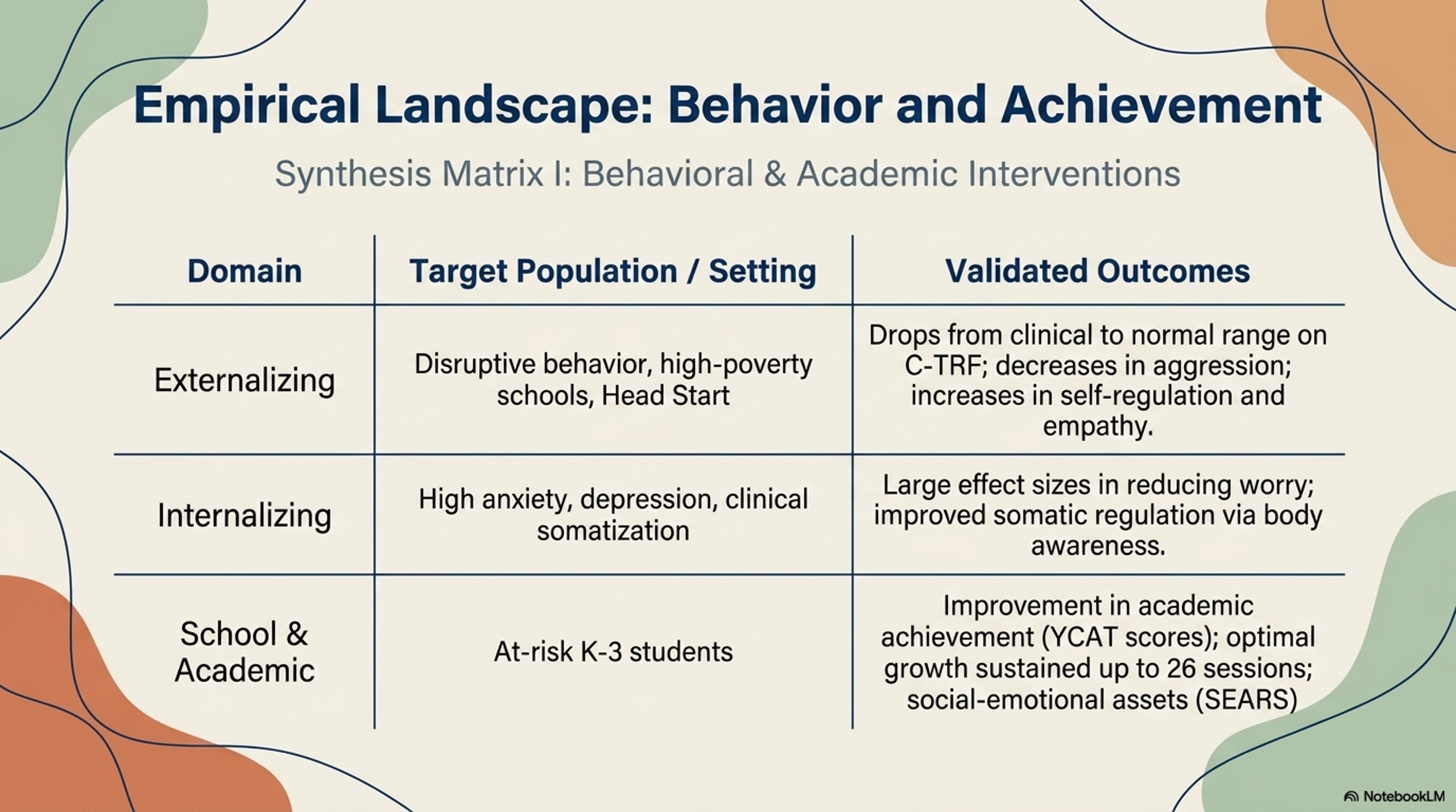
While CCPT focuses on emotional health, research by Blanco (2011) and Tucker (2020) demonstrates that academic growth is a consistent byproduct. When a child’s emotional roadblocks are removed, their ability to focus and self-regulate in the classroom naturally increases. Long-term data suggests that CCPT can significantly decrease the achievement gap for at-risk students over time. Academic success isn't something forced upon the child; it is the natural result of an "inside out" repair. Once a child feels safe and capable internally, their intellectual potential is finally free to flourish.
CCPT는 정서적 건강에 초점을 맞추지만, Blanco(2011)와 Tucker(2020)의 연구는 학업적 성장 역시 일관된 부산물임을 보여줍니다. 아동의 정서적 장애물이 제거되면 교실에서 집중하고 스스로를 조절하는 능력이 자연스럽게 향상됩니다. 장기 데이터에 따르면 CCPT는 시간이 지남에 따라 위기 학생들의 학업 성취도 격차를 크게 줄일 수 있습니다. 학업적 성공은 아이에게 강요되는 것이 아니라, "안에서 밖으로의" 회복이 가져오는 자연스러운 결과입니다. 아이가 내면에서 안전하고 유능하다고 느끼면, 그들의 지적 잠재력은 마침내 자유롭게 꽃을 피우게 됩니다.
8. Conclusion: A Forward-Looking Reflection
8. 결론: 미래를 향한 성찰
The evidence is clear: play is not a break from growth; it is the biologically essential engine of it. By respecting the "inside out" nature of healing and providing a state of polyvagal safety, we allow children to repave their internal maps for a lifetime of well-being. As our society becomes increasingly obsessed with early "productivity" and "results," we must reconsider our priorities. Are we providing our children with enough room to do the essential work of play? If we truly want to help them heal, we must be willing to put down the director's baton and pick up the companion's lantern.
증거는 명백합니다. 놀이는 성장으로부터의 휴식이 아니라, 생물학적으로 필수적인 성장의 엔진입니다. 치유의 "안에서 밖으로" 향하는 속성을 존중하고 다미주신경적 안전 상태를 제공함으로써, 우리는 아이들이 평생의 웰빙을 위해 내면의 지도를 다시 닦아 나갈 수 있도록 돕습니다. 우리 사회가 조기 "생산성"과 "성과"에 점점 더 집착함에 따라, 우리는 우선순위를 재고해야 합니다. 우리는 아이들에게 놀이라는 필수적인 작업을 할 수 있는 충분한 공간을 제공하고 있습니까? 우리가 진정으로 그들의 치유를 돕고 싶다면, 지시자의 지휘봉을 내려놓고 동반자의 등불을 기꺼이 들어 올려야 할 것입니다.