The Sacred Mundane: Why the Future is a Foolish Distraction
거룩한 일상: 미래라는 미련한 방해물에 대하여

1. The Hook: The Anxiety of the "Perfect" Path
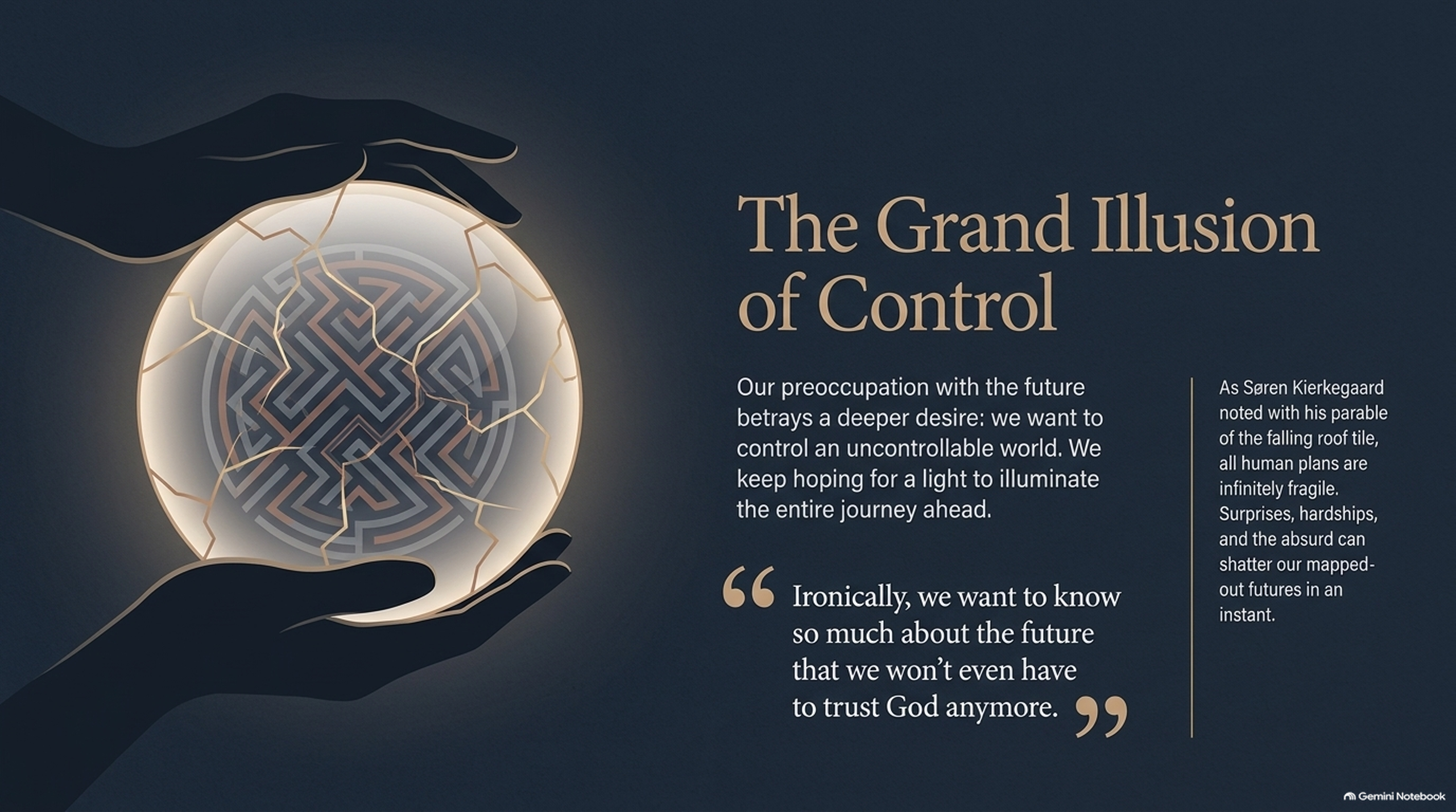
In our contemporary world, we are often haunted by a specific brand of decision paralysis. We treat our lives like a high-stakes puzzle where one misplaced piece might ruin the entire picture. This pressure is most acute when we discuss "destiny" or "the will of God." We operate under the assumption that there is a single, narrow path intended for us, and our primary job is to find it before we accidentally ruin our lives.
For many years, I lived under this weight, certain that my "perfect path" was medicine. But life has a way of shattering our maps. In the fall of 1991, a drunk driver collided with my family's minivan, killing my wife Lynda, my mother, and my daughter. In an instant, the "ideal life" I thought was God’s will evaporated. This tragedy forced me to realize that our conventional understanding of "God's will" is often a source of unnecessary anxiety—a celestial trap rather than a guiding light.
1. 도입: "완벽한" 경로에 대한 불안
현대 사회에서 우리는 특정 종류의 결정 장애에 종종 시달립니다. 우리는 자신의 삶을 단 하나의 조각이라도 잘못 놓치면 그림 전체를 망칠 수 있는 위험천만한 맞춤판(퍼즐)처럼 대합니다. 이러한 압박감은 우리가 "운명"이나 "하나님의 뜻"을 논할 때 가장 극심해집니다. 우리는 자신에게 주어진 단 하나의 좁은 길이 존재하며, 실수로 삶을 망치기 전에 그 길을 찾아내는 것이 우리의 첫째 과업이라는 전제 하에 행동합니다.
오랫동안 나는 나의 "완벽한 길"이 의학이라고 확신하며 이 무게감 아래 살았습니다. 그러나 삶은 우리가 그린 지도를 산산조각 내는 습성이 있습니다. 1991년 가을, 음주 운전자가 우리 가족의 승합차를 받으면서 내 아내 린다(Lynda)와 어머니, 그리고 딸이 목숨을 잃었습니다. 한순간에 내가 하나님의 뜻이라고 믿었던 "이상적인 삶"은 증발해 버렸습니다. 이 비극은 우리가 전통적으로 이해해 온 "하나님의 뜻"이 흔히 불필요한 불안의 출처이자, 인도하는 빛이라기보다는 하늘의 덫에 불과하다는 사실을 깨닫게 해 주었습니다.
2. Takeaway 1: The Myth of the Celestial Maze
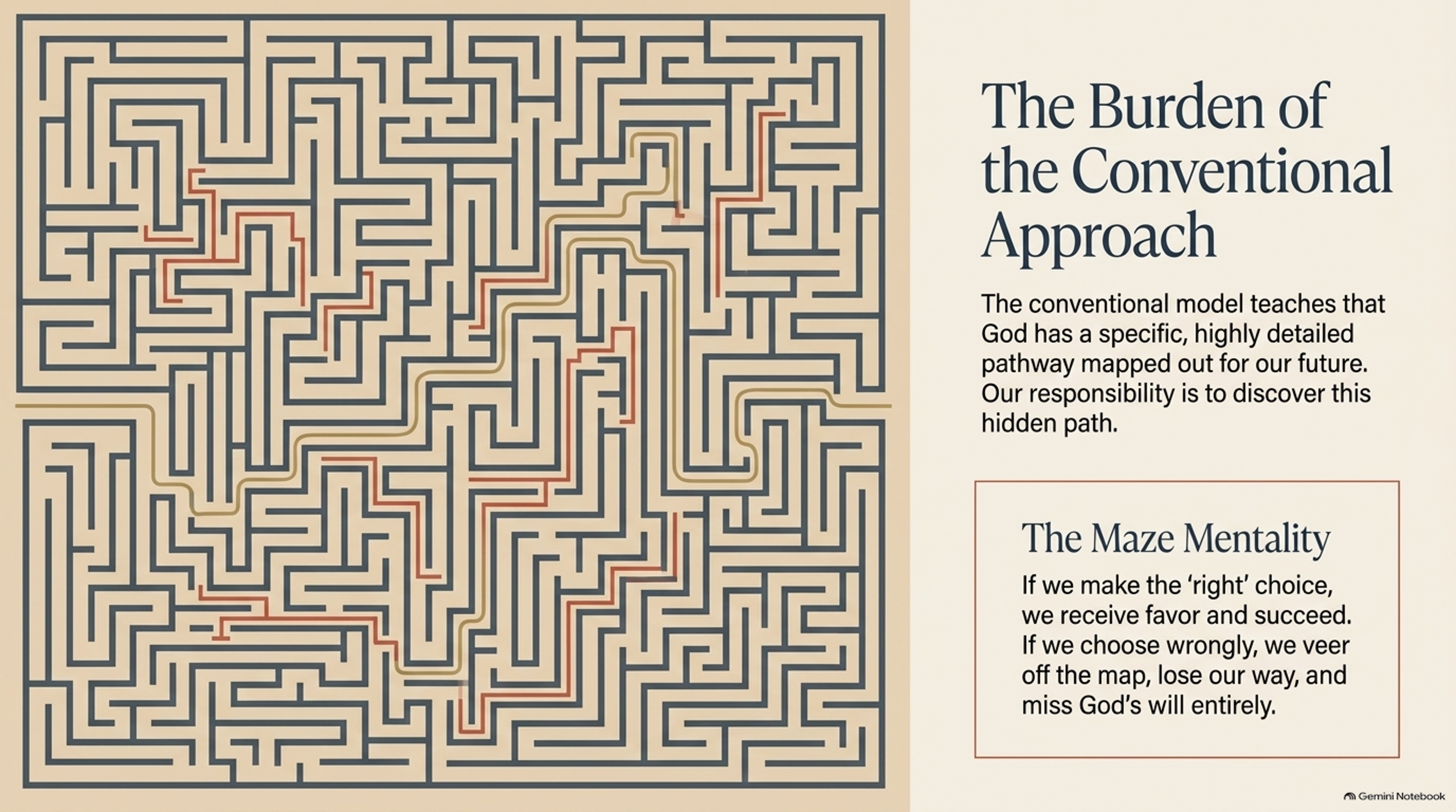
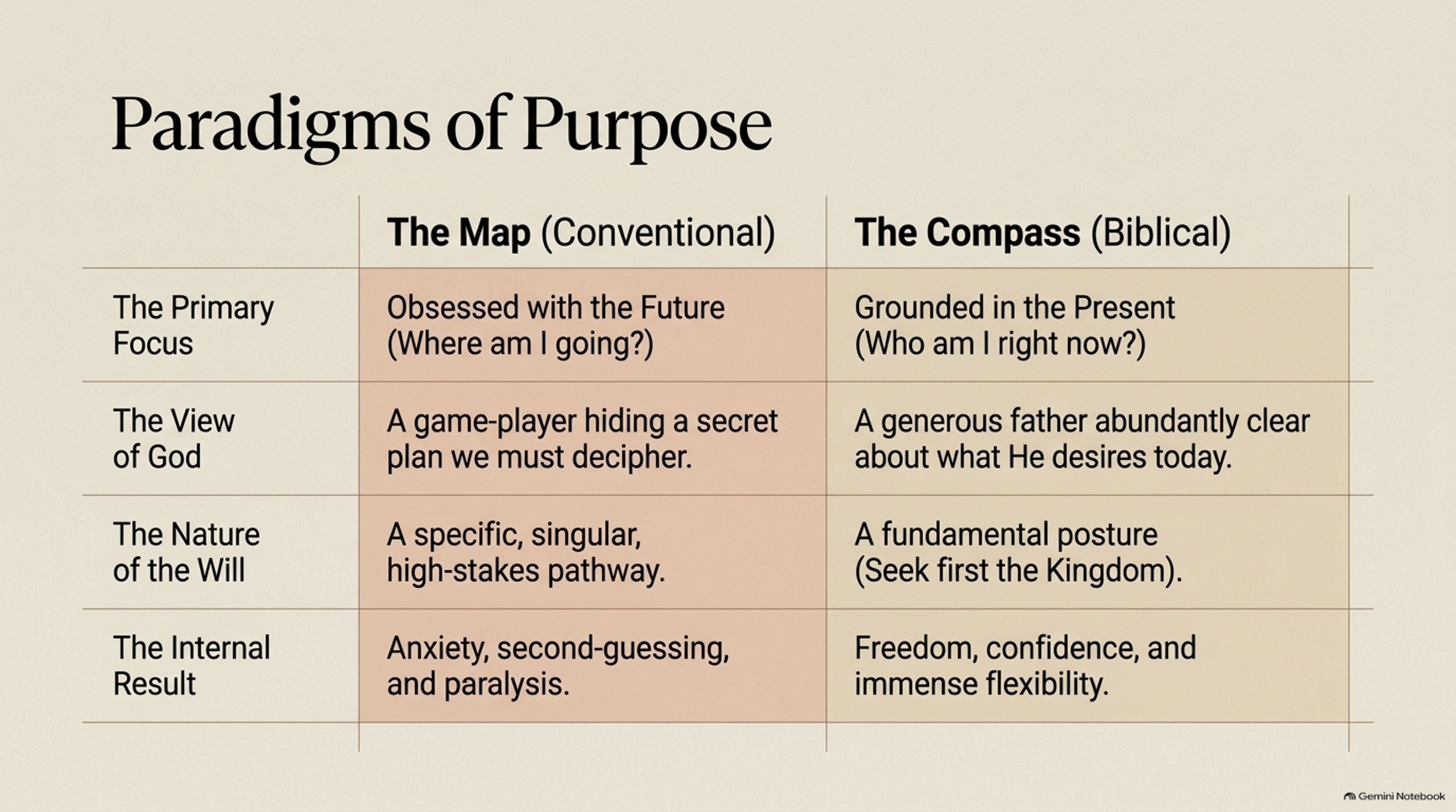
The "Conventional Approach" to spirituality suggests that God’s will is a hidden map or a complex maze with only one correct exit. In this view, God has laid out a specific pathway, and it is our heavy responsibility to decode it. This perspective is inherently weighted with dread; if every other path is a "dead end," then one wrong turn could leave us lost forever in an incomprehensible maze.
This approach yields a surprising and painful irony: in our intense search for divine guidance, we become profoundly self-centered. When we view God as a cosmic architect of a secret maze, we become, as I eventually realized, "as self-absorbed as a child standing in front of a mirror." We become so preoccupied with our own "divine destiny" that we become unpleasant to be around and oblivious to the world moving around us.
2. 첫 번째 교훈: 하늘 미로라는 신화
영성에 대한 "전통적인 접근법"은 하나님의 뜻이 숨겨진 지도이거나 단 하나의 올바른 출구만 존재하는 복잡한 미로라고 제시합니다. 이 관점에 따르면 하나님은 특정 경로를 마련해 두셨고, 이를 해독하는 것은 우리의 무거운 책임입니다. 이 시각은 본질적으로 두려움의 무게를 안고 있습니다. 다른 모든 길이 "막다른 골목"이라면, 한 번의 잘못된 선택으로 이해할 수 없는 미로 속에 영원히 갇혀 버릴 수 있기 때문입니다.
이러한 접근법은 놀랍고도 고통스러운 역설을 낳습니다. 신성한 인도를 간절히 구하는 과정에서 우리는 극도로 자기중심적으로 변하게 됩니다. 하나님을 비밀 미로를 설계한 우주적 건축가로 바라볼 때, 내가 결국 깨달았듯 우리는 "거울 앞에 선 아이만큼이나 자아에 몰두"하게 됩니다. 자신의 "신성한 운명"에 지나치게 사로잡힌 나머지, 타인에게 불쾌한 존재가 되고 주변에서 일어나는 세상을 인식하지 못하게 됩니다.
3. Takeaway 2: God Isn't Playing Hide-and-Seek
The "hidden map" theory implies a God who acts like a cosmic trickster, concealing information to test our worthiness. But a closer look at the nature of a loving Creator suggests something entirely different. Consider a parent playing hide-and-seek with their children. A parent doesn't hide to frustrate or lose the child; they provide "squeaks or hoots" to ensure they are discovered. The joy is in the connection, the being found.
I realized this while playing with my own children: "I never once wanted to hide so well that they would never find me, because the joy of the game came in being found, not in hiding." If human parents delight in being found, we must assume the Creator is not playing games to frustrate us. Divine clarity is not a reward for solving a puzzle; it is provided exactly where and when it is most needed.

3. 두 번째 교훈: 하나님은 숨바꼭질을 하지 않으신다
"숨겨진 지도" 이론은 하나님을 우리의 자격을 시험하기 위해 정보를 숨기는 우주적 사기꾼처럼 묘사합니다. 그러나 사랑이 많으신 창조주의 본성을 자세히 들여다보면 완전히 다른 모습을 발견하게 됩니다. 자녀와 숨바꼭질을 하는 부모를 생각해 보십시오. 부모는 아이를 좌절시키거나 잃어버리기 위해 숨지 않습니다. 부모는 아이가 자신을 찾을 수 있도록 "소리나 신호"를 보냅니다. 기쁨은 관계 맺음과 발견됨에 있습니다.
나 역시 내 아이들과 놀아주면서 이를 깨달았습니다. "나는 아이들이 나를 절대 찾지 못하도록 숨고 싶었던 적이 단 한 번도 없었다. 왜냐하면 게임의 기쁨은 숨는 데 있는 것이 아니라 발견되는 데 있었기 때문이다." 인간 부모조차 발견되는 것을 기뻐한다면, 창조주께서 우리를 좌절시키려고 장난을 치고 계시지 않음을 인정해야 합니다. 신성한 명확성은 퍼즐을 푼 것에 대한 포상이 아니라, 그것이 가장 필요한 장소와 시점에 정확히 제공됩니다.
4. Takeaway 3: The "Fatal Mistake" of Small Responsibilities
As a freshman at Hope College, I was certain my future lay in medicine. I viewed the required liberal arts courses—reading Dostoyevsky, writing persuasive essays—as a "fatal mistake" or an "inconvenience," much like doing chores on a hot summer day. I was so focused on a future vocation that I neglected the present responsibility of my writing class.
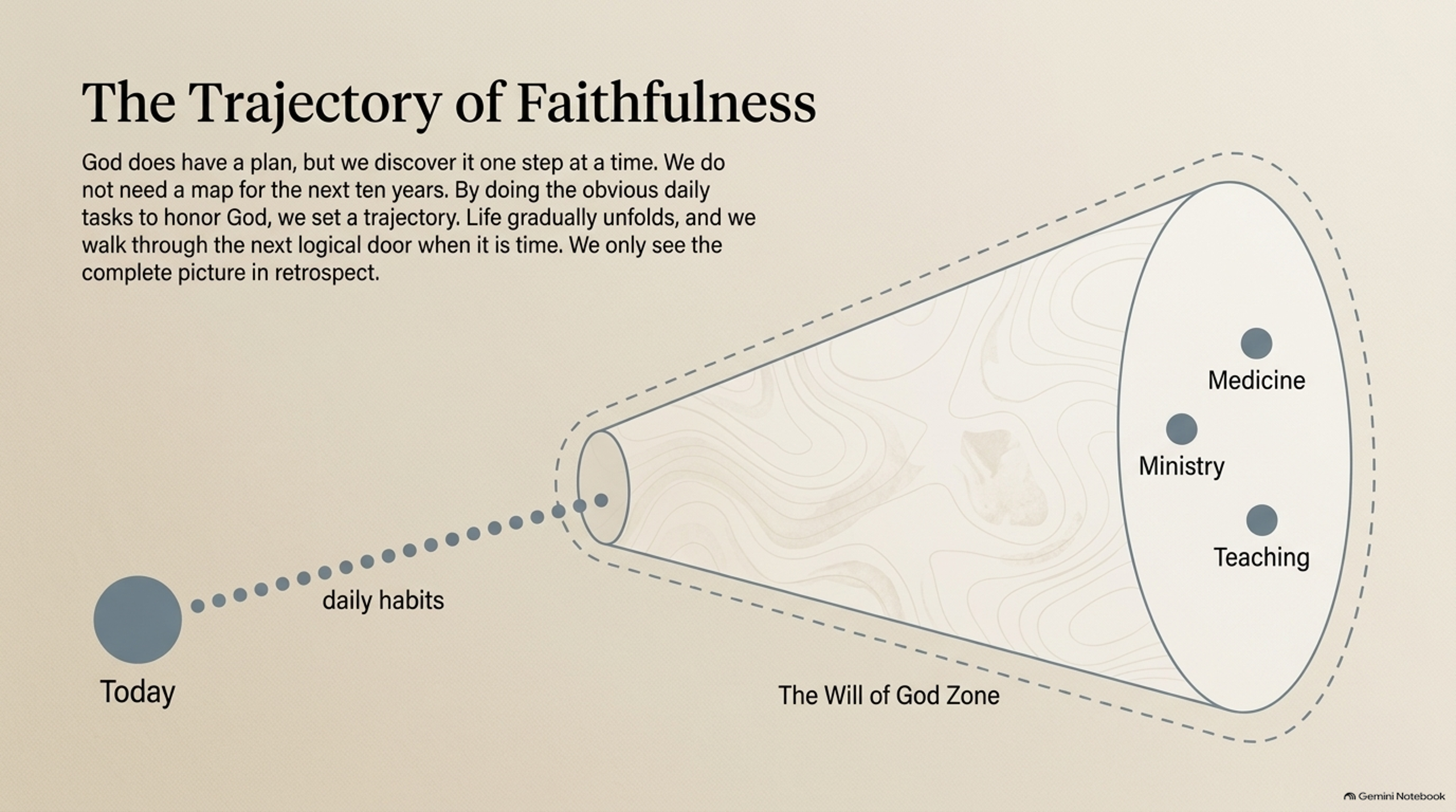
This reveals a common human error: we assume the will of God is only found in "big" future decisions. In reality, our preoccupation with the future is often a "foolish distraction" from the present. The mundane responsibility—the term paper, the household chore, the daily job—is where our character is truly formed. Those writing skills I once disdained became the cornerstone of a vocation I never imagined. God's will was not in my medical school application; it was in the essay due on Monday morning.
4. 세 번째 교훈: 사소한 책임이라는 "치명적 실수"
호프 대학교(Hope College) 1학년 시절, 나는 나의 미래가 의학에 있다고 확신했습니다. 나는 도스토옙스키를 읽고 설득력 있는 글을 쓰는 교양 필수 과목들을 뜨거운 여름날 집안일을 하는 것처럼 "치명적인 실수"나 "불편함"으로 여겼습니다. 미래의 직업에만 마음이 빼앗긴 나머지, 글쓰기 수업이라는 현재의 책임을 소홀히 했던 것입니다.
이는 인간이 흔히 범하는 오류를 보여줍니다. 우리는 하나님의 뜻이 미래의 "거대한" 결정 속에서만 발견된다고 가정합니다. 그러나 실제로 미래에 집착하는 것은 흔히 현재로부터 우리를 떼어놓는 "미련한 방해물"일 뿐입니다. 기말 보고서, 집안일, 일상적인 직무와 같은 평범한 책임이야말로 우리의 인격이 진정으로 형성되는 장소입니다. 한때 내가 경멸했던 그 글쓰기 기술은 내가 상상조차 하지 못했던 소명의 초석이 되었습니다. 하나님의 뜻은 의과대학 지원서에 있었던 것이 아니라, 월요일 아침까지 제출해야 했던 수필 속에 있었습니다.

5. Takeaway 4: Why We Shouldn't Want to See the Future
Humanity has a long history of seeking soothsayers and signs to peer into tomorrow, hoping for a security that bypasses the need for trust. Yet the Book of James describes life as a "mist" that appears briefly and vanishes, warning us against the "boasting" of our own plans. James offers a vital theological disclaimer: "If the Lord wishes" should be attached to every plan we make.
There is a profound mercy in our blindness. If we foresaw our future suffering—as I could not have foreseen the loss of my family—we would "recoil" in terror, unable to grow through the experience. Conversely, if we foresaw a future of ease, we would become "dull and complacent." We are not meant to see the end of the road; we are meant to trust the One who walks it with us, acknowledging that all knowledge of the future is conditional on His grace.
5. 네 번째 교훈: 우리가 미래를 보려 해서는 안 되는 이유
인류는 신뢰의 과정을 건너뛰는 안전함을 바라며 내일을 들여다보기 위해 점술가와 징조를 찾아 헤맨 오랜 역사를 지니고 있습니다. 그러나 야고보서는 삶을 잠시 나타났다 사라지는 "안개"로 묘사하며, 우리 자신의 계획을 "자랑"하는 것에 대해 경고합니다. 야고보서는 다음과 같은 핵심적인 신학적 조건절을 제시합니다. 즉, 우리가 세우는 모든 계획에는 "주님의 뜻이면"이라는 표현이 붙어야 한다는 것입니다.
우리의 눈이 멀어 있다는 사실에는 깊은 은혜가 담겨 있습니다. 다가올 고통을 미리 본다면(내가 가족을 잃을 것을 예견할 수 없었던 것처럼), 우리는 두려움에 "흠칫 놀라 물러서며" 그 경험을 통해 성장하지 못할 것입니다. 반대로 편안한 미래를 미리 본다면, 우리는 "둔감하고 안일해질" 것입니다. 우리는 길의 끝을 보게끔 창조된 것이 아니라, 미래에 대한 모든 지식이 그분의 은혜에 매여 있음을 인정하며 우리와 함께 그 길을 걸으시는 분을 신뢰하도록 창조되었습니다.
6. Takeaway 5: The Freedom of "Multiple Pathways"
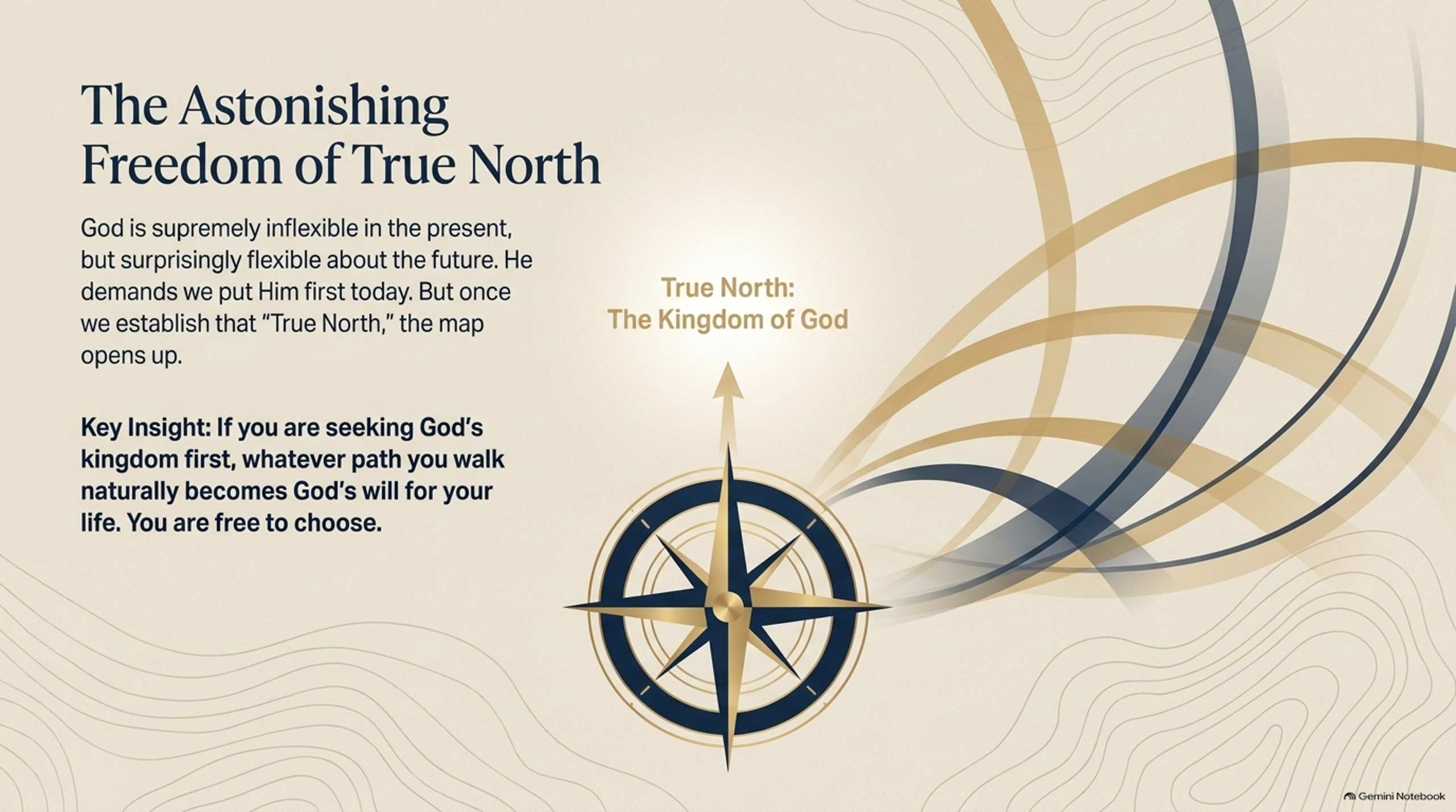
The most startling conclusion of a present-focused life is that there isn't just one right person to marry or one right career to choose. When we prioritize a "right heart" over a "right path," we find "astonishing freedom." If we seek God’s kingdom first, we find that God is surprisingly flexible about the future because He is supremely inflexible about our devotion in the present.
The "simple will of God" is rarely found in a crystal ball; it is found in:
- Treating an unkind coworker with respect.
- Loving a spouse even after a heated argument.
- Serving the needy with a "giant platter of food."
- Remaining a diligent student in a "boring" class.
6. 다섯 번째 교훈: "다양한 경로"가 주는 자유
현재에 집중하는 삶이 가져다주는 가장 놀라운 결론은, 결혼해야 할 단 한 사람의 올바른 상대나 선택해야 할 단 하나의 올바른 직업만 존재하는 것은 아니라는 점입니다. 우리가 "올바른 경로"보다 "올바른 마음"을 우선시할 때, 우리는 "놀라운 자유"를 발견하게 됩니다. 우리가 먼저 하나님의 나라를 구한다면, 하나님께서는 현재 우리의 헌신에 대해서는 타협이 없으신 반면, 미래에 대해서는 놀라울 정도로 유연하시다는 사실을 깨닫게 됩니다.
"하나님의 단순한 뜻"은 수정구슬 속에서 찾아볼 수 없으며, 다음과 같은 일상 속에서 발견됩니다:
- 불친절한 동료를 존중으로 대하는 것.
- 격렬한 다툼 후에도 배우자를 사랑하는 것.
- "푸짐한 음식 한 상"으로 가난한 이들을 섬기는 것.
- "지루한" 수업 시간에도 성실한 학생으로 남는 것.
7. Takeaway 6: The "Iron Cage" of Modern Busyness
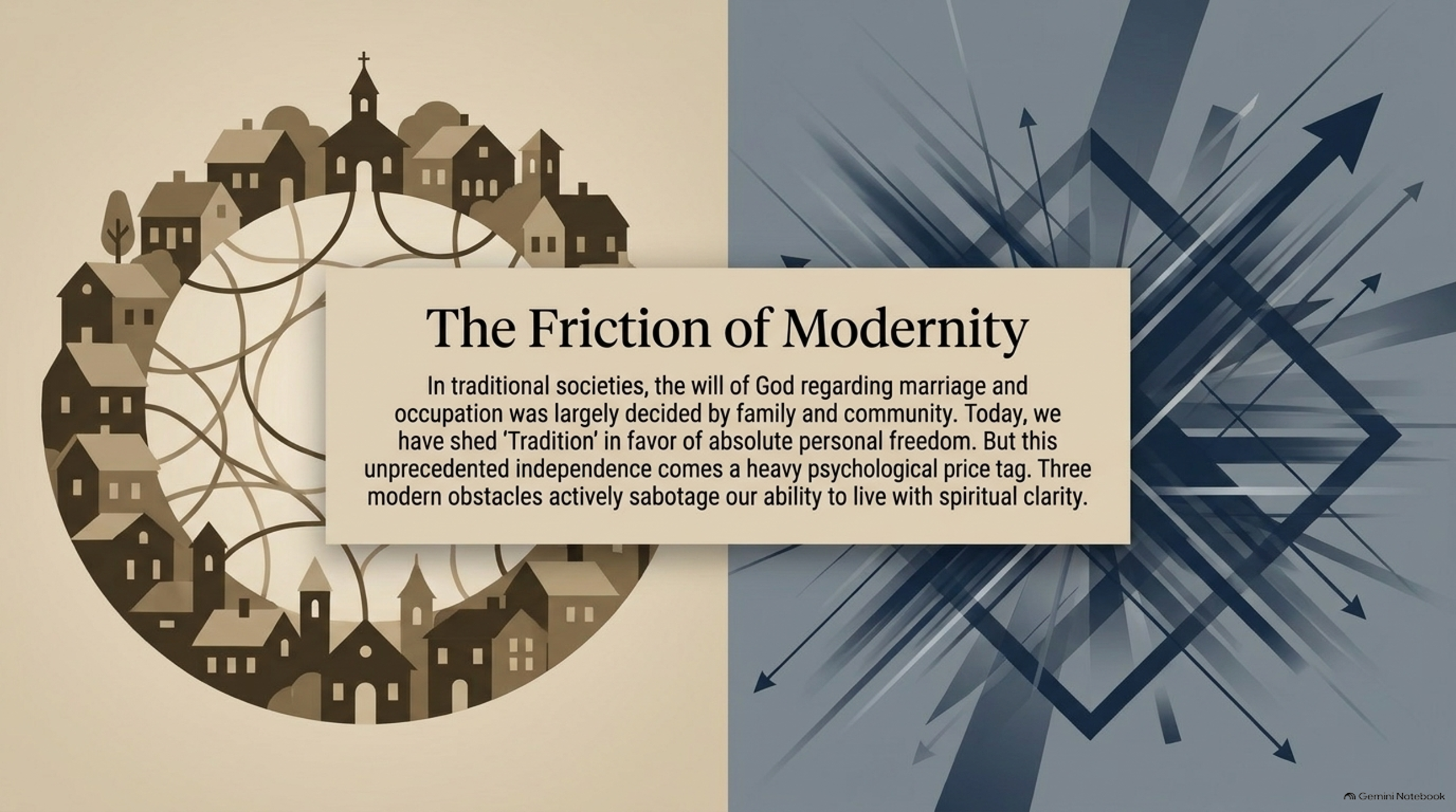
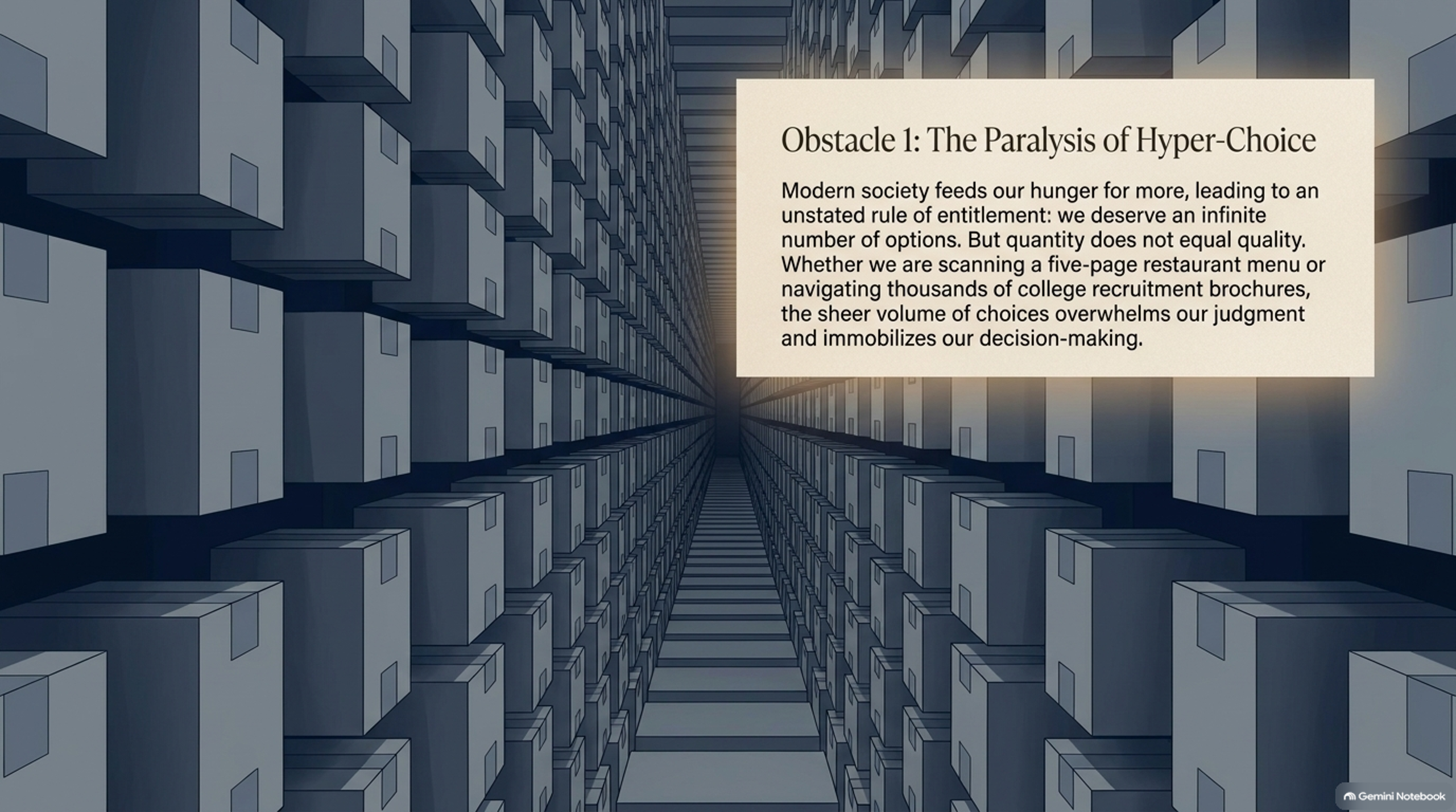
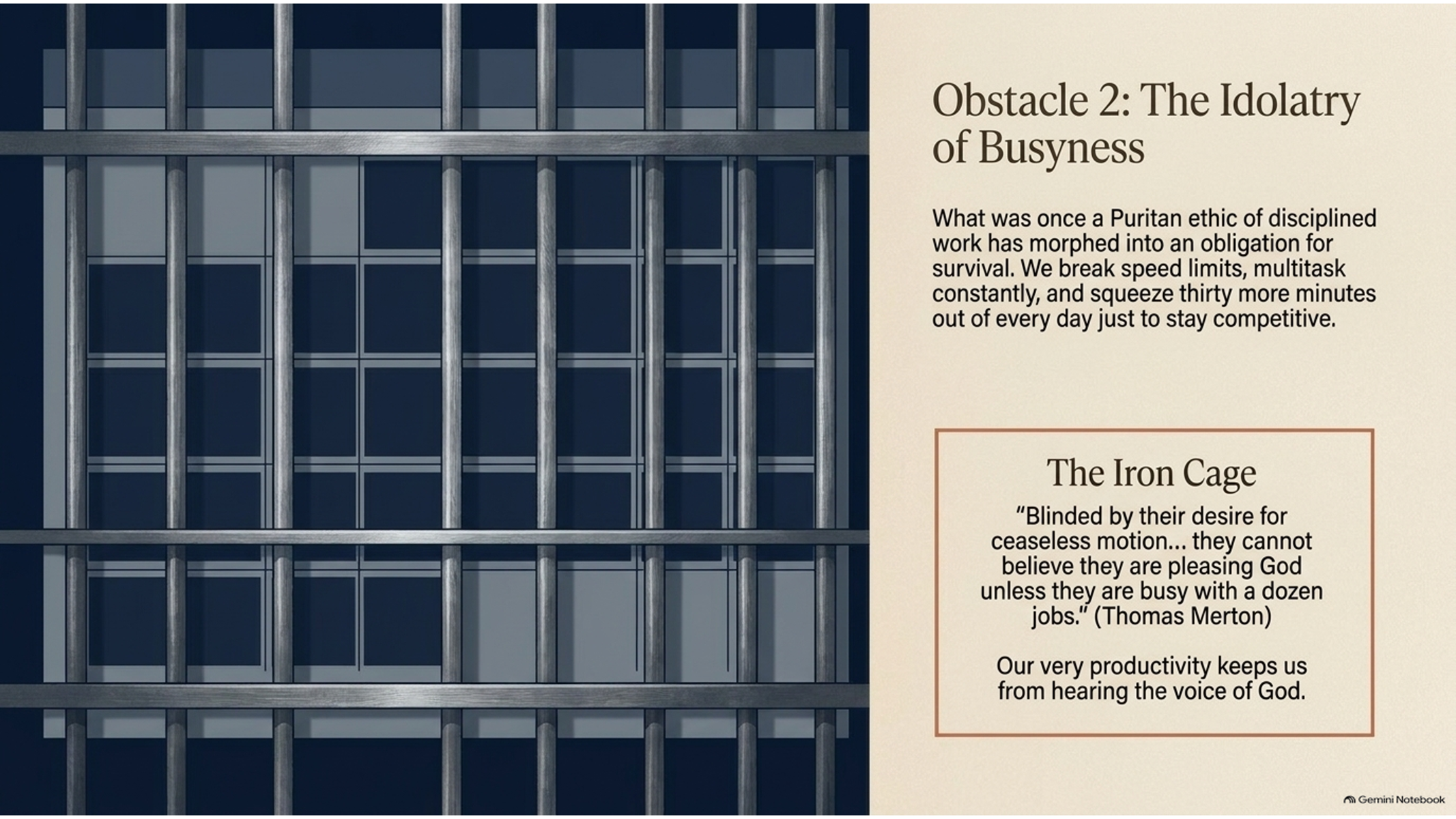
The 21st century presents a "Super Wal-Mart" of options that often immobilizes our judgment. Max Weber identified this as the "iron cage." He noted that for the Puritans, work and external goods were meant to be a "light cloak" that could be thrown aside. However, in our modern culture of competition and "idolatry of busyness," that cloak has hardened into a cage.
We no longer work out of a "want" for a calling; we are "forced" to work to stay competitive. This "crude hunger for results" creates a noise that prevents us from hearing God. We confuse quantity of options with quality of life, failing to see that productivity is not a virtue if it costs us our soul.
7. 여섯 번째 교훈: 현대적 분주함이라는 "쇠창살 가옥(Iron Cage)"
21세기는 우리의 판단력을 자주 마비시키는 옵션들의 "슈퍼 월마트"를 제공합니다. 막스 베버(Max Weber)는 이를 "쇠창살 가옥(철의 감옥)"이라 칭했습니다. 그는 청교도들에게 노동과 외적인 재화가 언제든 벗어 던질 수 있는 "가벼운 외투"에 불과했다고 지적했습니다. 그러나 경쟁과 "분주함이라는 우상숭배"로 가득 찬 현대 문화 속에서, 그 외투는 경직되어 감옥으로 변해 버렸습니다.
우리는 더 이상 소명에 대한 "열망"으로 일하지 않으며, 경쟁력을 유지하기 위해 일하도록 "강요"받습니다. 이러한 "성과에 대한 조잡한 갈망"은 하나님의 소리를 듣지 못하게 방해하는 소음을 만들어 냅니다. 우리는 옵션의 수량과 삶의 질을 혼동하며, 내면의 영혼을 잃어버린다면 생산성은 결코 덕목이 될 수 없음을 깨닫지 못합니다.
8. Takeaway 7: We Only Discern the Path in Retrospect
Life is best understood through a "room to room" metaphor. We walk through a door into one room, and only over time do we recognize which door to take next. If clear guidance is lacking, we are free to simply choose another door and walk through it, trusting that God is "inside" the will of those who seek Him.
We only see the "intended course" of our lives by looking backward. The pattern of God's providence is rarely visible while we are staring forward into the fog of the future. It is a story that only makes sense in retrospect, where we see that the life we actually lived—the one we often thought was off-course—was exactly what was intended.
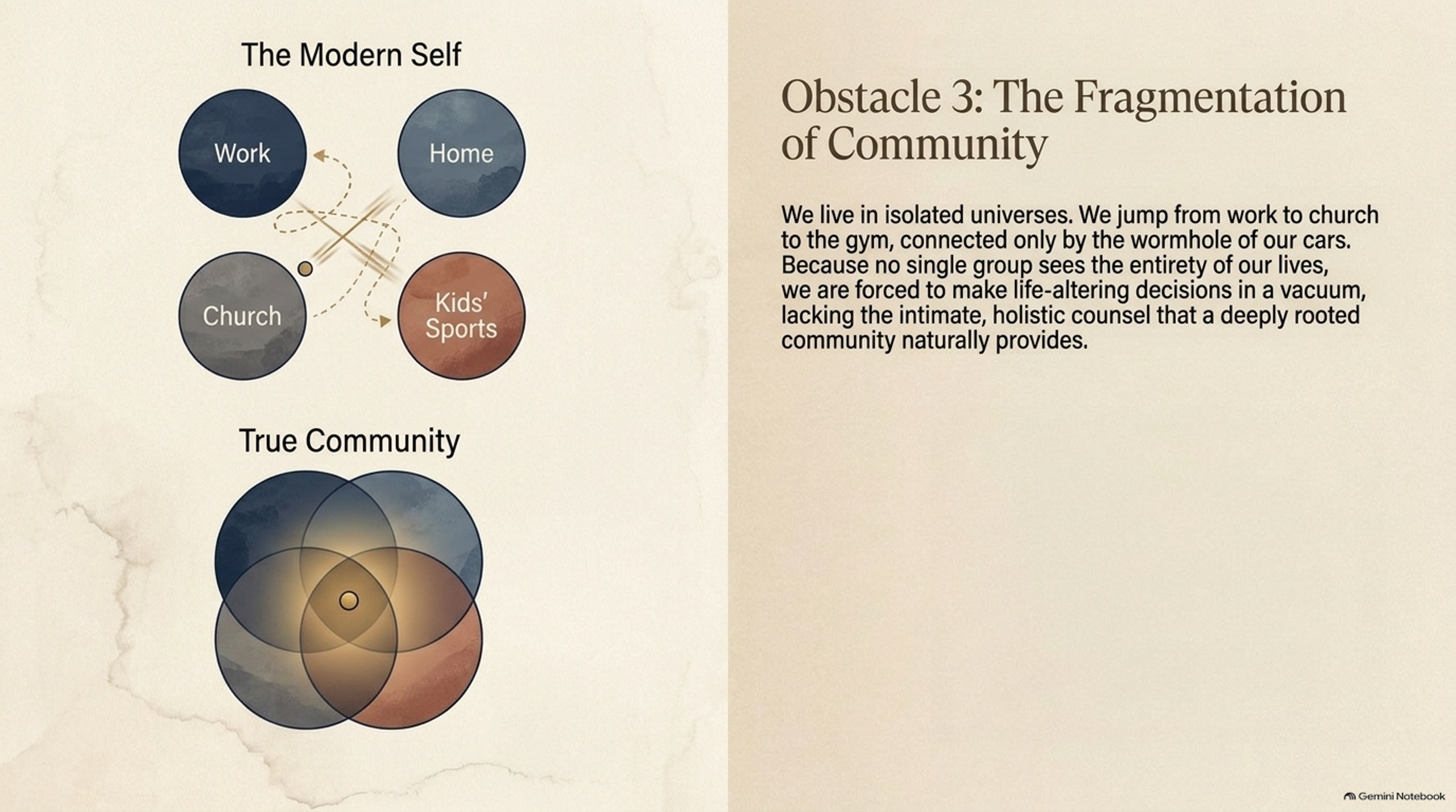
8. 일곱 번째 교훈: 경로는 돌아볼 때만 분별할 수 있다
삶은 "방에서 방으로" 이동하는 비유를 통해 가장 잘 이해할 수 있습니다. 우리는 문을 지나 하나의 방으로 들어가며, 시간이 흐른 뒤에야 다음에 어떤 문으로 들어가야 할지 깨닫게 됩니다. 명확한 인도가 부족하다면, 우리는 단순히 다른 문을 선택해 걸어 들어갈 자유가 있습니다. 자기를 찾는 이들의 의지 "안에" 하나님이 계심을 신뢰하면서 말입니다.
우리는 뒤돌아볼 때에만 우리 삶의 "의도된 과정"을 보게 됩니다. 하나님의 섭리의 패턴은 미래라는 안개를 정면으로 바라보고 있는 동안에는 거의 보이지 않습니다. 그것은 돌아볼 때에만 비로소 의미가 통하는 이야기이며, 그제야 우리가 실제로 살아온 삶—우리가 종종 궤도를 벗어났다고 생각했던 그 삶—이 정확히 의도되었던 삶이었음을 깨닫게 됩니다.
9. Conclusion: The Power of "Now"
The weightiest choice you will ever make is not between two jobs or two cities. The most significant choice is between two ways of life: one lived for God, and one lived against Him. This is the "easy" life of complete devotion, though the initial step of submission—taking up the yoke—may feel like the most difficult step of all.
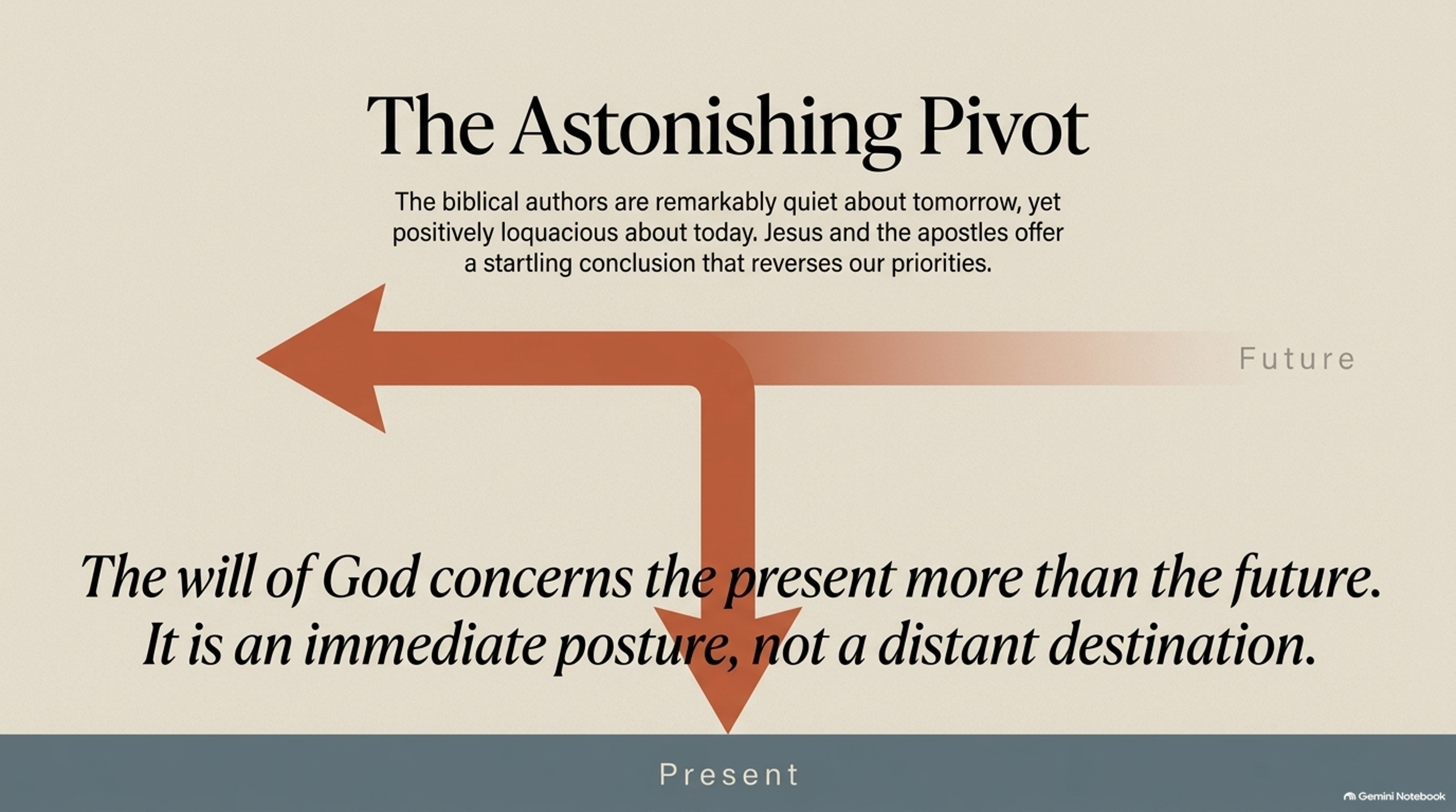
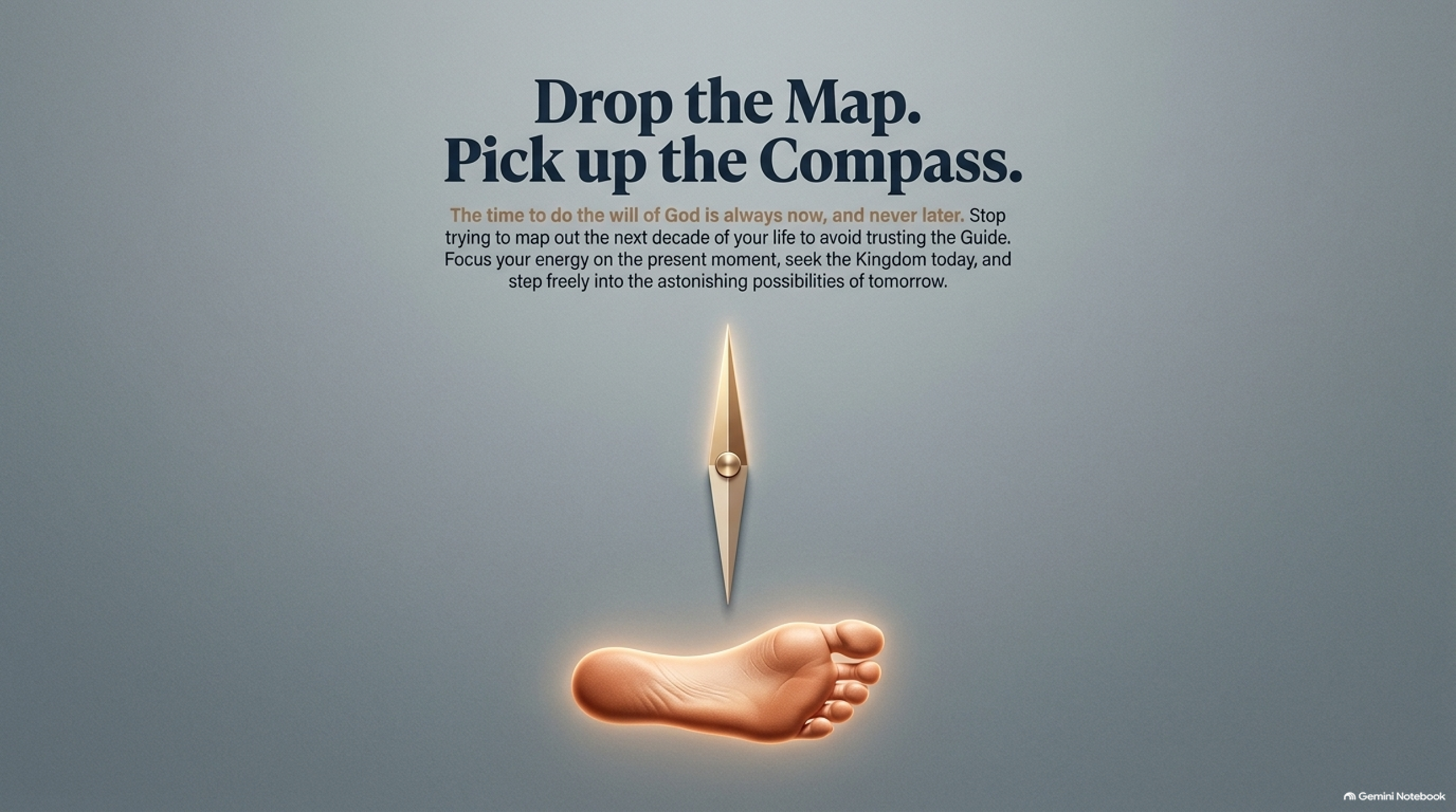
When we shift our focus from a future destination to a present way of life, the pressure of "finding our purpose" evaporates. We are already inside the will of God the moment we decide to seek Him in the now. The "intended course" is found one step at a time, in the quiet faithfulness of today.
What "mundane" task or simple responsibility are you overlooking today because you are too busy searching for a "grand" tomorrow? "If the Lord wishes," tomorrow will take care of itself. For now, there is only today.
9. 결론: "지금"이라는 순간의 힘
당신이 내리게 될 가장 무거운 선택은 두 개의 직업이나 두 개의 도시 사이의 선택이 아닙니다. 가장 중요한 선택은 삶의 두 가지 방식, 즉 하나님을 위해 사는 삶과 하나님을 거스르는 삶 사이의 선택입니다. 순종의 첫걸음—멍에를 메는 것—이 가장 힘든 단계처럼 느껴질지라도, 이것이야말로 완전한 헌신이 가져다주는 "쉬운" 삶입니다.
우리가 초점을 미래의 목적지에서 현재의 삶의 방식으로 돌릴 때, "나의 목적을 찾아야 한다"는 압박감은 증발해 버립니다. 우리가 '지금' 이 순간 그분을 찾기로 결정하는 바로 그 순간, 우리는 이미 하나님의 뜻 안에 있습니다. "의도된 과정"은 오늘이라는 조용한 성실함 속에서, 한 번에 한 걸음씩 발견됩니다.
"창대한" 내일을 찾느라 너무 바쁜 나머지, 오늘 당신이 간과하고 있는 "평범한" 과업이나 사소한 책임은 무엇입니까? "주님의 뜻이면," 내일 일은 내일이 알아서 다룰 것입니다. 지금 우리에게 주어진 것은 오직 오늘뿐입니다.
'정신건강상담_Mental Health Counseling > [진로상담] Career Counseling' 카테고리의 다른 글
| 1. Introduction: The Paradox of Career Choice1. 도입: 진로 선택의 역설 (0) | 2026.09.22 |
|---|