The Foreigner in the Mirror: Why South Korea’s "Global Chameleons" are Struggling to Re-enter Their Own Classrooms 거울 속의 이방인: 한국의 '글로벌 카멜레온'들이 자국 강의실 적응에 어려움을 겪는 이유
The Foreigner in the Mirror: Why South Korea’s "Global Chameleons" are Struggling to Re-enter Their Own Classrooms
거울 속의 이방인: 한국의 '글로벌 카멜레온'들이 자국 강의실 적응에 어려움을 겪는 이유
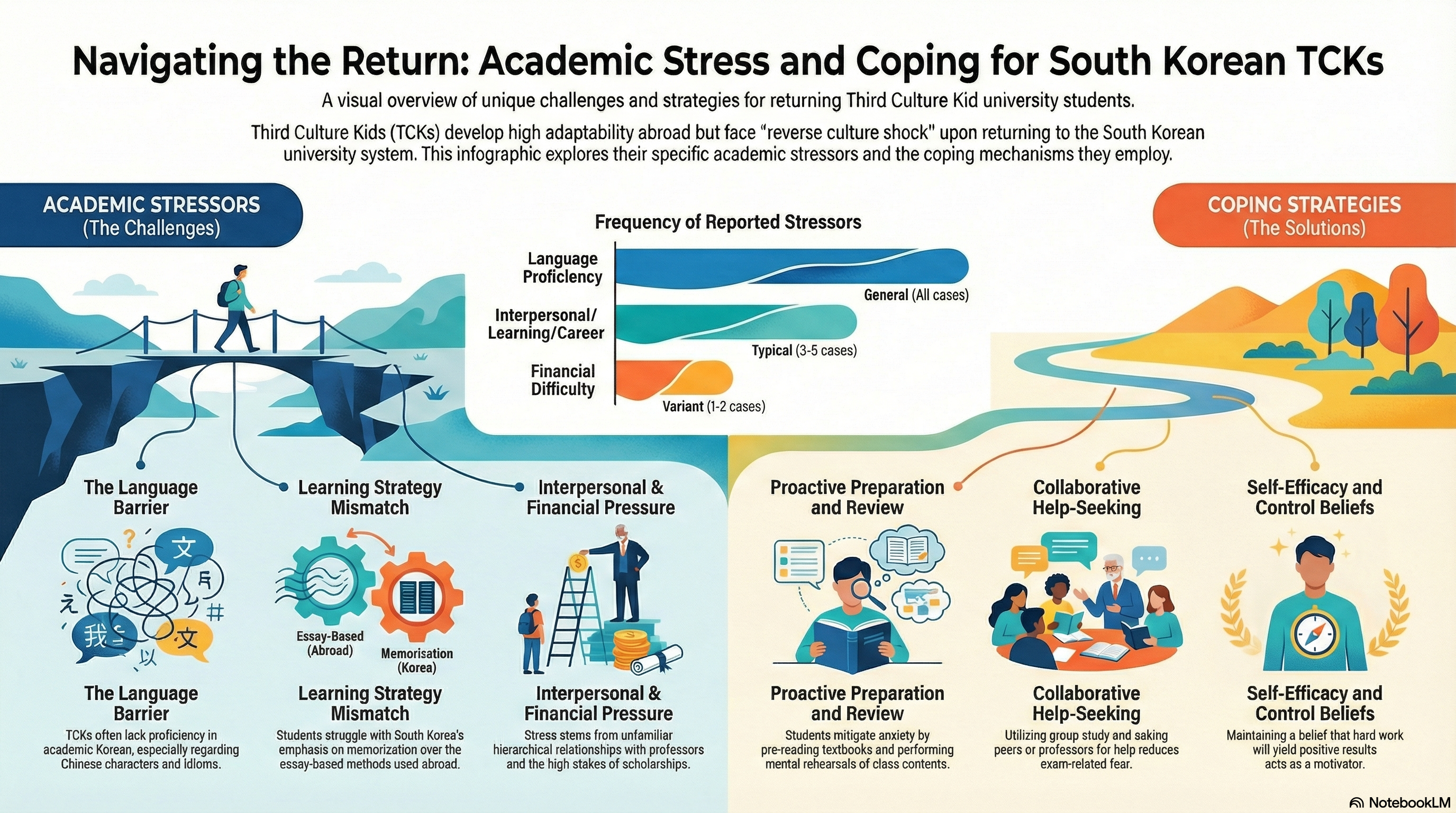
For the modern "Third Culture Kid" (TCK), the return to the "motherland" is a jarring collision with reality. In the last five years, 134,367 students have returned to South Korea after studying abroad, only to experience profound Reverse Culture Shock. 현대의 '제3문화 아이들(TCK)'에게 고국으로의 귀환은 현실과의 불협화음과 같습니다. 지난 5년 동안에만 134,367명의 학생이 유학 후 한국으로 돌아왔지만, 이들이 마주한 것은 깊은 **역문화 충격(Reverse Culture Shock)**이었습니다.
1. The "Passport Language" Paradox: When Fluency Masks Competence
'여권 언어'의 역설: 유창함이 실력을 가릴 때
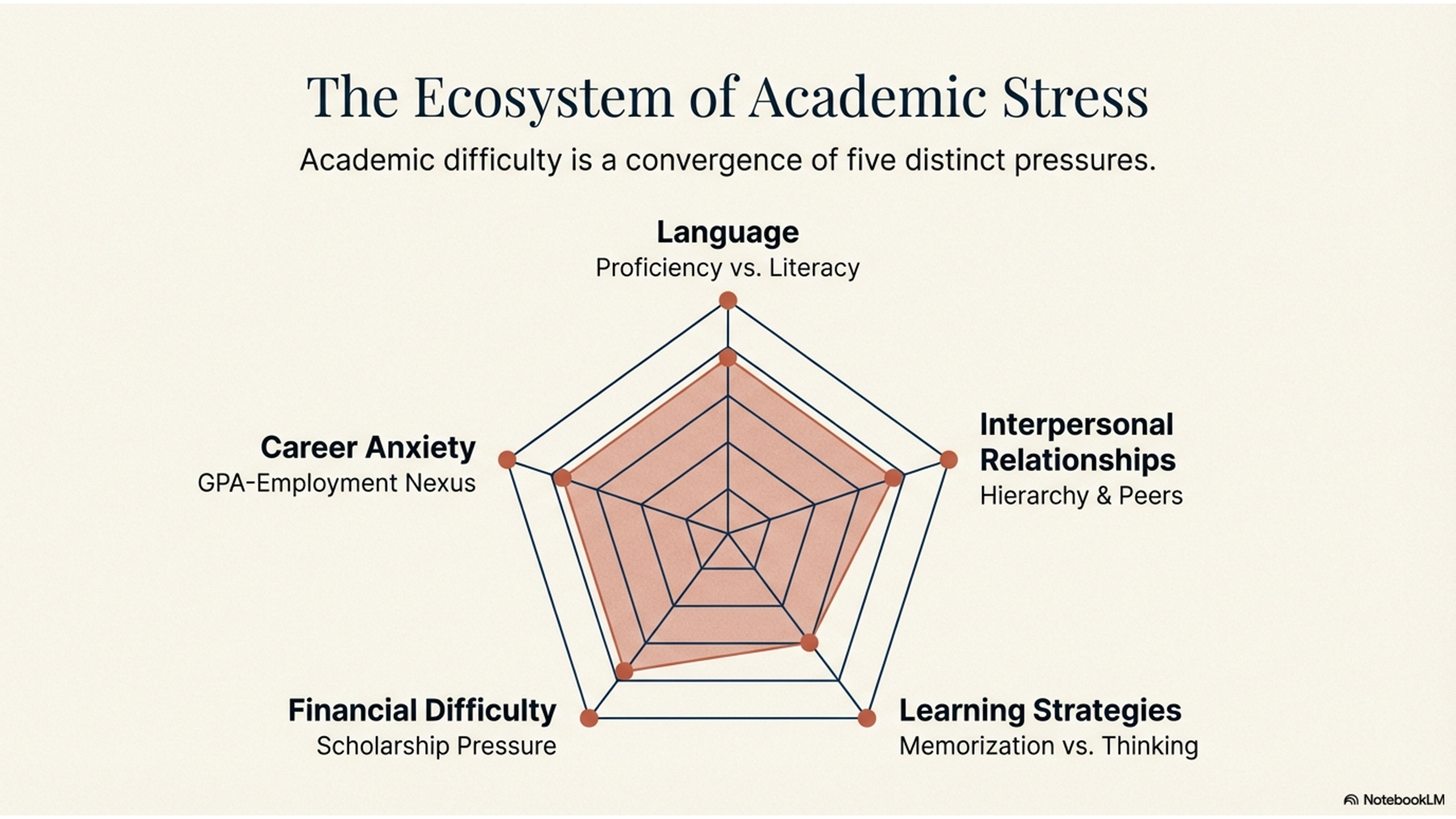
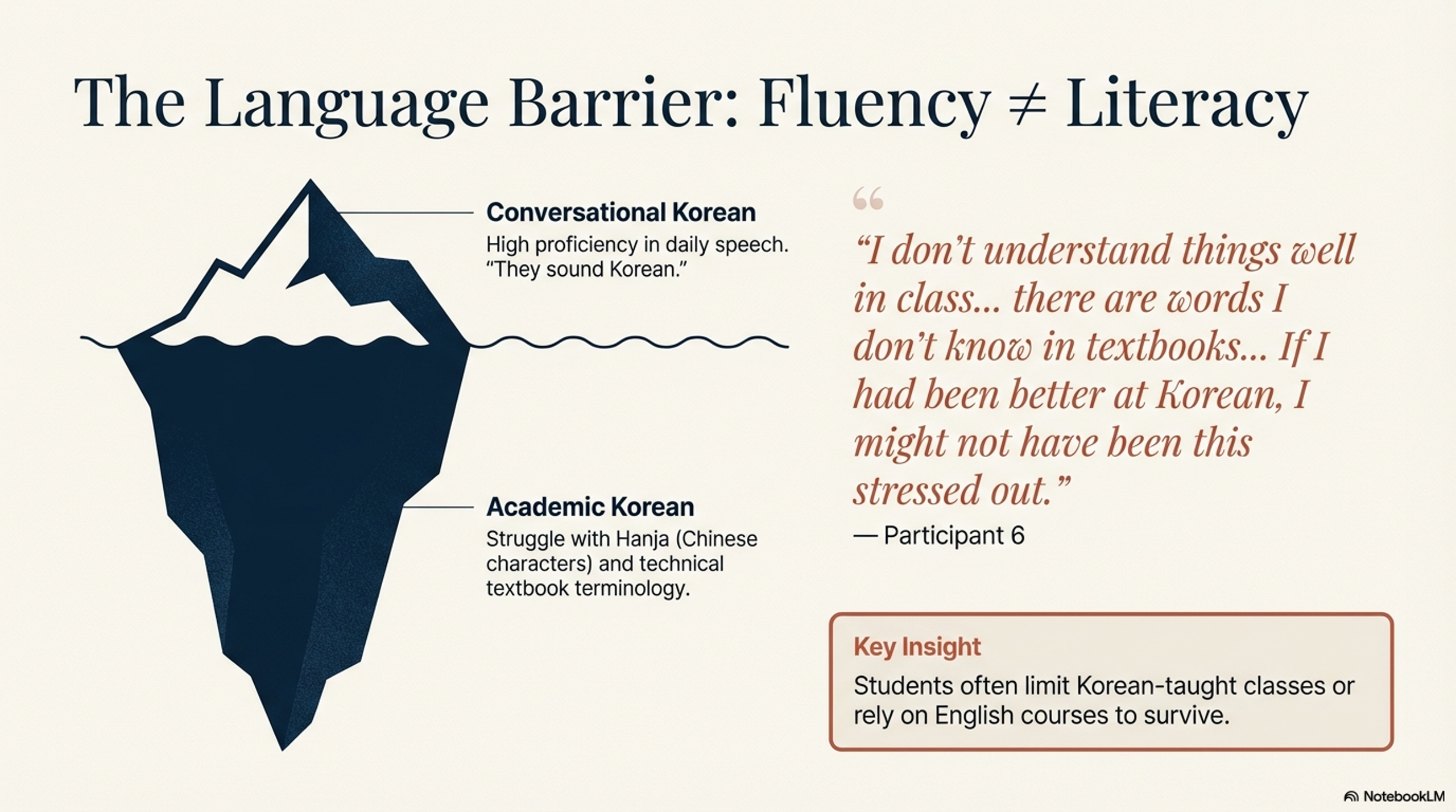
While many TCKs possess conversational Korean, they often lack the "academic" proficiency required for university-level discourse. This creates a Language-Intelligence Bias, where professors or peers may unfairly judge a TCK’s fundamental "educational ability" as insufficient simply because they lack native-level fluency in technical Korean. 많은 TCK가 일상적인 한국어 회화는 가능하지만, 대학교 수준의 담화에 필요한 '학술적' 숙달도는 부족한 경우가 많습니다. 이는 **언어-지능 편향(Language-Intelligence Bias)**을 초래하며, 교수나 동료들은 단지 기술적인 한국어 구사가 서툴다는 이유만으로 TCK의 근본적인 '학습 능력'이 부족하다고 부당하게 판단하곤 합니다.
The inability to parse a textbook in one’s "own" language leads to deep psychological distress and a feeling of being an outsider in one’s own skin. '모국어'로 된 교과서를 온전히 이해하지 못하는 상황은 깊은 심리적 고통과 더불어, 자신의 나라에서 이방인이 된 듯한 기분을 느끼게 합니다.
2. The Hierarchy Gap: Navigating the Boasting Stereotype
위계의 간극: '자랑한다'는 고정관념 속에서 살아남기
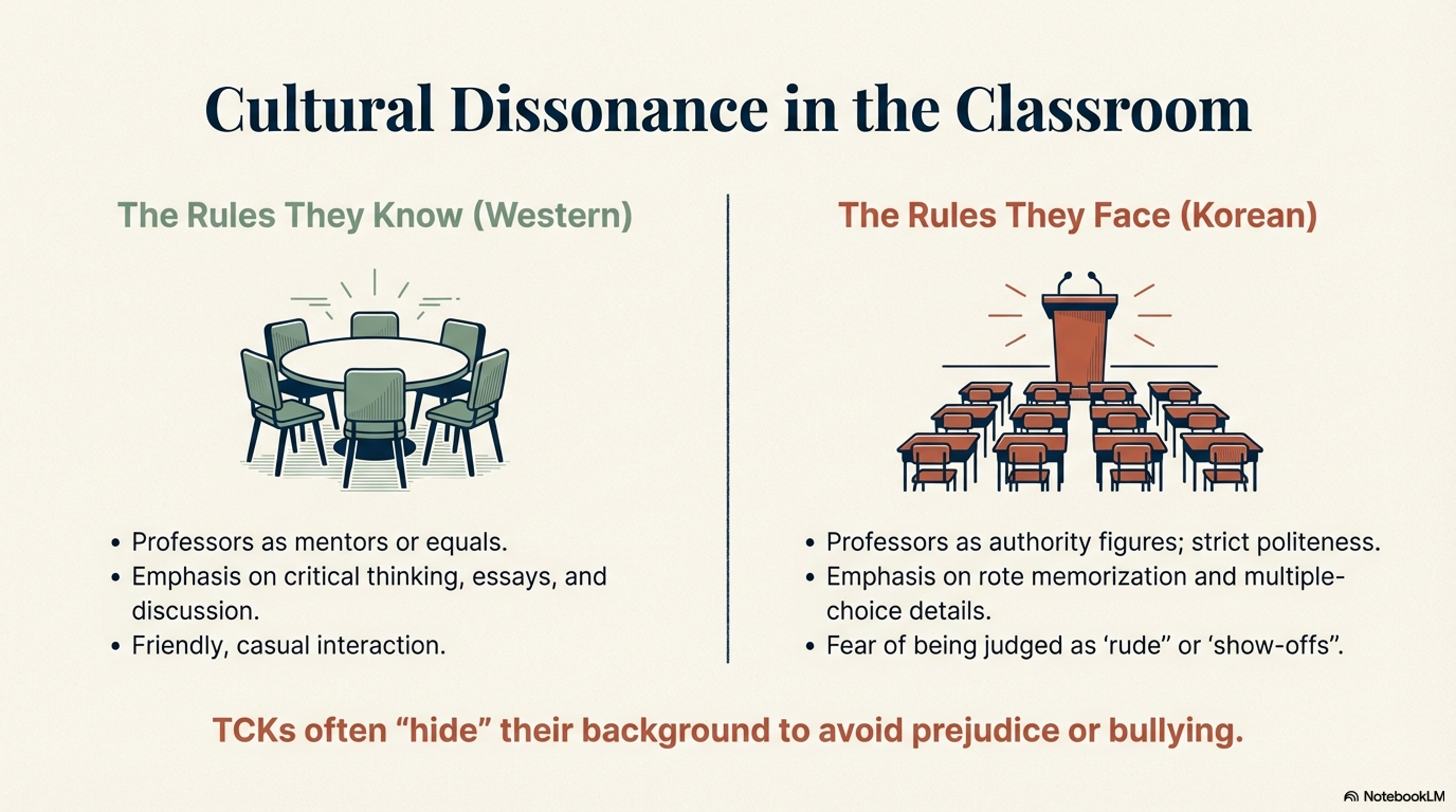
South Korean academia remains largely uniform, collective, and authoritarian. This creates a friction point as TCKs struggle to navigate the rigid hierarchical boundaries. Worse still, they are often misunderstood as "boasting" about their multicultural experiences, leading many to hide their international history entirely. 한국의 학계는 여전히 대체로 획일적이고 집단주의적이며 권위주의적입니다. 이는 엄격한 위계 질서에 익숙하지 않은 TCK들에게 마찰 지점이 됩니다. 설상가상으로, 이들의 다문화적 경험은 종종 '자랑'으로 오해받기도 하며, 이 때문에 많은 학생이 자신의 해외 체류 경험을 완전히 숨기는 선택을 하기도 합니다.
3. The Memorization Shock: Rethinking the Strategy of Learning
암기 충격: 학습 전략의 재정립
Accustomed to essay-based assessments and holistic discussion, TCKs find themselves blindsided by a system that prioritizes rote memorization. Transitioning from "understanding the big picture" to "memorizing the minute detail" is intellectually draining. 에세이 기반의 평가와 통합적 토론에 익숙한 TCK들은 단순 암기를 우선시하는 시스템에 큰 충격을 받습니다. '전체적인 흐름을 이해하는 것'에서 '세부 사항을 암기하는 것'으로 전환하는 과정은 지적으로 상당한 에너지를 소모하게 합니다.
4. The Collective Advantage: Combating the Anxiety of Solitude
집단의 이점: 고독의 불안에 맞서기
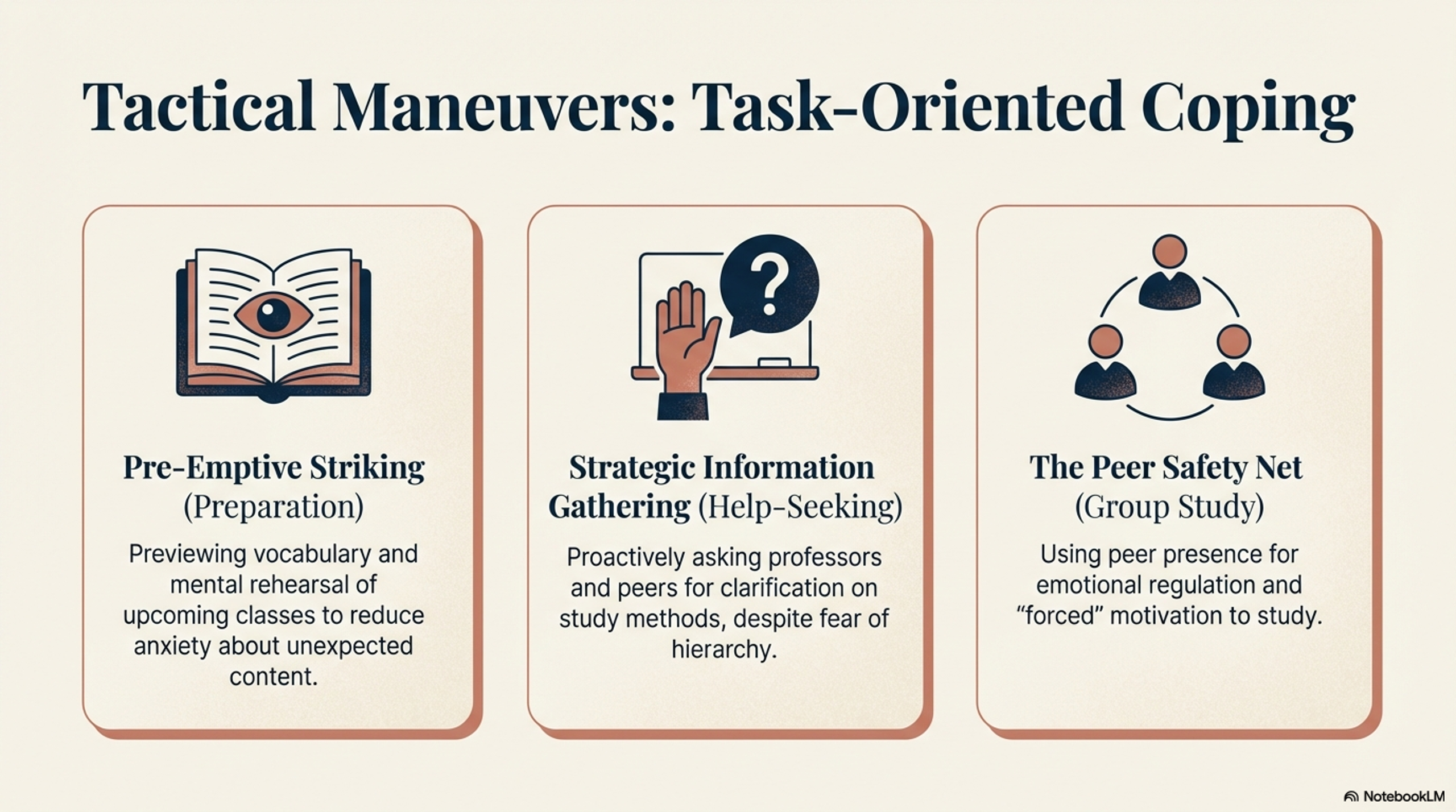
While domestic students often prefer the "solitary grind" of the library, TCKs frequently experience a specific Anxiety of Solitude when studying alone. To mitigate this, they utilize "Group Study" as both a cognitive and emotional buffer. 한국인 재학생들이 도서관에서의 '나홀로 공부'를 선호하는 것과 달리, TCK들은 혼자 공부할 때 특유의 **고독의 불안(Anxiety of Solitude)**을 자주 경험합니다. 이를 완화하기 위해 그들은 '그룹 스터디'를 인지적, 정서적 완충제로 활용합니다.
Through "peer teaching," TCKs transform isolating pressure into a collaborative effort, providing a sense of belonging that the traditional university structure fails to provide. '또래 가르치기'를 통해 TCK들은 고립된 압박감을 협력적인 노력으로 승화시키며, 전통적인 대학 구조가 제공하지 못하는 소속감을 형성합니다.
5. The Scholarship Trap: Career Anxiety Amidst Economic Crisis
장학금의 덫: 경제 위기 속의 진로 불안
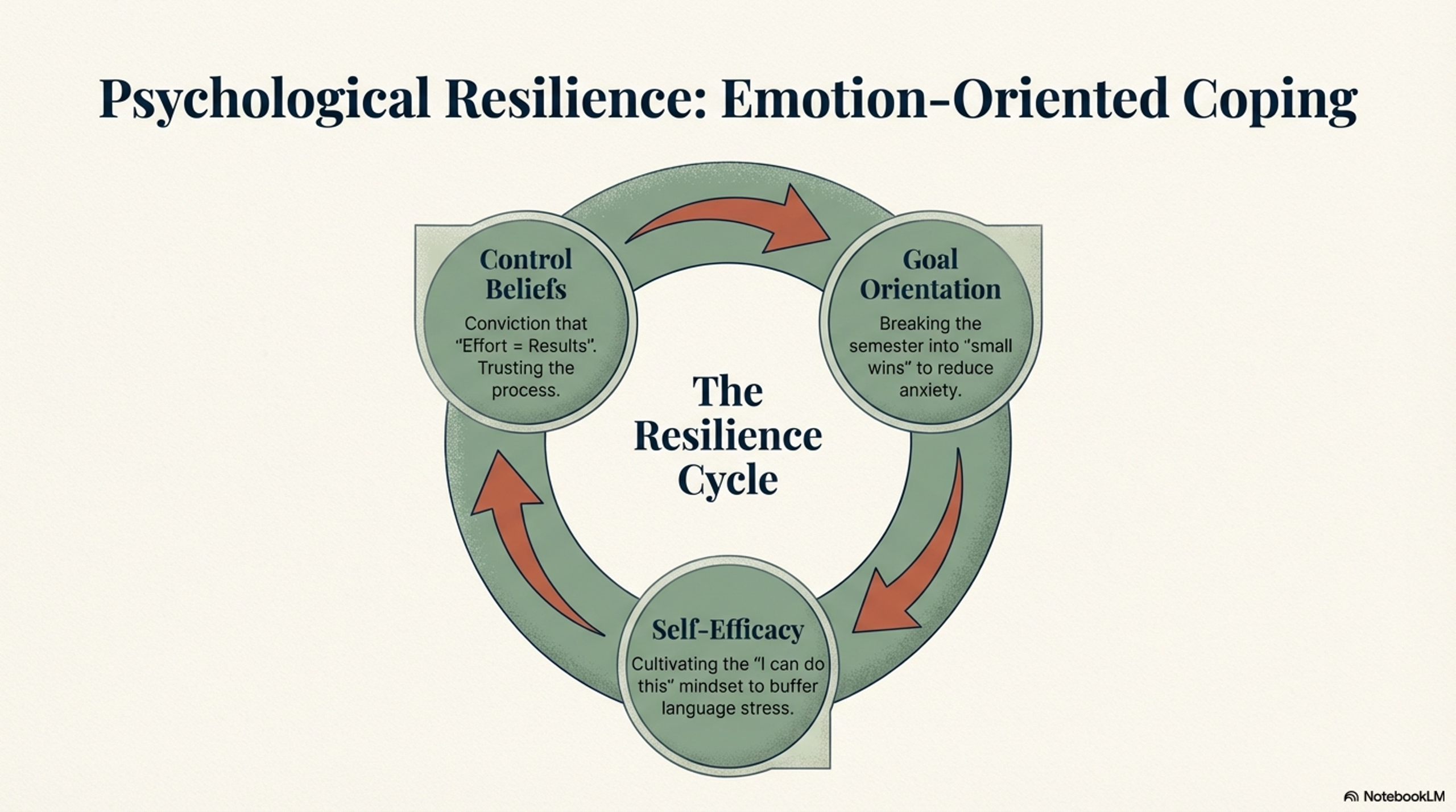
Against the backdrop of a recent economic crisis and rising unemployment, a high GPA has become a non-negotiable prerequisite. TCKs often feel a duty to secure scholarships to alleviate the financial burden on parents. To manage this, they employ Emotion-Oriented Coping through Control Belief strategies—mentally rehearsing the sense of relief felt after an ordeal. 최근의 경제 위기와 실업률 상승을 배경으로, 높은 학점은 타협할 수 없는 필수 조건이 되었습니다. TCK들은 종종 부모님의 경제적 부담을 덜어드리기 위해 장학금을 받아야 한다는 의무감을 느낍니다. 이를 관리하기 위해 그들은 통제 신념(Control Belief) 전략을 통한 정서 중심 대처를 사용하며, 시련이 끝난 후 느낄 안도감을 미리 시각화하곤 합니다.

Deep Dive: Comparison of Cultural and Academic Expectations
심층 탐구: 문화적 및 학술적 기대치 비교
The table below contrasts the international environments TCKs are often coming from versus the South Korean university reality. 아래 표는 TCK들이 주로 경험한 국제적 환경과 한국 대학의 현실을 대조하여 보여줍니다.
| Feature (특징) | International/Western Model (국제/서구 모델) | S. Korean University Model (한국 대학 모델) |
| Communication (소통) | Egalitarian/Open (평등함/개방적) | Hierarchical/Formal (위계적/격식적) |
| Assessment (평가) | Essays & Discussion (에세이 및 토론) | Rote Memorization & MCQ (단순 암기 및 객관식) |
| Social Focus (사회적 초점) | Individual Expression (개인적 표현) | Collective Harmony (집단적 화합) |
| Language Use (언어 사용) | Contextual/Practical (맥락적/실용적) | Academic/Technical (학술적/전문적) |
- The Mask of Fluency: Because these students look Korean and speak the language conversationally, faculty often forget they are essentially "international students" in their cognitive processing.
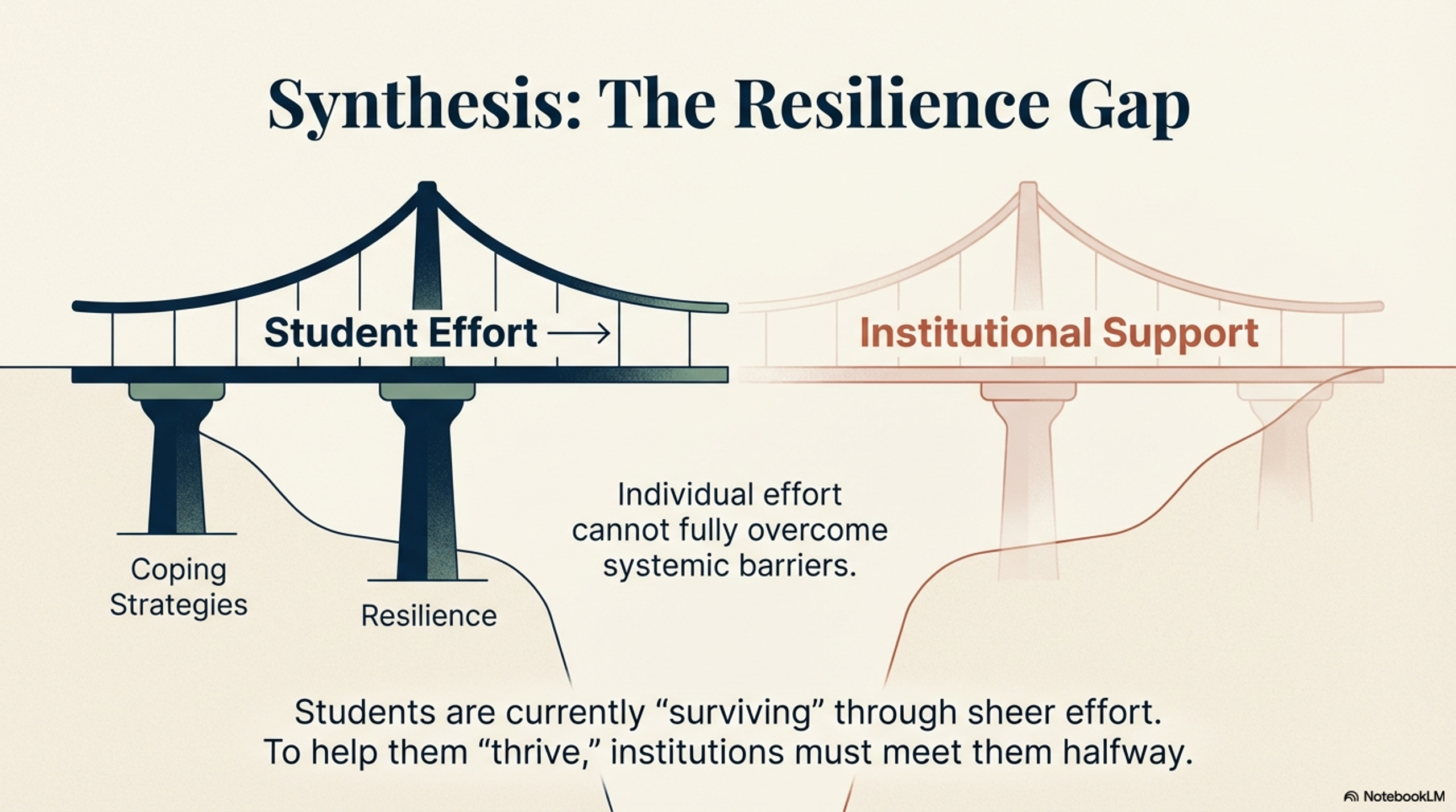
- The Hidden Asset: Despite the struggle, the study notes that TCKs develop high Self-Efficacy (the belief in one's ability to succeed). Their experience of overcoming multiple "worlds" eventually translates into a unique professional resilience.
- 유창함의 가면: 이 학생들이 한국인처럼 보이고 일상 대화가 가능하기 때문에, 교수진은 종종 이들의 인지 처리 과정이 본질적으로 '외국인 유학생'과 같다는 사실을 잊곤 합니다.
- 숨겨진 자산: 이러한 고충에도 불구하고, 연구에 따르면 TCK들은 높은 자기 효능감(성공할 수 있다는 스스로에 대한 믿음)을 발달시킵니다. 여러 '세계'를 극복해 온 이들의 경험은 결국 독보적인 직업적 탄력성으로 이어집니다.