The State Secret in Your Living Room / 거실 속의 국가 기밀
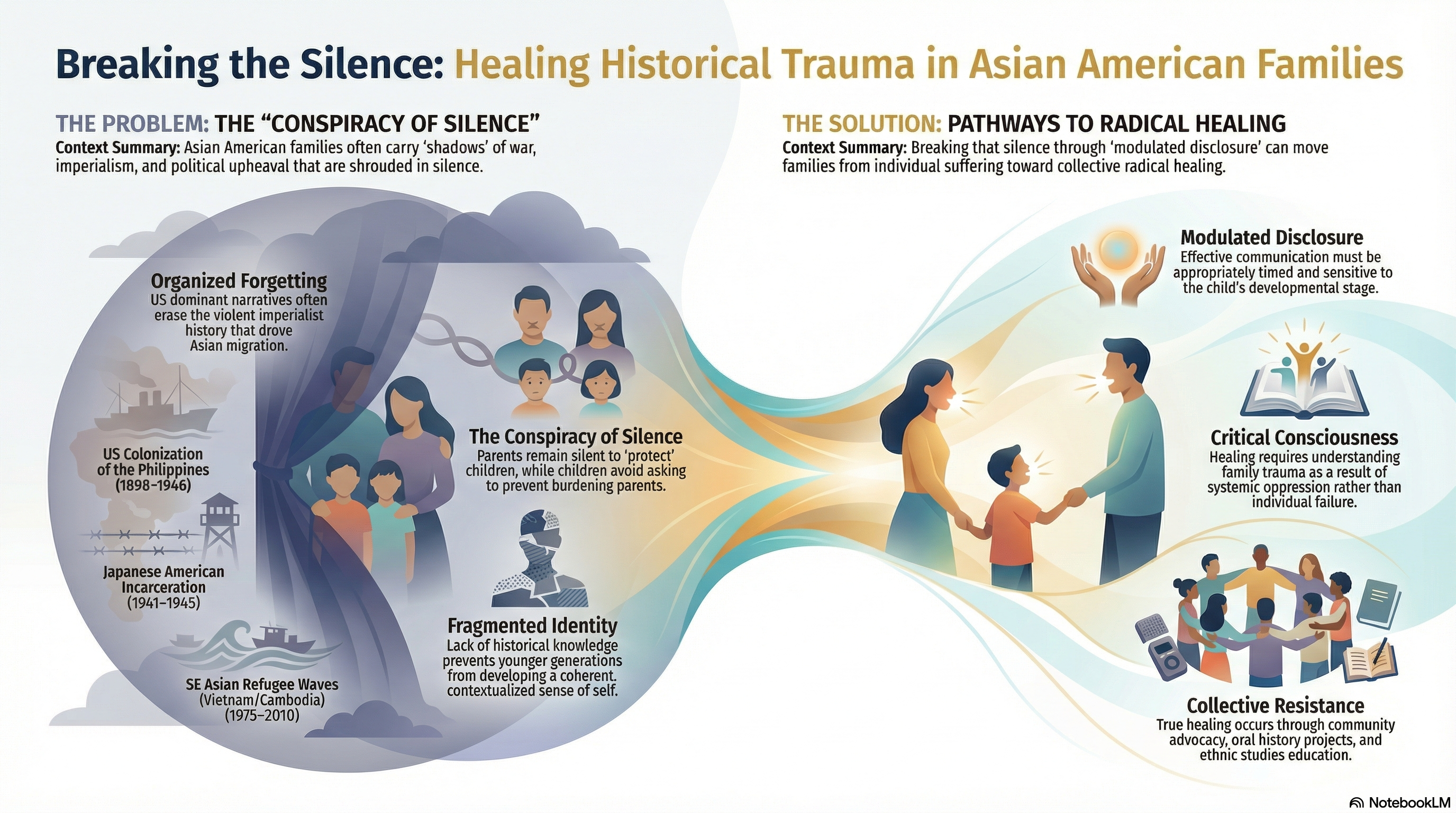
1. Organized Forgetting & State Silence / 조직적 망각과 국가적 침묵
- Conspiracy of Silence / 침묵의 공모: When a nation-state erases historical violence (e.g., the "Forgotten War" in Korea or the bombing of Laos) from its narrative, it forces families to bury their own memories to fit in. / 국가가 자신의 역사적 폭력(예: 한국의 '잊혀진 전쟁'이나 라오스 폭격)을 공식 기록에서 지울 때, 가족들은 사회에 적응하기 위해 자신의 기억을 묻어두게 된다.
- The Unwritten Contract / 기록되지 않은 계약: To "become American," immigrants are often pressured to leave their traumatic memories at the border to maintain the image of the U.S. as a land of pure opportunity. / '미국인이 되기 위해' 이민자들은 미국을 순수한 기회의 땅으로 묘사하는 국가 서사를 유지하고자 자신의 비극적인 기억을 국경 너머에 두고 오라는 압박을 받는다.
2. The Model Minority as a "Psychological Straitjacket" / '심리적 구속복'으로서의 모델 마이너리티
- Invisibilizing Trauma / 트라우마의 비가시화: The myth of the "problem-free" Asian American group makes it psychologically difficult for families to demand a reckoning with the imperialism or poverty they fled. / '문제없는' 집단이라는 아시아계 미국인 신화는 가족들이 자신들이 탈출해온 제국주의나 빈곤에 대한 보상을 요구하는 것을 심리적으로 어렵게 만든다.
- Performance of Gratitude / 감사함의 연기: The myth demands a performance of success, rendering any struggle a "nuisance" to the American Dream narrative. / 이 신화는 성공을 연기할 것을 요구하며, 모든 고통을 '아메리칸 드림' 서사를 방해하는 '성가신 것'으로 치부해버린다.
3. "Sticky" Trauma and Parenting / '끈적한' 트라우마와 부모 역할
- The Architecture of Anxiety / 불안의 건축학: Strict parenting or obsession with academic/financial security is often a lingering reflex of past scarcity and displacement. / 엄격한 훈육이나 학업 및 경제적 안정에 대한 집착은 과거의 결핍과 추방 경험에서 비롯된 잔존하는 반사 작용인 경우가 많다.
- Temporary Safety / 일시적인 안전: Parents react to "ghosts" of instability, fearing that current safety is only temporary and could be taken away at any moment. / 부모들은 불안정의 '유령'에 반응하며, 현재의 안전이 일시적일 뿐 언제든 사라질 수 있다는 공포를 느낀다.
4. Modulated Disclosure vs. Harmful Talk / "조절된 공개" 대 "해로운 대화"
- The Trap of Shame / 수치심의 함정: Using past suffering as a weapon to guilt children into compliance creates resentment rather than healing. / 자녀에게 순종을 강요하기 위해 과거의 고통을 무기로 사용하는 것은 치유가 아닌 원망을 낳는다.
- Modulated Disclosure / 조절된 공개: Sharing history in a way that respects both the child’s development and the parent’s emotional capacity is the path to a shared narrative. / 자녀의 발달 단계와 부모의 정서적 역량을 모두 존중하며 역사를 공유하는 것이 공유된 서사를 만드는 길이다.
5. Radical Healing as Rebellion / 저항으로서의 근본적 치유
- Critical Remembering / 비판적 기억하기: If the state relies on forgetting to maintain its image, then remembering and documenting the truth is a political act of rebellion. / 국가가 이미지를 유지하기 위해 망각에 의존한다면, 진실을 기억하고 기록하는 것은 정치적 저항 행위가 된다.
- From Victim to Agent / 피해자에서 주체로: Radical healing moves families from passive coping to collective action (e.g., the Japanese American redress movement). / 근본적 치유는 가족들을 수동적인 대처에서 집단적 행동(예: 일본계 미국인 보상 운동)으로 나아가게 한다.
Conclusion: Beyond the Debt / 결론: 부채를 넘어서 By situating personal family dynamics within global history, we transform "inherited shadows" into a foundation for a more just future. We stop asking "Why are you like this?" and start asking "What did you survive for me?" / 개인적인 가족 역동을 세계사의 맥락에 배치함으로써, 우리는 '유산으로 물려받은 그림자'를 더 정의로운 미래를 위한 토대로 바꿀 수 있다. 우리는 "왜 저러시는 걸까?"라는 의문 대신 "나를 위해 무엇을 견디셨나요?"라고 묻기 시작해야 한다.
REVIEW ARTICLE
Intergenerational Communication about Historical Trauma in Asian American Families