[Chapter 1] Why the Past Refuses to Stay Past: Insights from Trauma Research
과거가 과거로 남기를 거부하는 이유: 트라우마 연구의 최전선에서 얻은 통찰
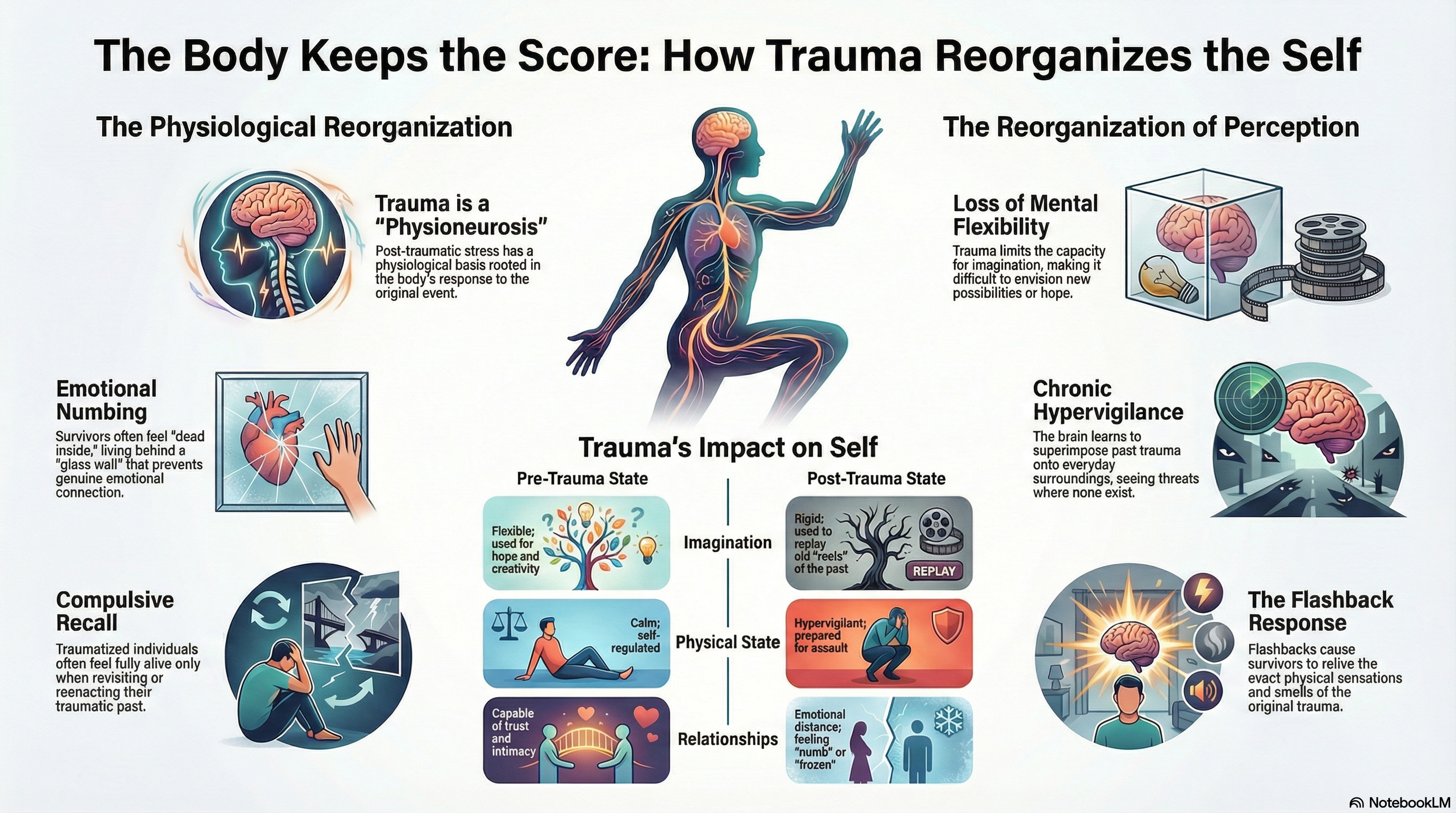

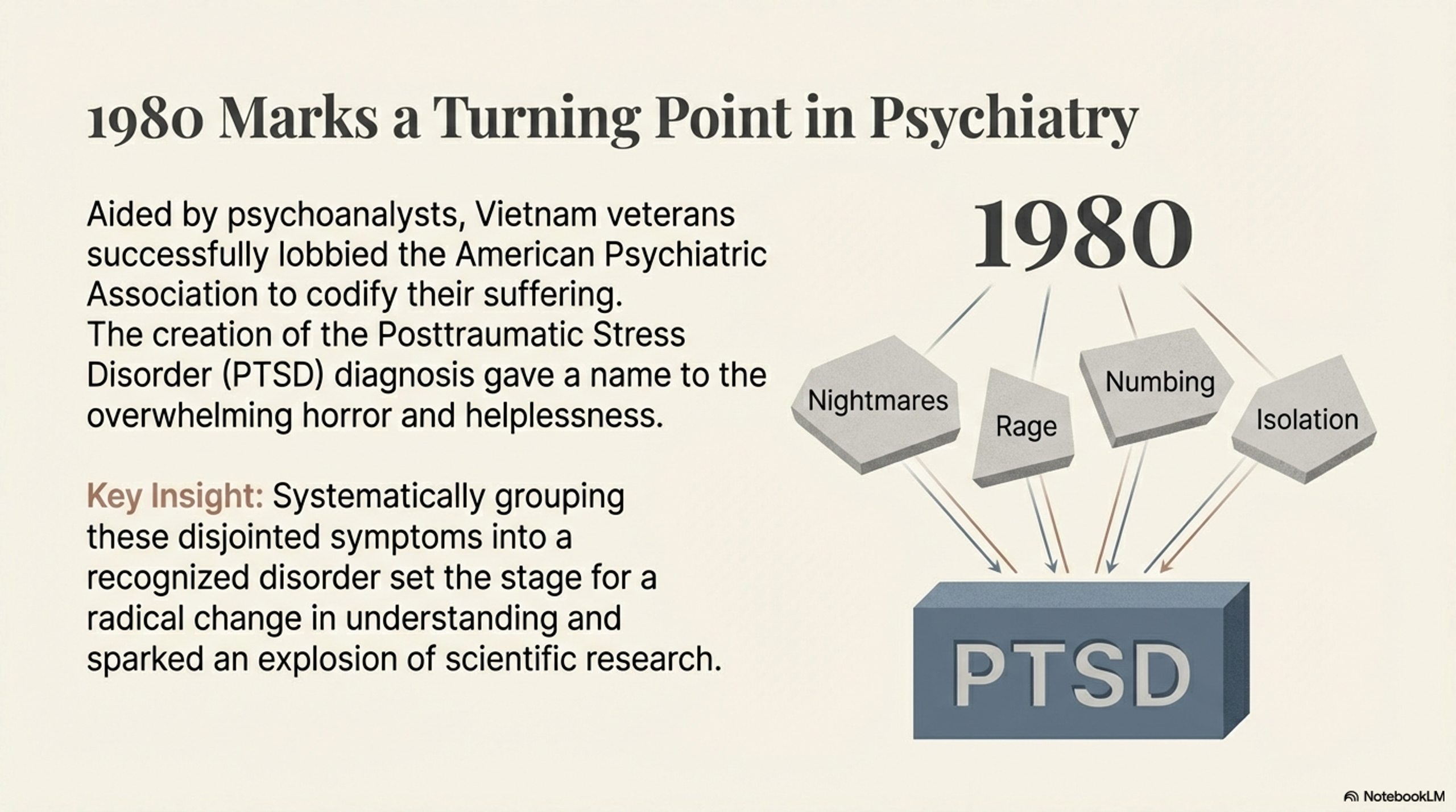
Trauma is a temporal trap. While the world expects survivors to "move on," the survivor remains frozen in a moment of horror, unable to rejoin the flow of a normal human narrative. It interrupts the plot of a life.
트라우마는 시간의 덫입니다. 세상은 생존자가 "나아가길" 기대하지만, 생존자는 공포의 순간에 얼어붙은 채 평범한 인간 서사의 흐름으로 돌아오지 못합니다. 그것은 삶의 줄거리를 중단시킵니다.
1. Trauma is a Physical "Physioneurosis," Not Just a Bad Memory
트라우마는 단순한 나쁜 기억이 아닌 신체적 '생리신경증'입니다
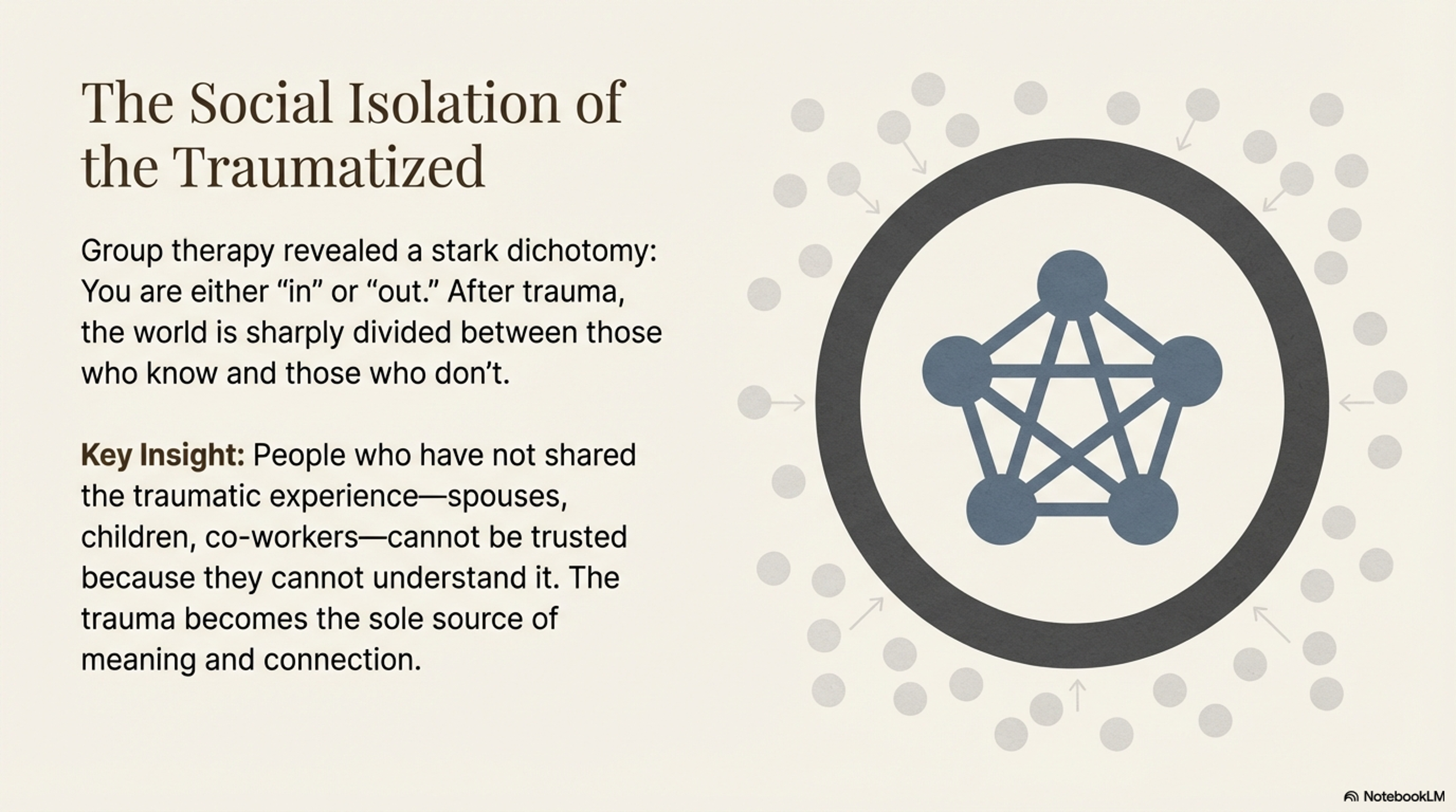
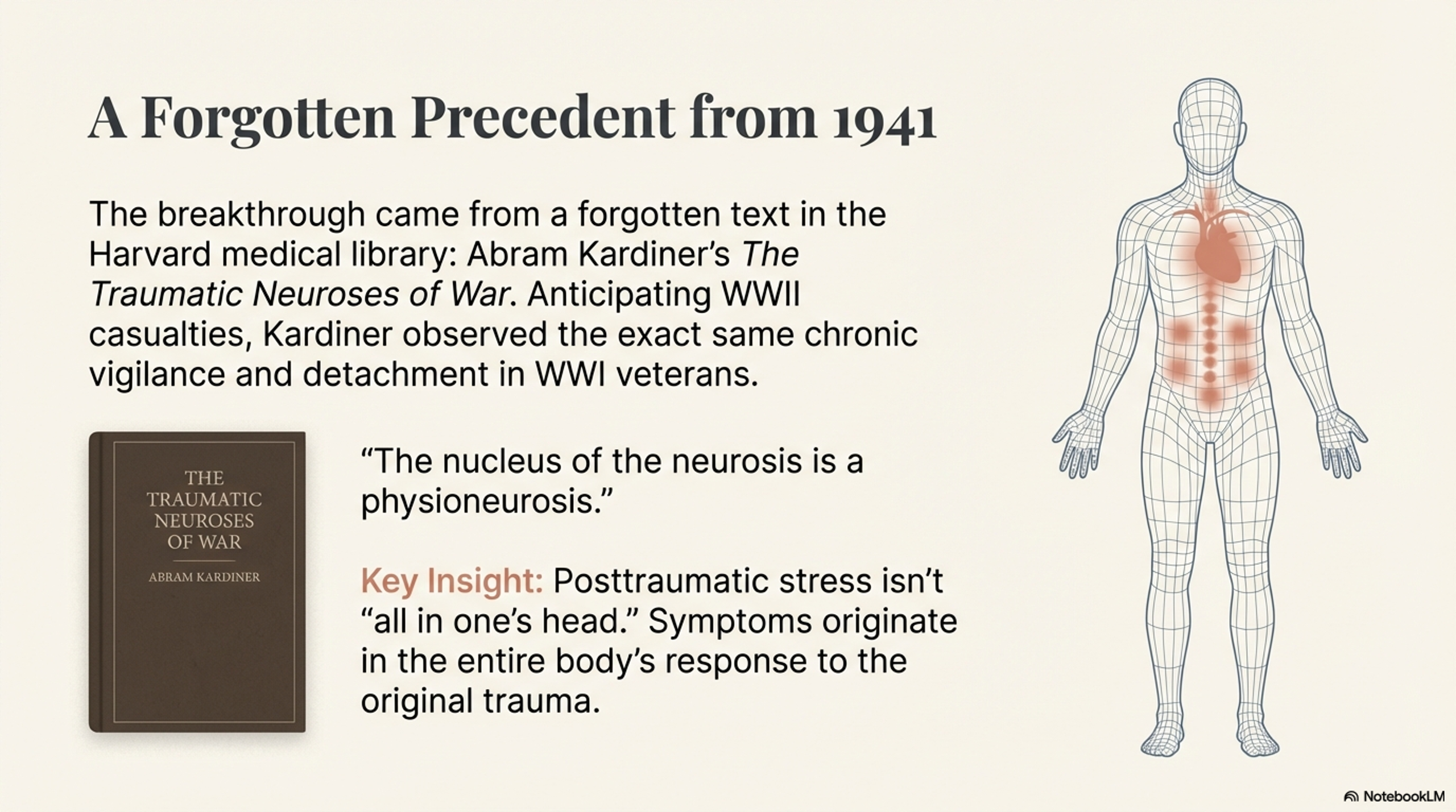
PTSD is not merely "all in one's head." As Abram Kardiner observed, the nucleus of the neurosis is a physioneurosis. The fear circuits of the brain are altered, keeping the body in a state of chronic, involuntary vigilance.
PTSD는 단순히 "머릿속의 문제"가 아닙니다. 아브람 카디너가 관찰했듯, 신경증의 핵심은 **생리신경증(physioneurosis)**입니다. 뇌의 공포 회로가 변형되어 신체를 만성적이고 비자발적인 경계 상태로 유지합니다.
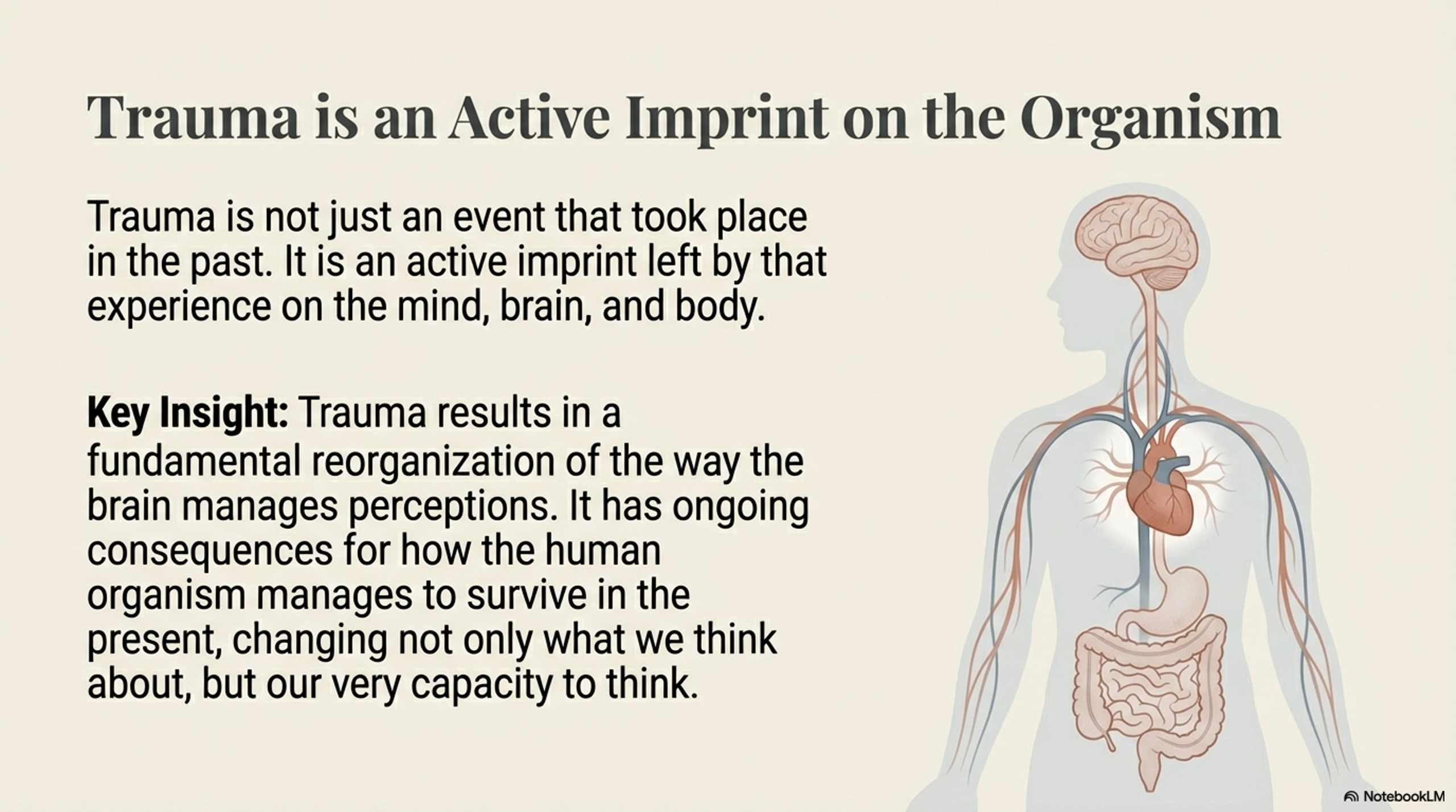
The body reacts to a threat that has passed as if it were still imminent. Because these responses operate below the level of the rational mind, you cannot simply "think" your way out of them.
신체는 이미 지나간 위협에 대해 마치 지금 당장 일어나는 일인 것처럼 반응합니다. 이러한 반응은 이성적인 사고 아래 단계에서 작동하기 때문에, 단순히 "생각"만으로는 거기서 빠져나올 수 없습니다.
2. The Living Memorial: Why Recovery Can Feel Like Betrayal
살아있는 기념비: 회복이 왜 배신처럼 느껴지는가
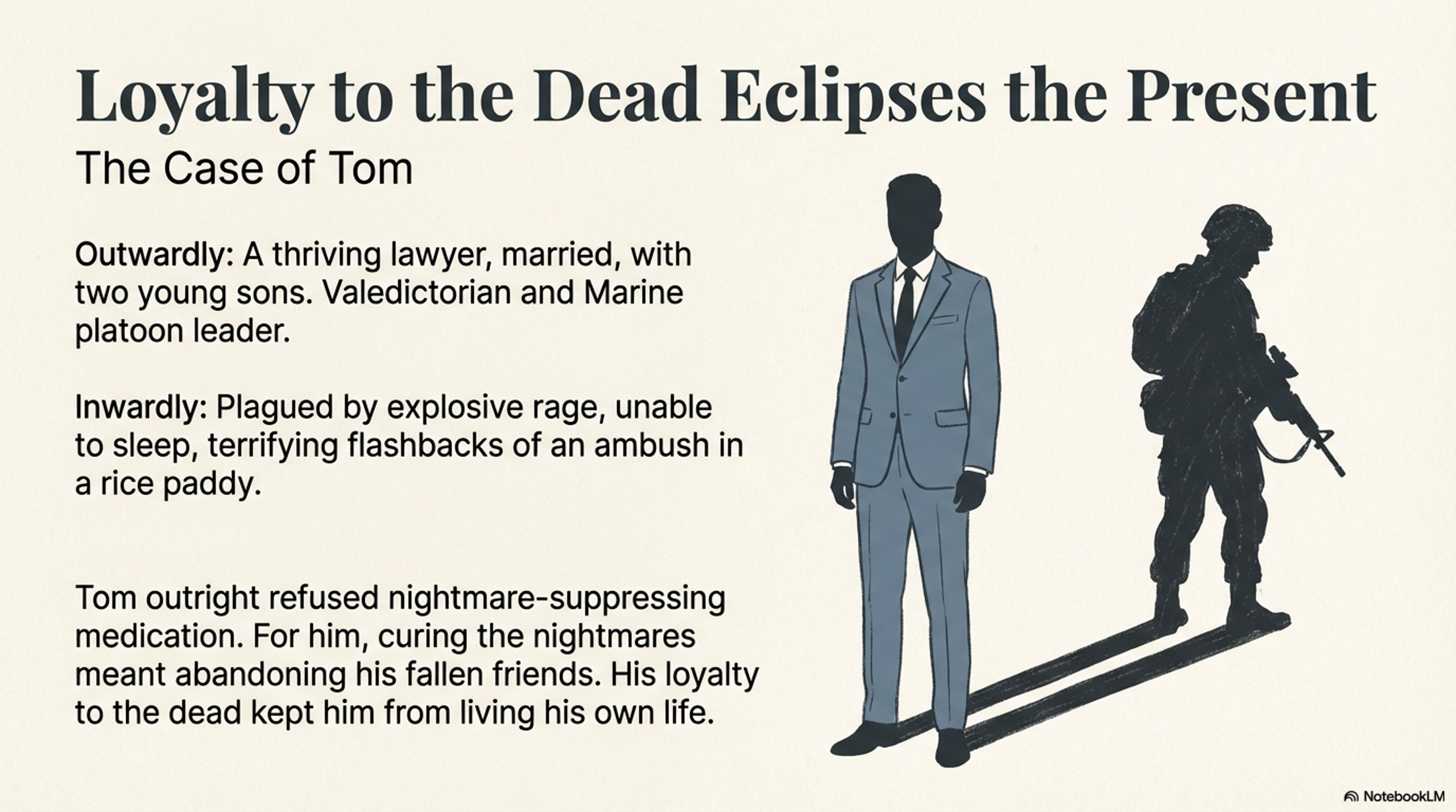
For many survivors, recovery feels like an abandonment of those who died. Tom, a Vietnam veteran, refused medication because his nightmares were his way of being a "living memorial" to his fallen friends.
많은 생존자에게 회복은 죽은 자들에 대한 버림처럼 느껴집니다. 베트남 참전 용사인 톰은 자신의 악몽이 전사한 친구들을 위한 "살아있는 기념비"라고 생각했기에 약물 치료를 거부했습니다.
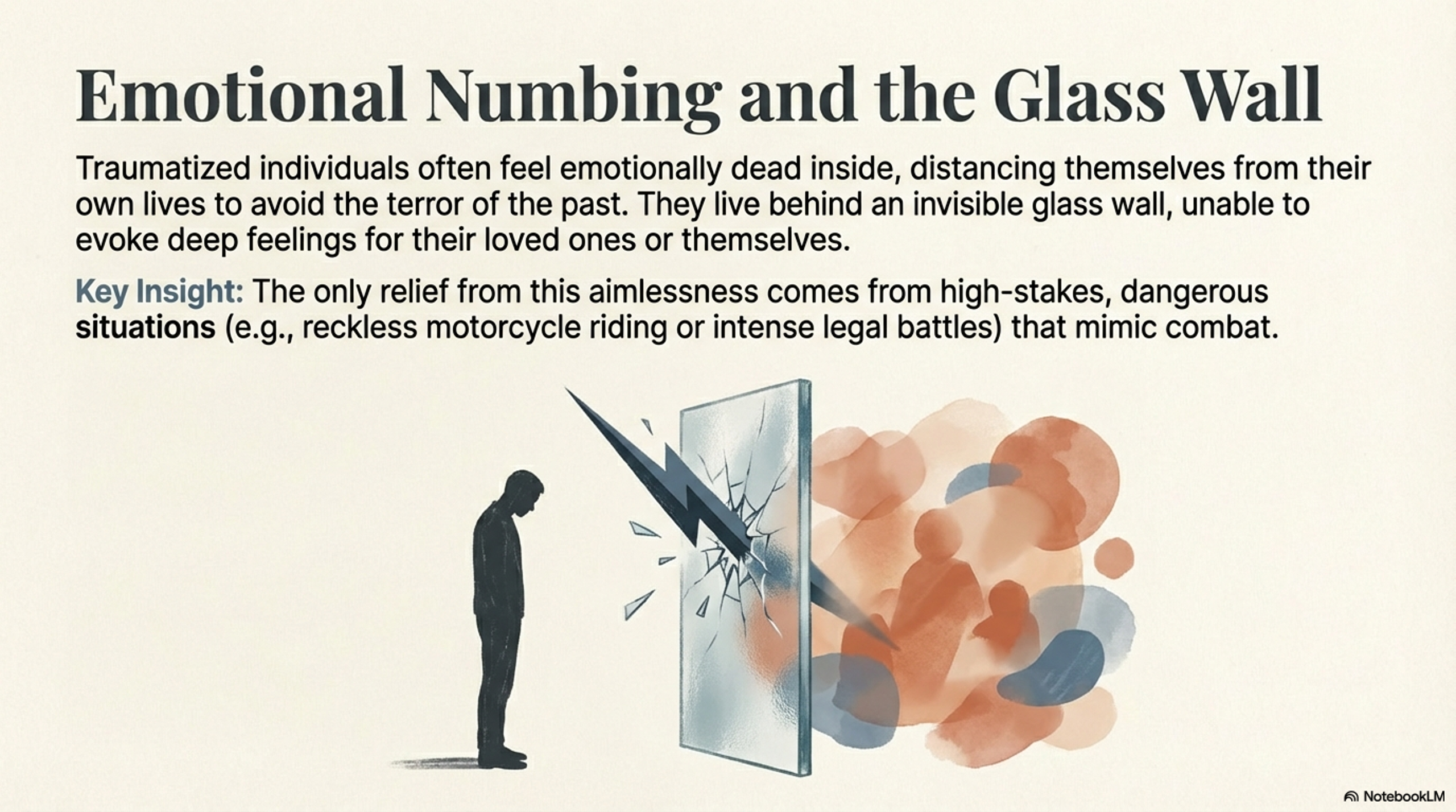
This creates a "glass wall" of emotional numbness. The survivor is physically present but emotionally anchored to the past, feeling that joy or peace would be a betrayal of the dead.
이는 정서적 마비라는 "유리 벽"을 만듭니다. 생존자는 물리적으로는 현재에 존재하지만 정서적으로는 과거에 닻을 내리고 있으며, 기쁨이나 평화를 느끼는 것이 죽은 자들에 대한 배신이라고 여깁니다.
3. The Death of Imagination: Why the Traumatized Can't See a Future
상상력의 죽음: 트라우마를 겪은 이들이 미래를 보지 못하는 이유
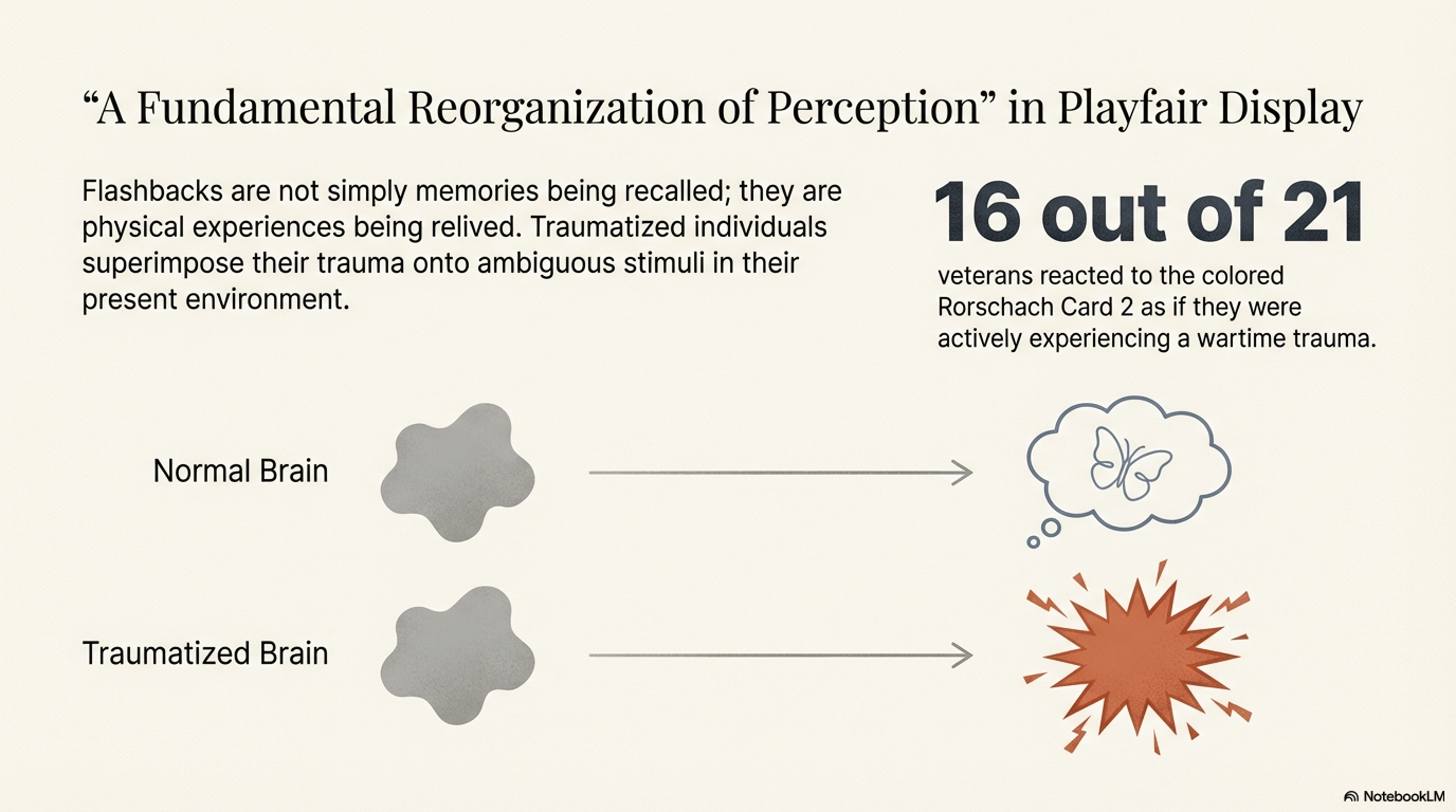
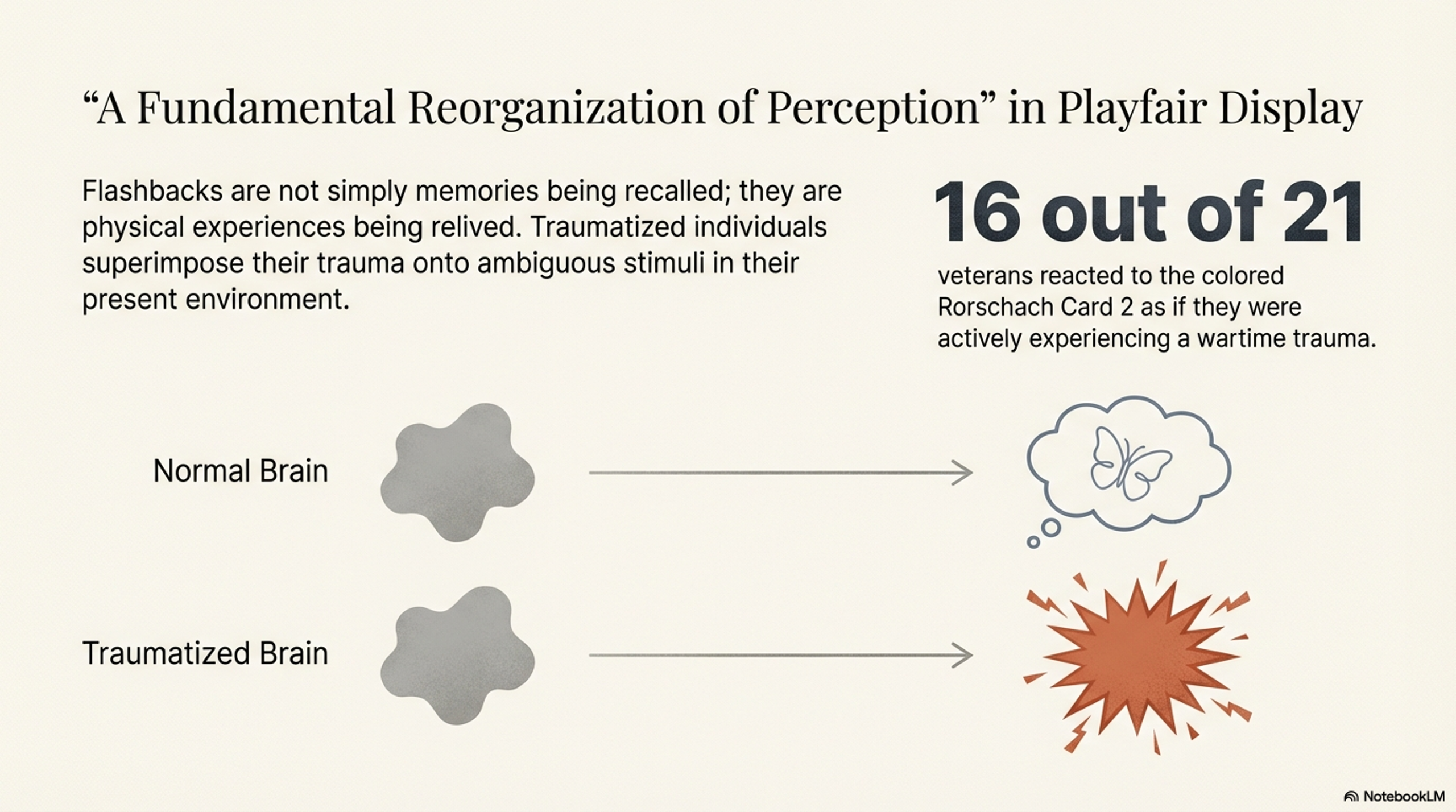
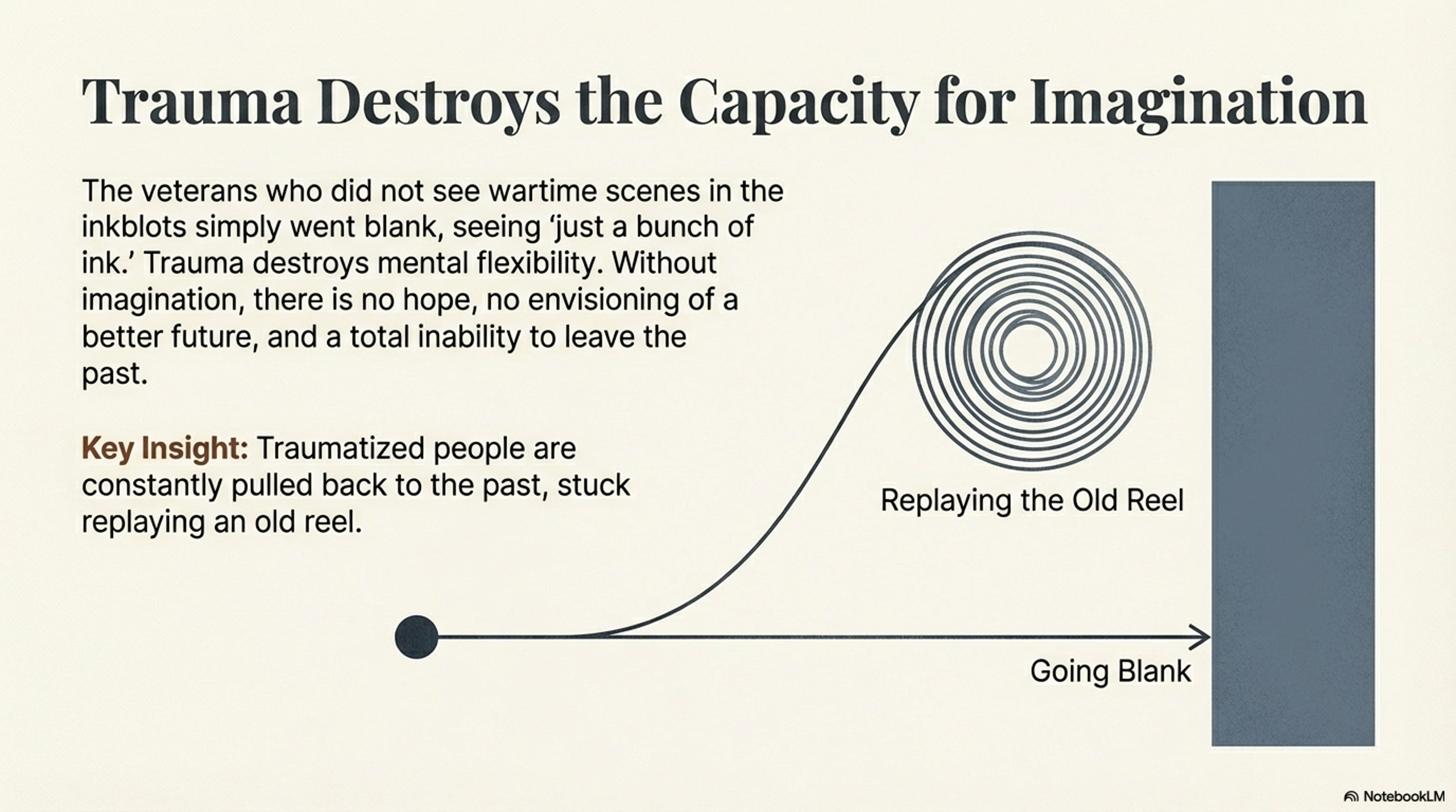
Trauma destroys mental flexibility. In Rorschach tests, traumatized veterans often see "nothing" or only images of horror. They lose the ability to use imagination to envision new possibilities or solve daily problems.
트라우마는 정신적 유연성을 파괴합니다. 로르샤흐 테스트에서 트라우마를 겪은 퇴역 군인들은 종종 "아무것도" 보지 못하거나 공포스러운 이미지만을 봅니다. 이들은 새로운 가능성을 구상하거나 일상적인 문제를 해결하는 데 필요한 상상력을 잃어버립니다.
Imagination is the launchpad for hope. Without it, the person is stuck replaying an old reel of their worst moments, unable to fantasize about travel, food, or a better life.
상상력은 희망의 발판입니다. 상상력이 없다면 사람은 자신의 최악의 순간들을 담은 오래된 필름을 반복해서 재생하며, 여행이나 음식, 혹은 더 나은 삶을 꿈꾸지 못하게 됩니다.
4. The War at Home: Trauma is Closer Than We Think
집 안의 전쟁: 트라우마는 생각보다 가까이 있습니다
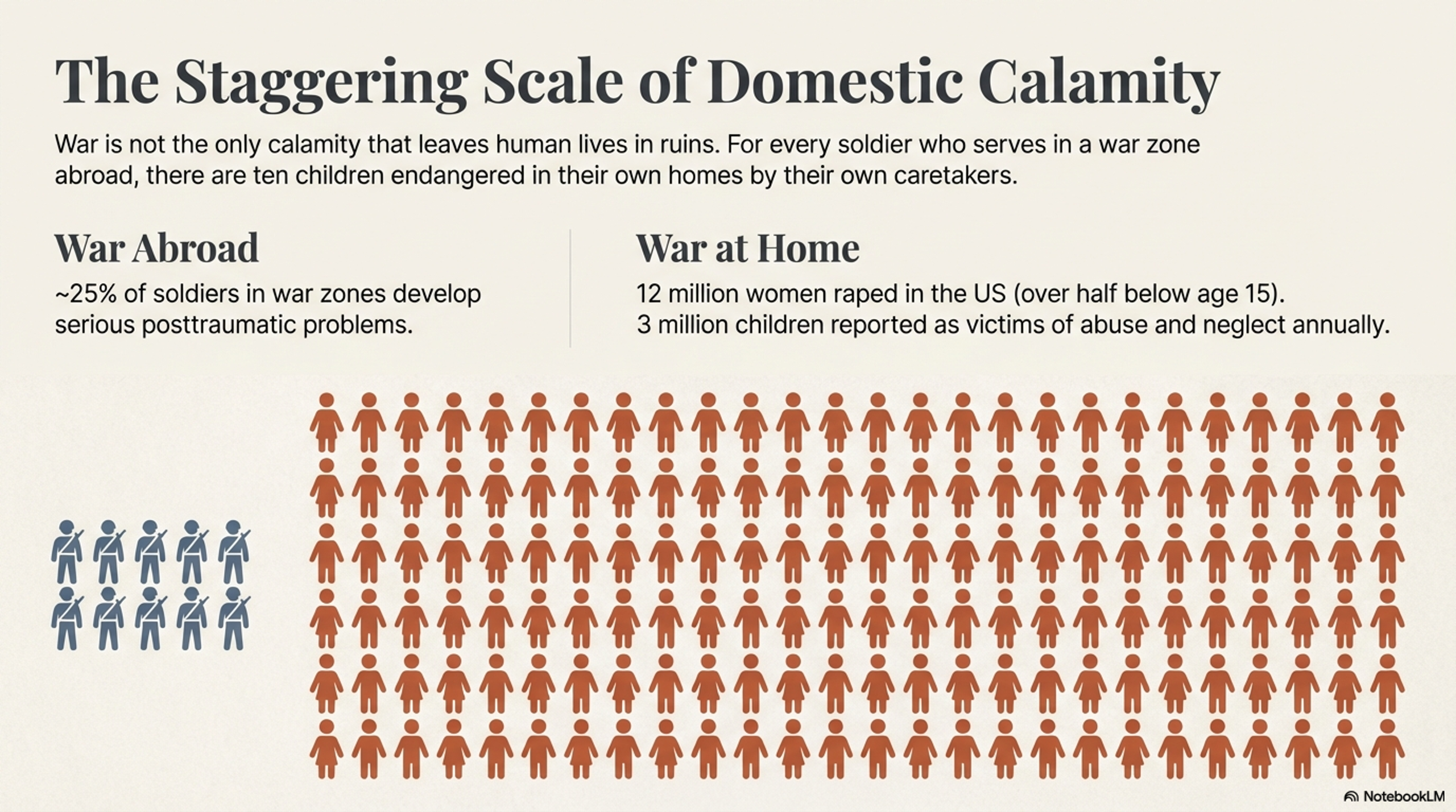
The "war zone" is not always a faraway battlefield. Statistically, for every soldier in a war zone abroad, there are ten children endangered in their own homes.
"교전 지역"은 항상 먼 곳의 전장인 것만은 아닙니다. 통계적으로 해외 전장에 파견된 군인 한 명당, 자신의 집에서 위험에 처한 열 명의 아이들이 존재합니다.
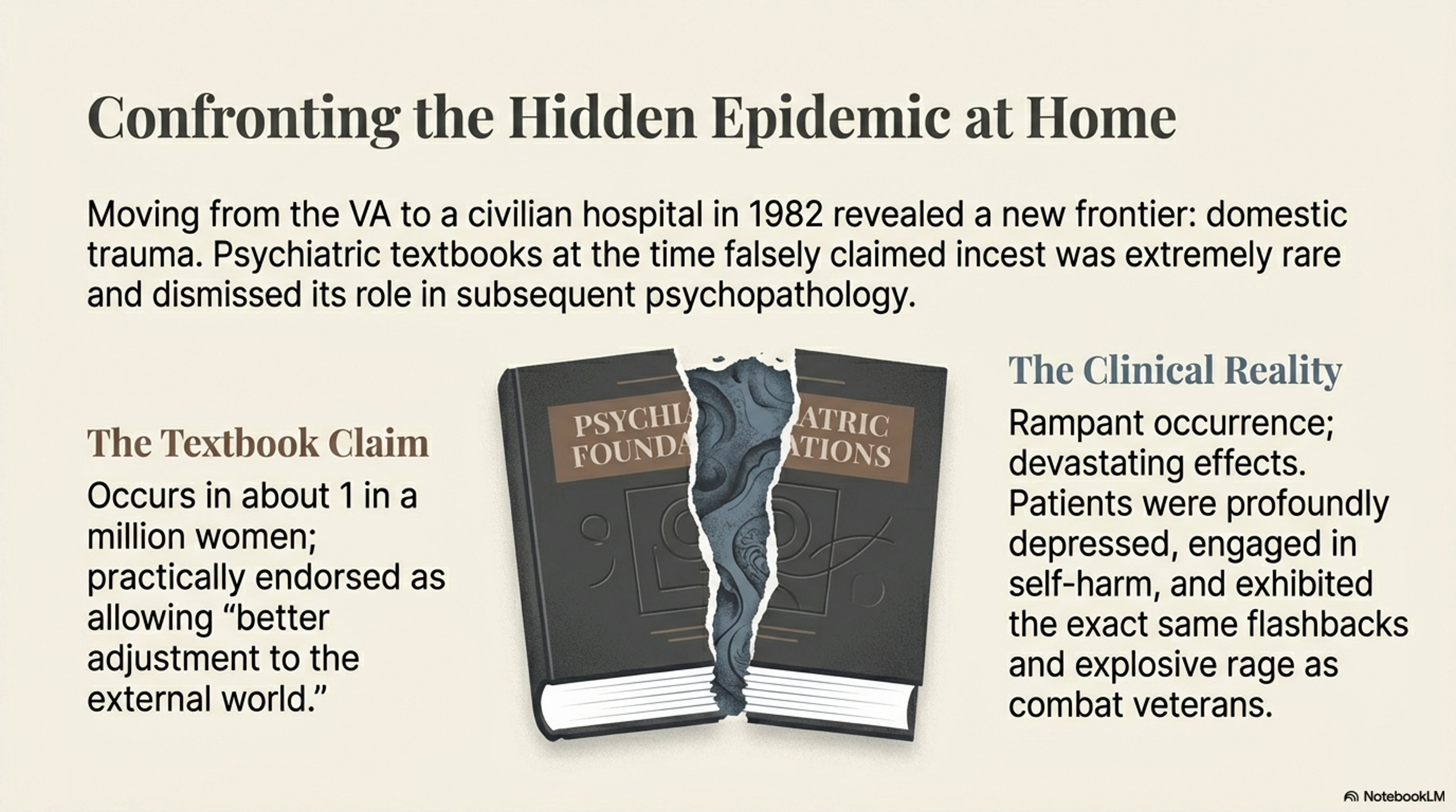
This "war at home" is hardest to heal because the source of terror is the person the child depends on for survival. This creates a profound confusion between love and fear.
이 "집 안의 전쟁"은 치유하기 가장 어렵습니다. 공포의 근원이 아이가 생존을 위해 의지해야 하는 사람이기 때문입니다. 이는 사랑과 공포 사이의 심각한 혼란을 야기합니다.

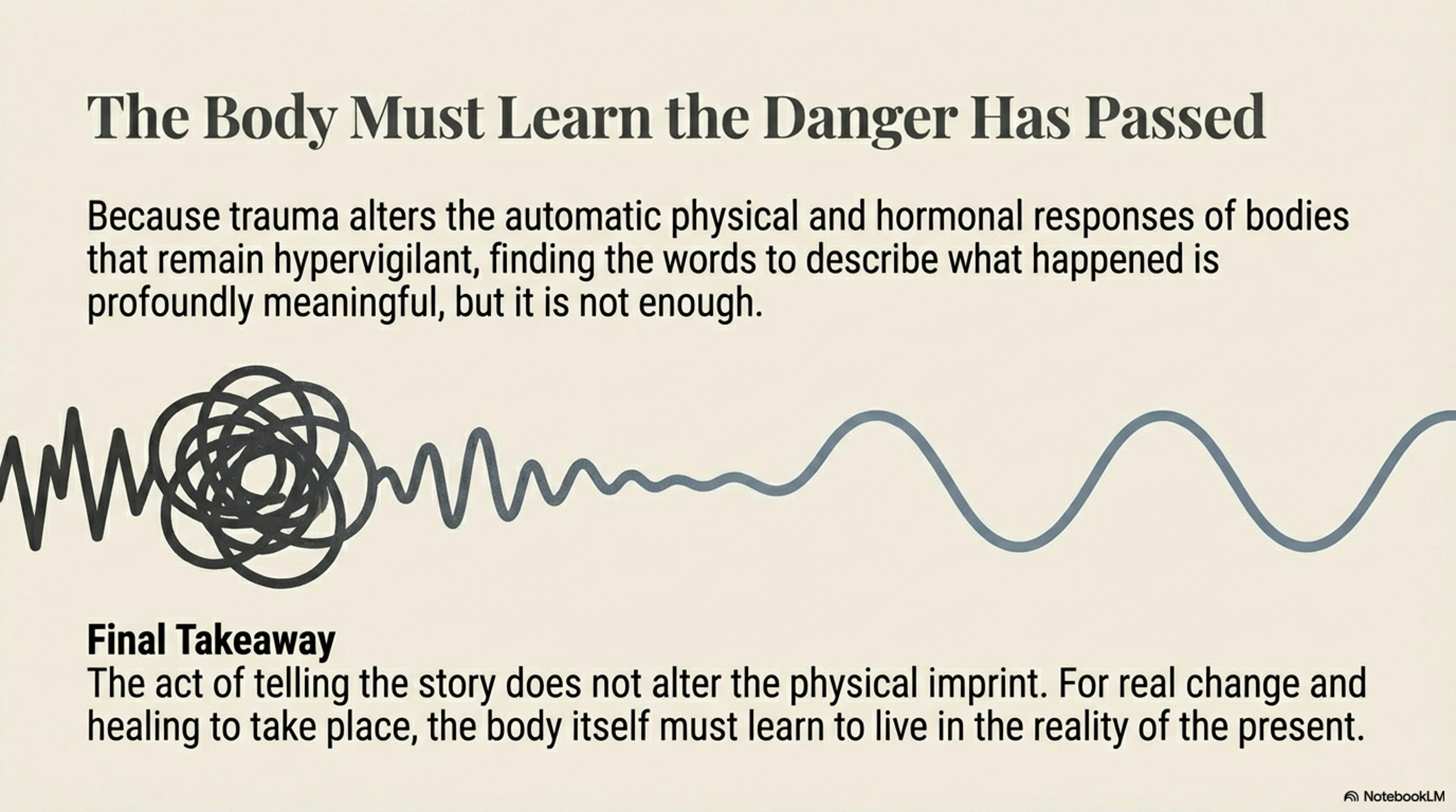
5. The Body Must Learn that the Danger Has Passed
신체는 위험이 지나갔음을 배워야 합니다
Talk therapy alone is often not enough because trauma leaves a physical "imprint." To truly recover, the human organism must be helped to realize—at a deep, physiological level—that the danger is over.
트라우마는 신체적인 "각인"을 남기기 때문에 대화 치료만으로는 충분하지 않은 경우가 많습니다. 진정으로 회복하려면 인간이라는 유기체가 깊은 생리학적 수준에서 위험이 끝났음을 깨닫도록 도와야 합니다.
Deep Dive: The Neurobiology of the Traumatic State
심층 탐구: 트라우마 상태의 신경생물학
Modern research shows how trauma reorganizes the brain's internal wiring, particularly the balance between the "Smoke Detector" and the "Watchtower."
현대 연구는 트라우마가 뇌의 내부 회로, 특히 '연기 탐지기'와 '감시탑' 사이의 균형을 어떻게 재구성하는지 보여줍니다.
| Brain Part (뇌 부위) | Functional Name (기능적 명칭) | Impact of Trauma (트라우마의 영향) |
| Amygdala (편도체) | The Smoke Detector (연기 탐지기) | Becomes hypersensitive; triggers "fight or flight" even for non-threats. (과민해짐; 위협이 아닌 상황에서도 '투쟁 혹은 도피' 반응 유발) |
| Medial Prefrontal Cortex (내측 전전두엽) | The Watchtower (감시탑) | Function decreases; unable to tell the Amygdala to "calm down." (기능 저하; 편도체에 "진정하라"고 지시하지 못함) |
| Thalamus (시상) | The Cook (요리사) | Becomes overwhelmed; fails to integrate sensory input into a coherent story. (과부하됨; 감각 입력을 일관된 이야기로 통합하지 못함) |
- The Loss of Self: Trauma often leads to a "numbing" of the self-system. Survivors may lose the ability to feel their own bodies (interoception), making them feel like "ghosts" in their own lives.
- Healing Through Action: Because trauma is physiological, healing often requires body-based approaches—such as yoga, EMDR, or theater—that help the person feel safe in their physical skin again.
- 자아의 상실: 트라우마는 종종 자기 체계의 "마비"를 초래합니다. 생존자들은 자신의 신체 감각(내부 감각)을 느끼는 능력을 잃어버릴 수 있으며, 이는 자신의 삶에서 스스로를 "유령"처럼 느끼게 만듭니다.
- 행동을 통한 치유: 트라우마는 생리적이기 때문에, 치유를 위해서는 요가, EMDR, 또는 연극과 같이 신체가 다시 안전하다고 느끼게 돕는 신체 기반 접근법이 필요할 때가 많습니다.