[Chapter 4] Why the Body Remembers What the Mind Tries to Forget
정신은 잊으려 해도 몸이 기억하는 이유: 생존 신경과학의 5가지 놀라운 통찰
Trauma is not simply a psychological "memory" of a past event; it is a fundamental physiological shift in how the brain and body process the world. Many survivors remain imprisoned in the past, their bodies organized as if the threat were still occurring.
트라우마는 단순히 과거 사건에 대한 심리적 '기억'이 아닙니다. 그것은 뇌와 신체가 세상을 처리하는 방식에 일어난 근본적인 생리학적 변화입니다. 많은 생존자들은 과거에 갇힌 채, 마치 위협이 지금도 일어나고 있는 것처럼 신체 시스템을 가동하며 살아갑니다.
1. The Biology of Doing: Movement Prevents the Scar
행동의 생물학: 움직임이 흉터를 방지합니다
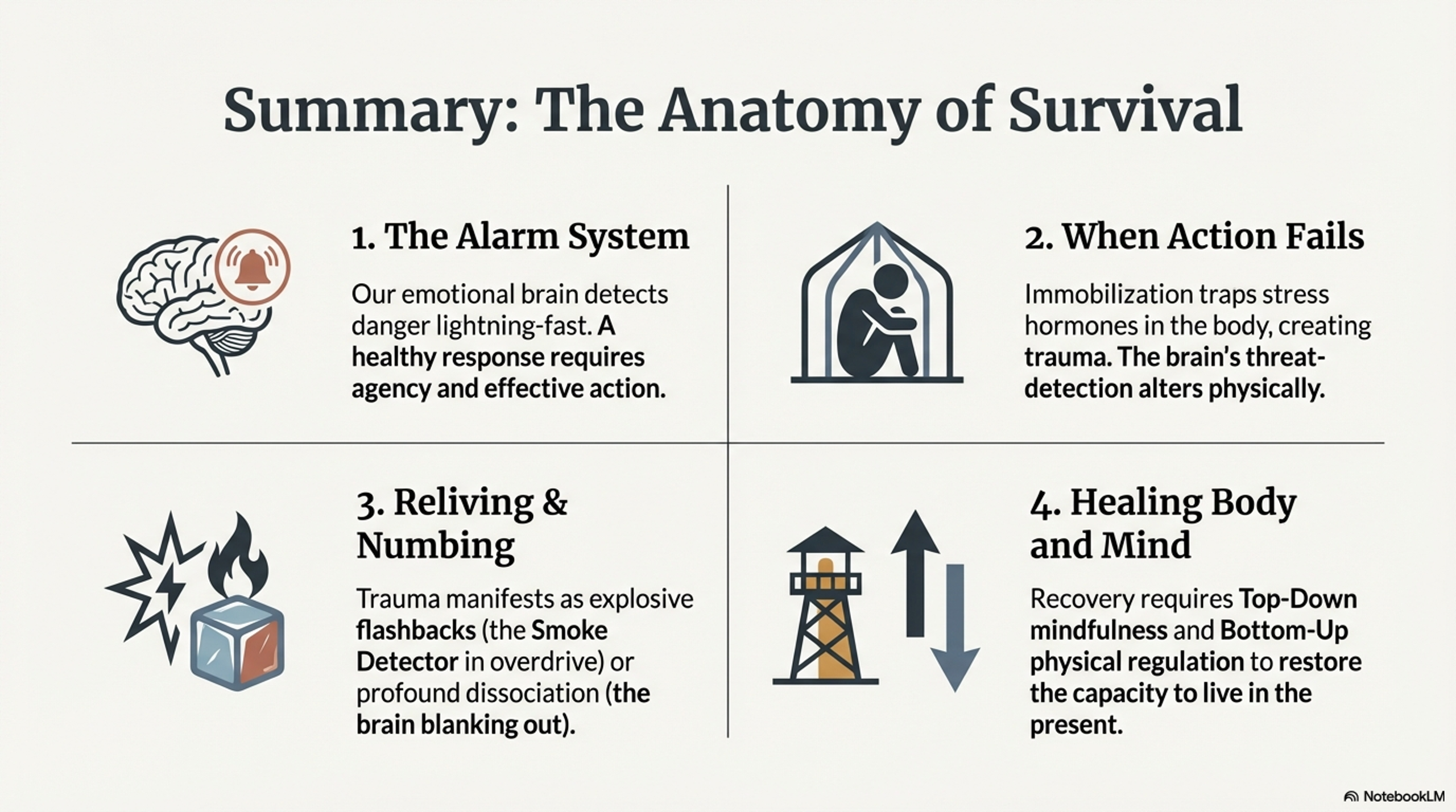
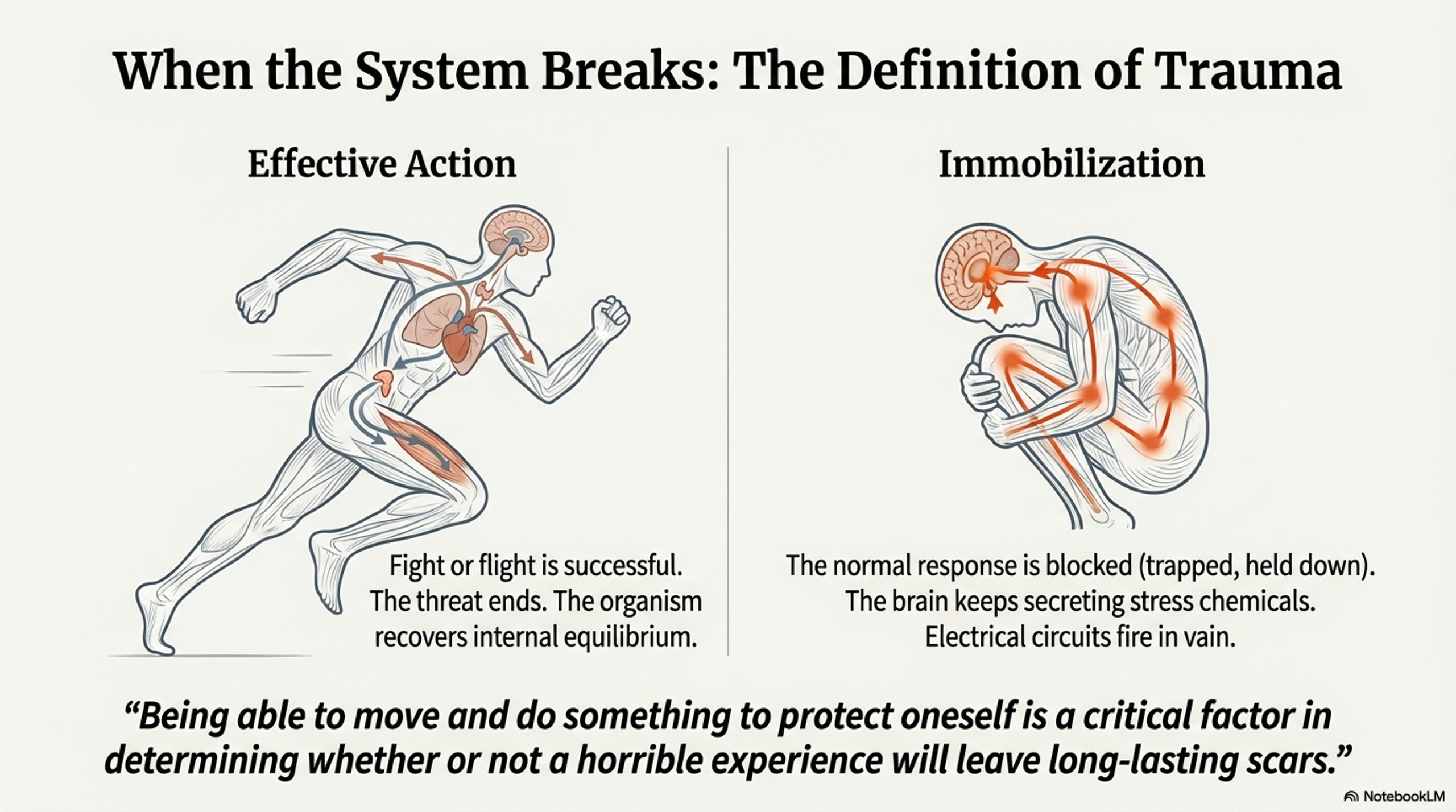
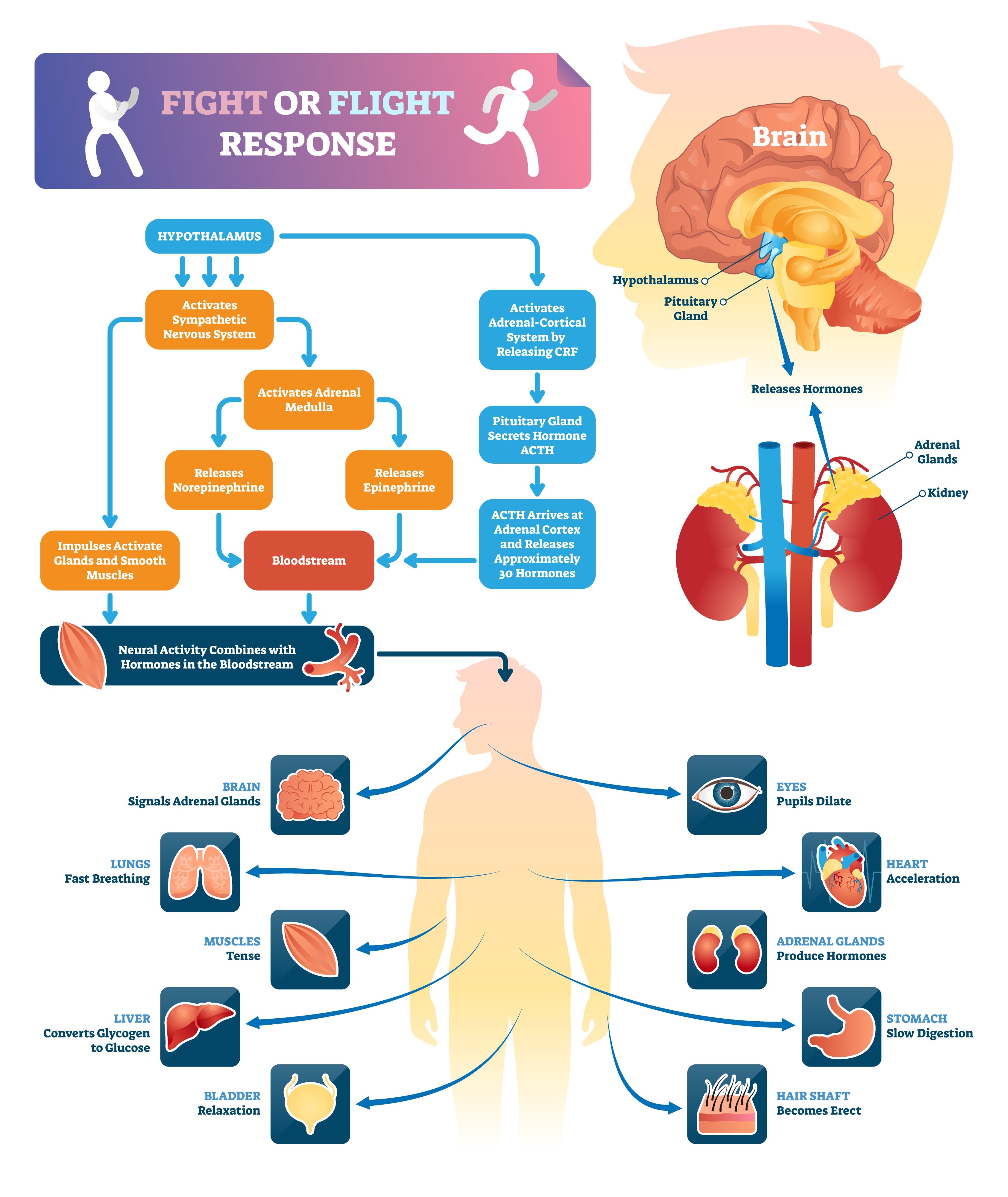
The difference between a recoverable tragedy and a lasting scar often depends on "effective action." When a person is able to run or protect themselves, the body follows through on its survival plan. If movement is blocked (immobilization), the brain continues to fire escape circuits indefinitely.
회복 가능한 비극과 영구적인 상처의 차이는 종종 '유효한 행동' 여부에 달려 있습니다. 사람이 도망치거나 스스로를 보호할 수 있을 때, 신체는 미리 입력된 생존 계획을 완수합니다. 만약 움직임이 차단(부동화)되면, 뇌는 끝없이 탈출 회로를 가동하며 멈추지 않습니다.
2. The Tug-of-War: The "Smoke Detector" vs. the "Watchtower"
줄다리기: '연기 탐지기' 대 '감시탑'
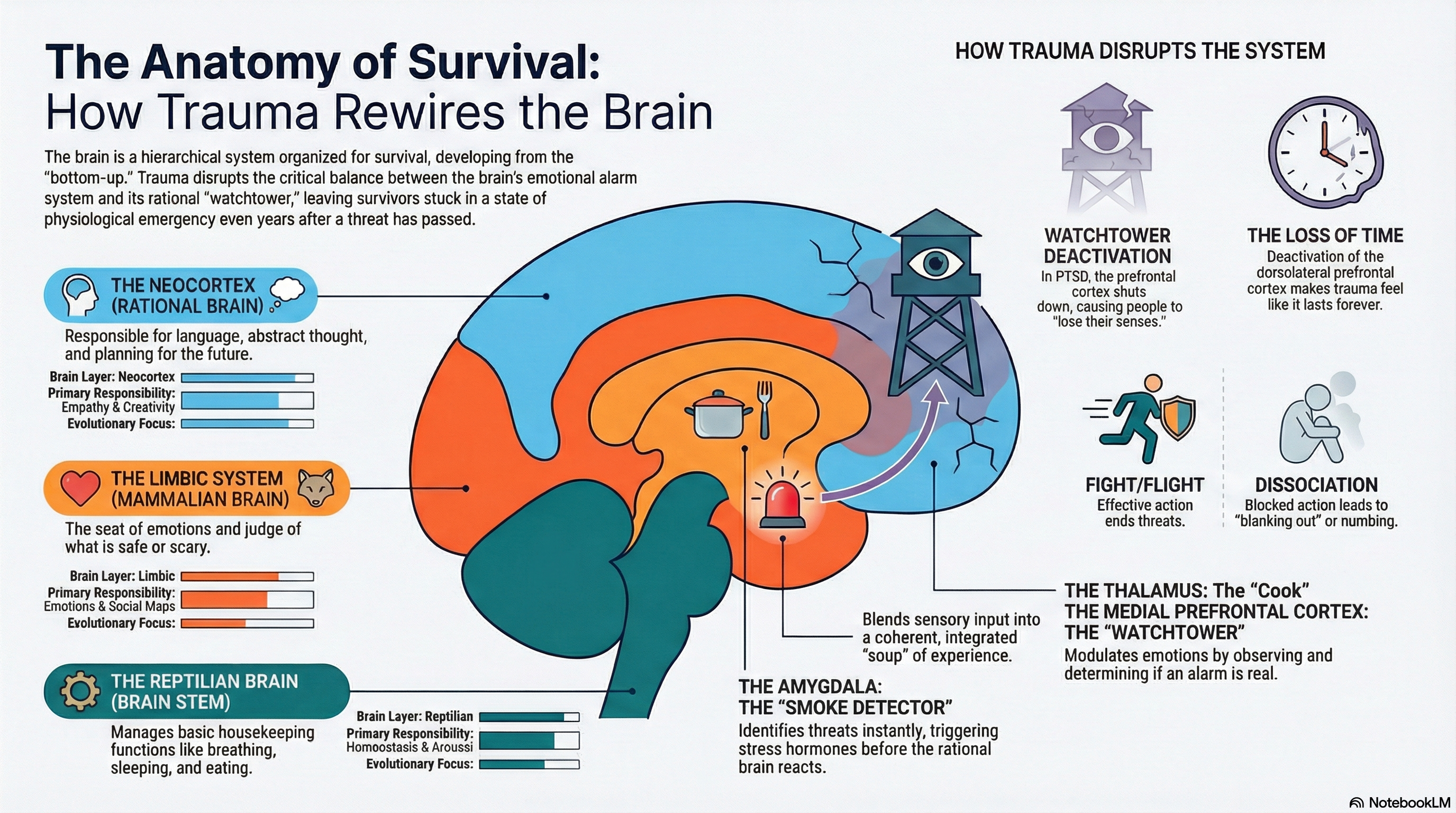
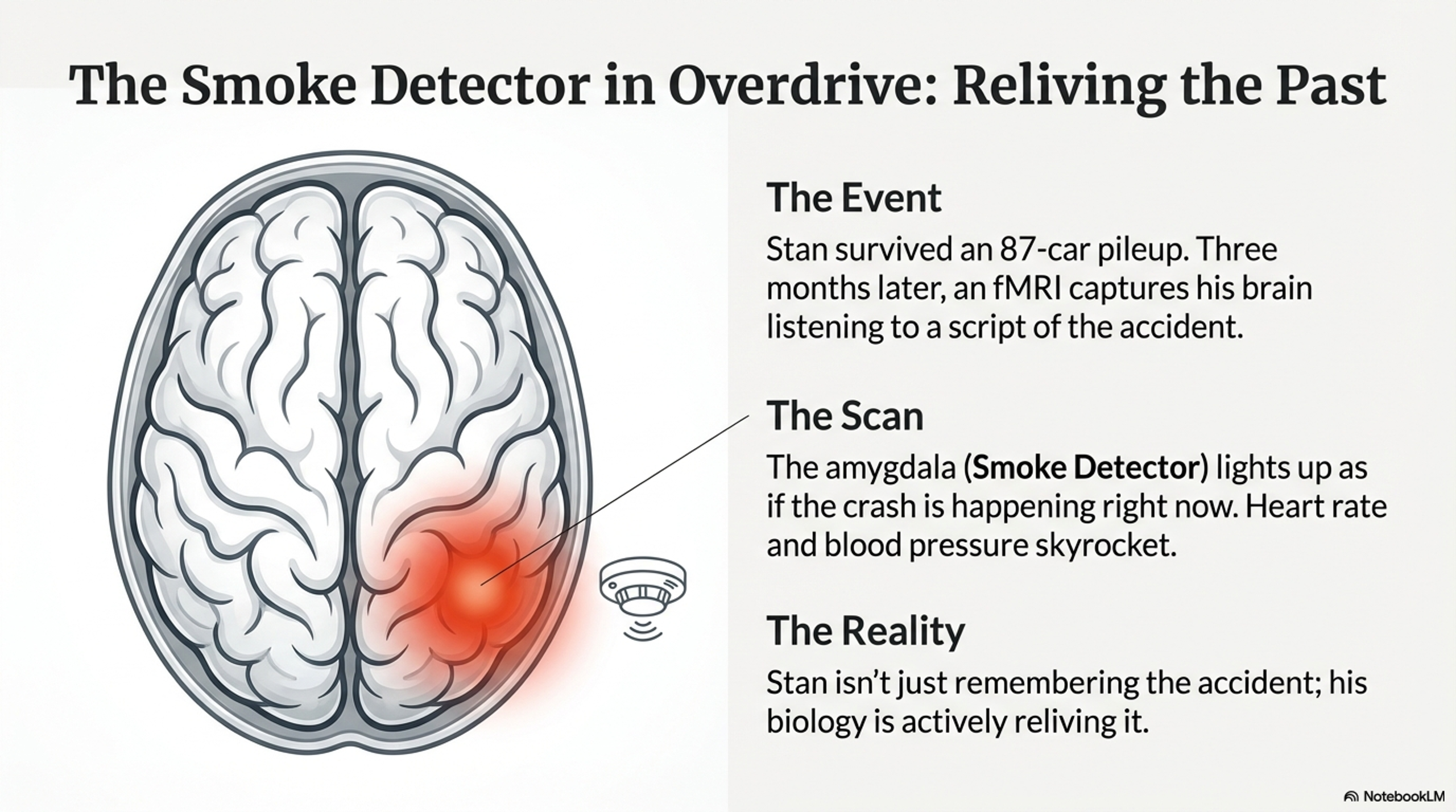
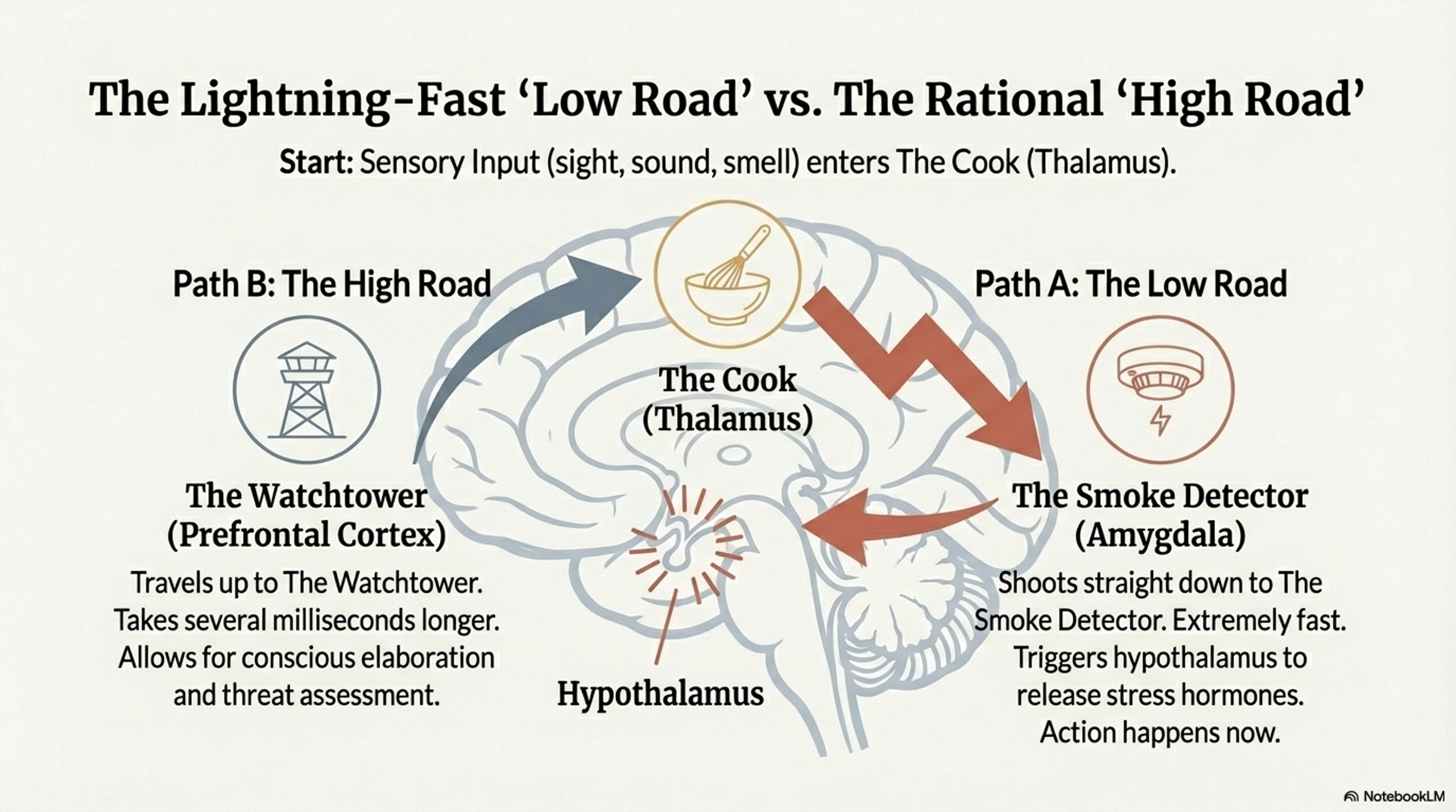
Survival depends on the balance between the Amygdala (the smoke detector) and the Medial Prefrontal Cortex (the watchtower). In PTSD, the smoke detector goes into overdrive while the watchtower goes offline.
생존은 편도체(연기 탐지기)와 내측 전전두엽(감시탑) 사이의 균형에 달려 있습니다. PTSD 상태에서는 연기 탐지기가 과하게 작동하는 반면, 감시탑은 기능을 멈춥니다.
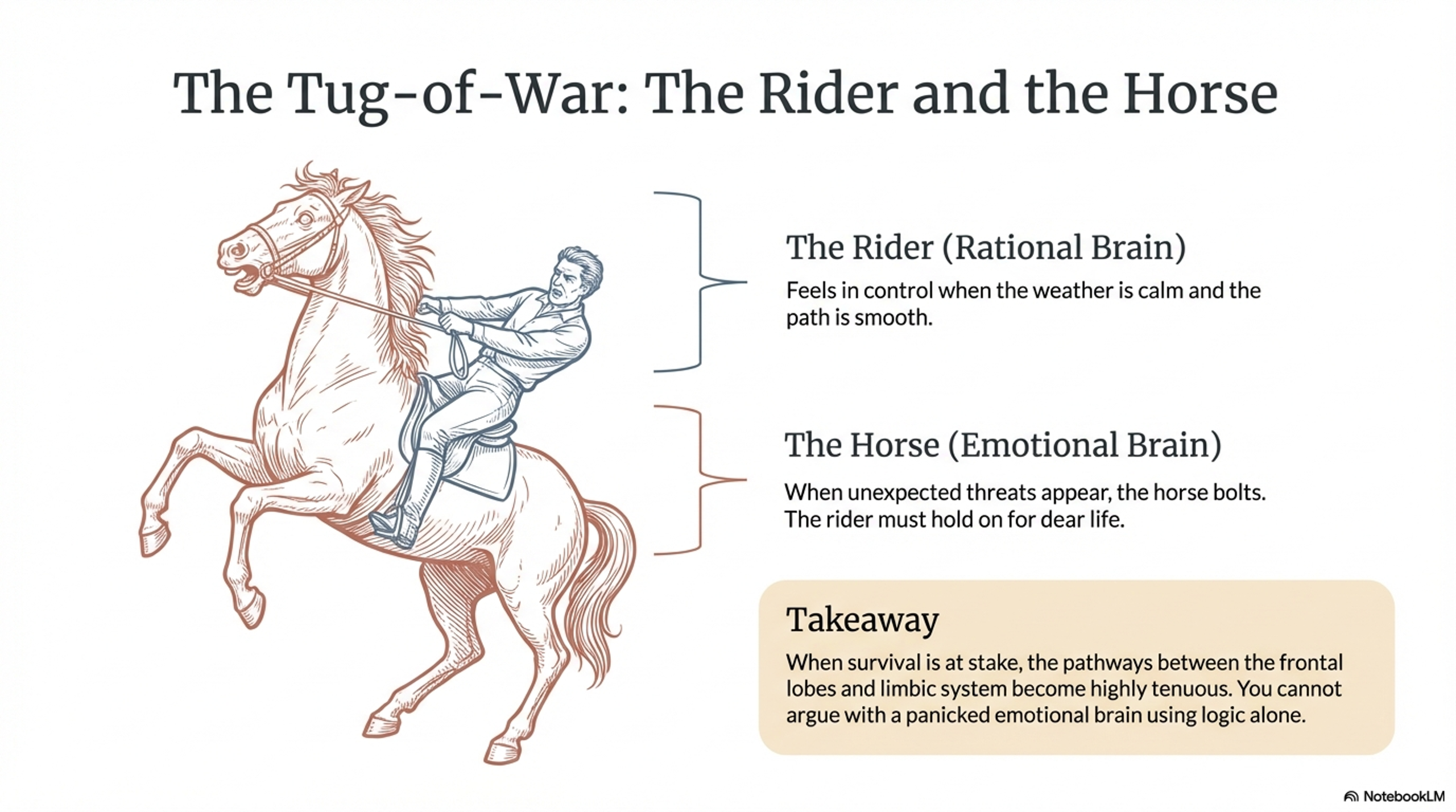
The "rider" (rational brain) loses the ability to use logic to calm the "unruly horse" (emotional brain). Reason cannot reach a system that believes it is currently dying.
'기수'(이성적인 뇌)는 논리를 이용해 '제멋대로인 말'(감정적인 뇌)을 진정시킬 능력을 잃게 됩니다. 죽음의 공포를 느끼는 시스템에게는 이성적인 설득이 통하지 않기 때문입니다.
3. The Collapse of Time and Context
시간과 맥락의 붕괴
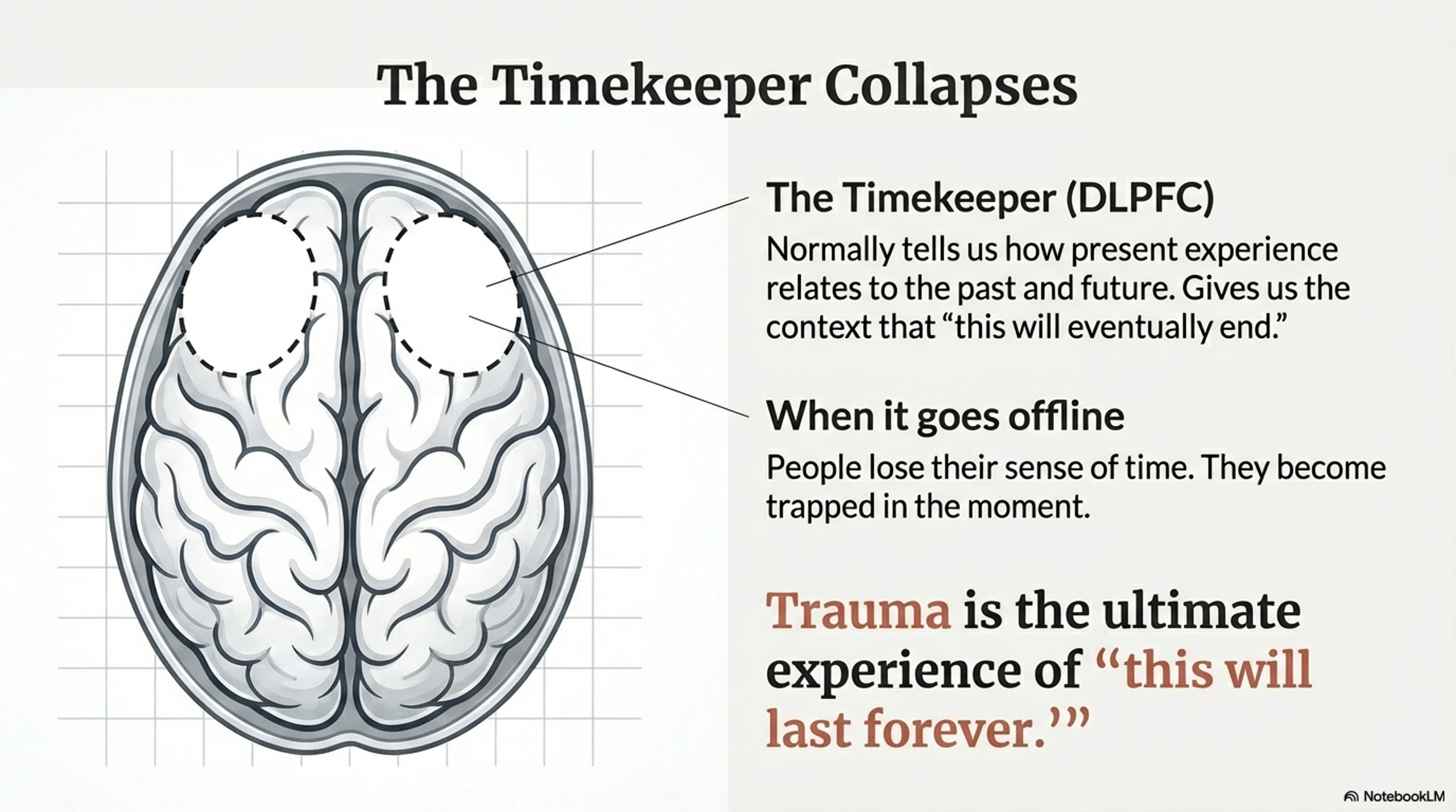
Trauma deactivates the Dorsolateral Prefrontal Cortex (the timekeeper). When this shuts down, survivors lose the sense of time and become trapped in an eternal "now."
트라우마는 배외측 전전두엽(시간 기록계)을 비활성화합니다. 이 기능이 꺼지면 생존자들은 시간 감각을 잃고 영원한 '지금' 속에 갇히게 됩니다.
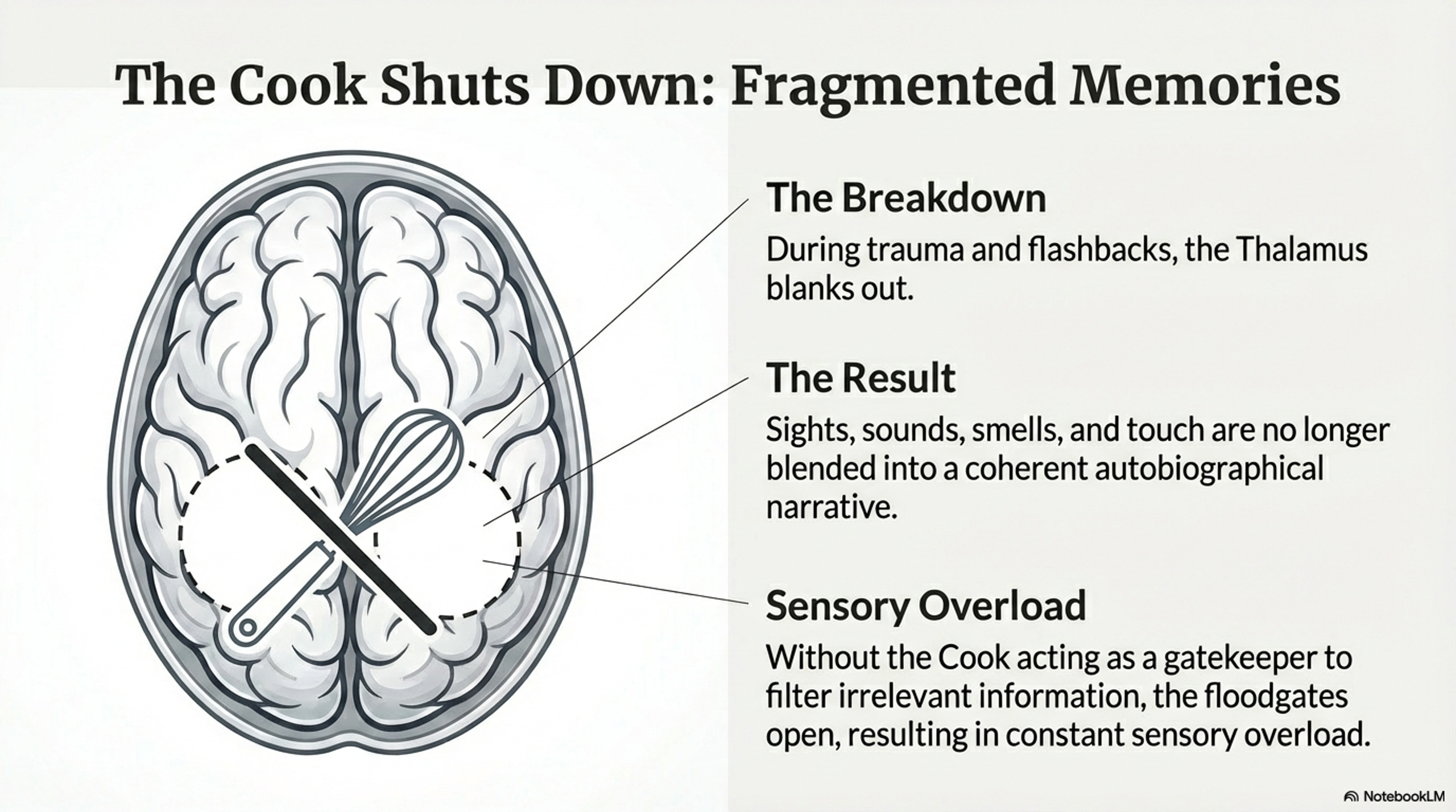
Additionally, the Thalamus (the gatekeeper) fails to filter sensory input. The floodgates open, leading to sensory overload where lights are too bright and sounds are too loud.
또한 시상(문지기)이 감각 입력을 필터링하지 못하게 됩니다. 수문이 열리면서 빛은 너무 밝고 소리는 너무 크게 느껴지는 감각 과부하 상태에 빠집니다.
4. Two Faces: Reliving vs. Numbing Out
두 가지 얼굴: 재경험 대 마비
Trauma manifests in two distinct ways:
트라우마는 두 가지 뚜렷한 방식으로 나타납니다.
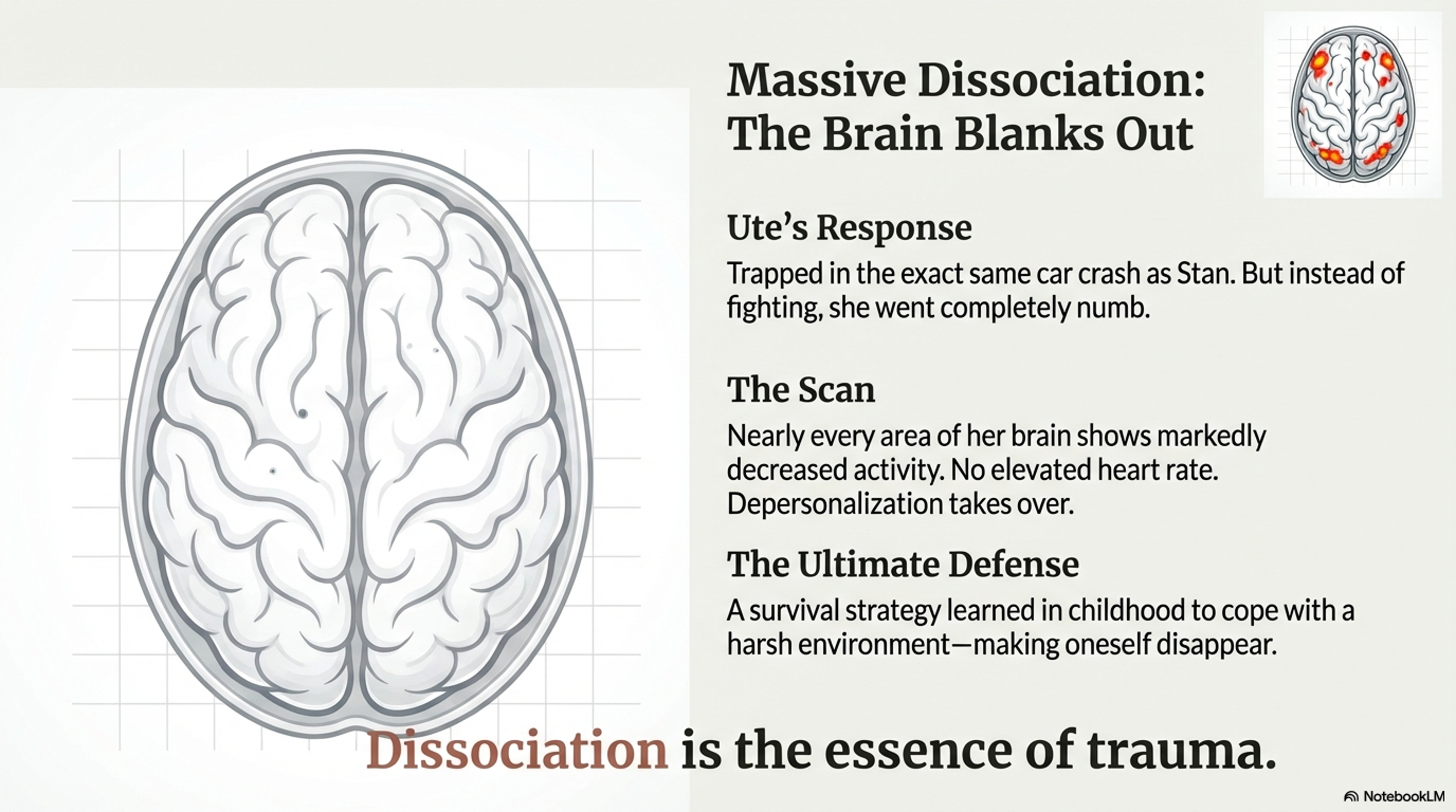
- Explosive Reliving: The right brain screams in visceral emotion while the left brain (language center) goes dark. This is why trauma is often "unspeakable." (폭발적 재경험: 우뇌가 본능적인 감정으로 절규하는 동안 좌뇌의 언어 센터는 꺼집니다. 이것이 트라우마가 종종 '말로 표현할 수 없는' 이유입니다.)
- Numbing Out (Dissociation): The brain "blanks out" as a survival strategy when escape is impossible. (마비/해리: 탈출이 불가능할 때 생존 전략으로서 뇌가 '멍해지는' 상태입니다.)
5. Healing from the "Bottom-Up"
'하향식'이 아닌 '상향식' 치유
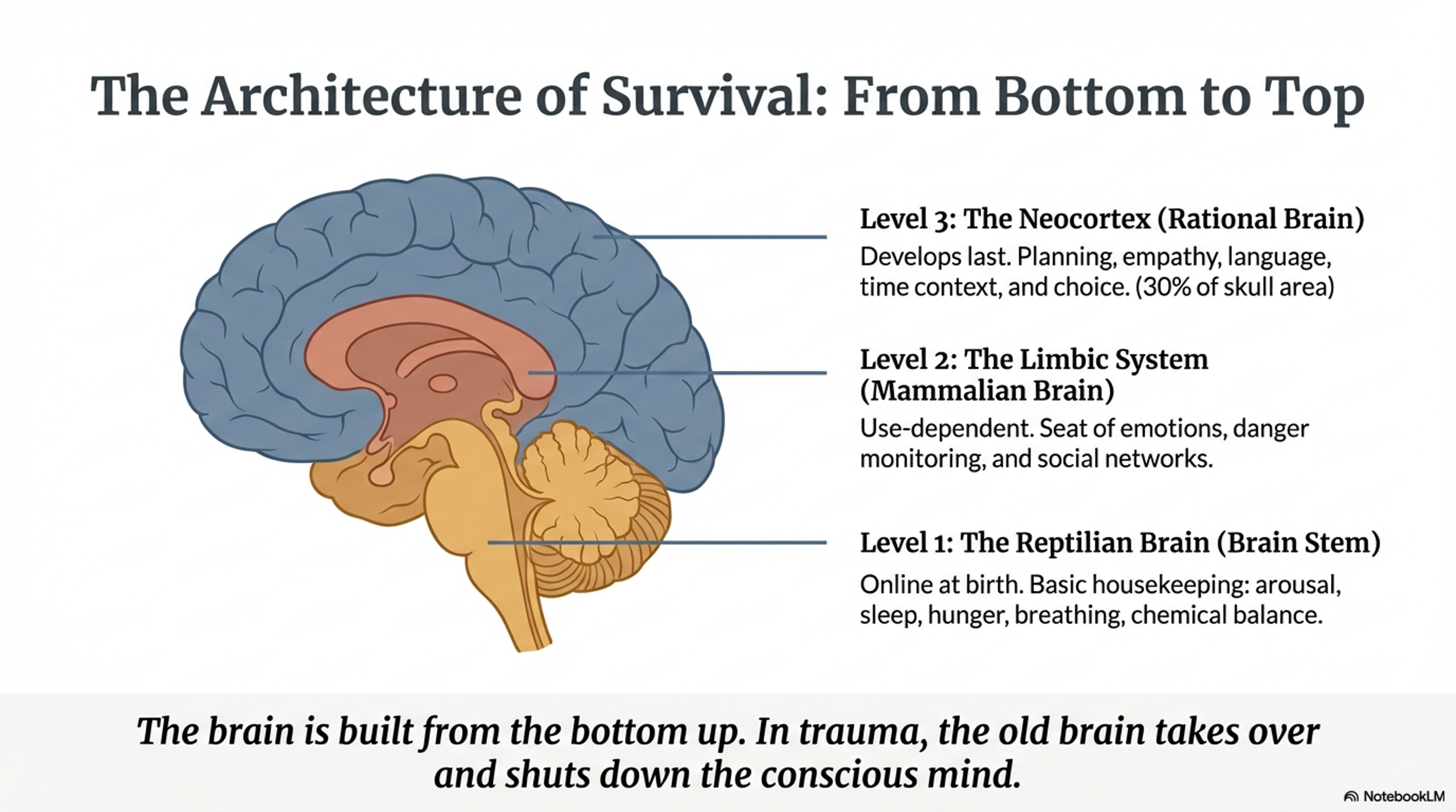
Insight is not enough. Because trauma is stored in the deeper regions of the brain, "talk therapy" often cannot reach it. Healing requires Bottom-Up Regulation—recalibrating the nervous system through the body.
이해만으로는 부족합니다. 트라우마는 뇌의 더 깊은 영역에 저장되기 때문에 '대화 치료'만으로는 도달할 수 없는 경우가 많습니다. 치유에는 신체를 통해 신경계를 재조정하는 상향식(Bottom-Up) 조절이 필요합니다.
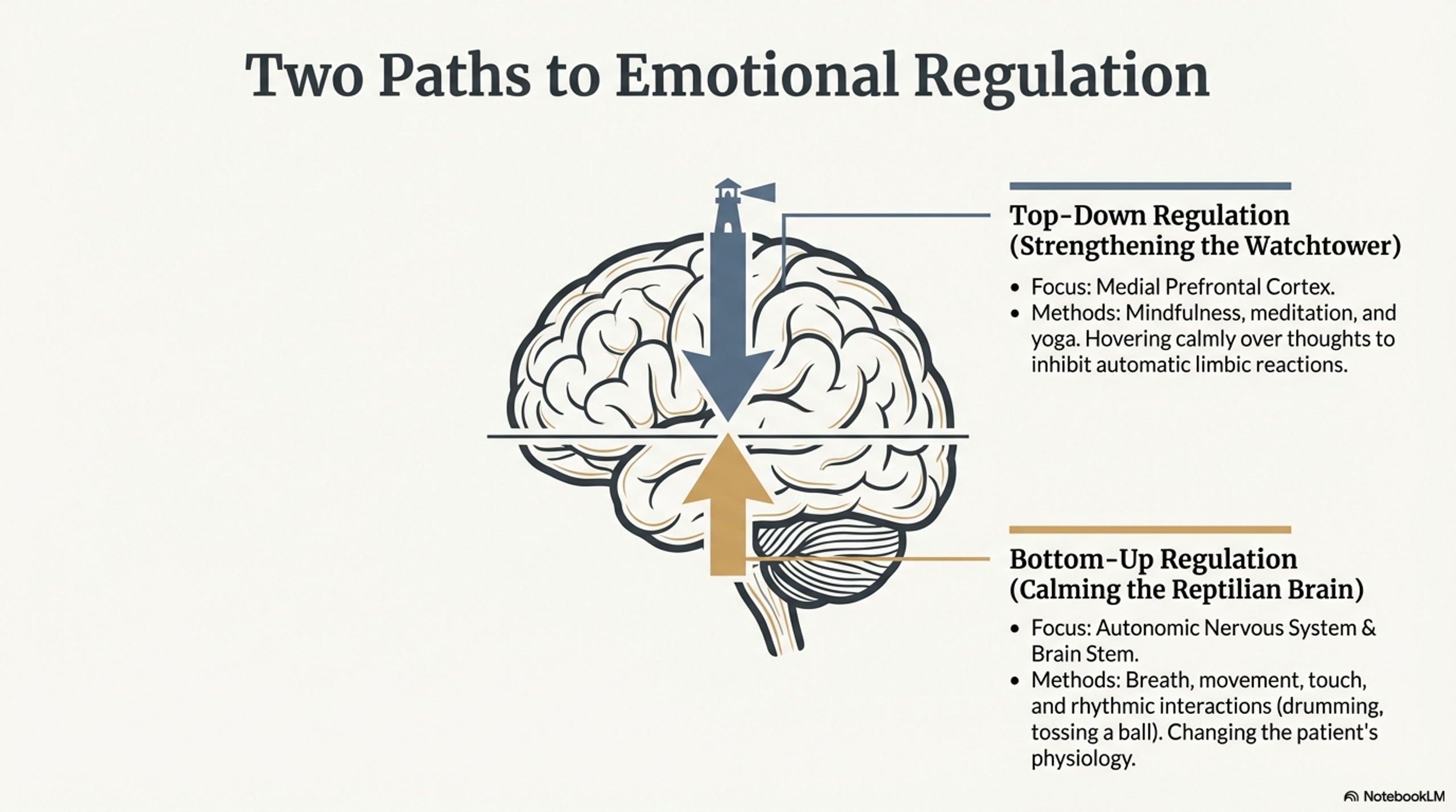
Using breath, rhythmic movement, drumming, and yoga helps the "unruly horse" feel safe enough to stop bolting, eventually allowing the "rider" to regain the reins.
호흡, 리듬감 있는 움직임, 드럼 연주, 요가 등은 '제멋대로인 말'이 안전하다고 느끼게 하여 폭주를 멈추게 하고, 결과적으로 '기수'가 다시 고삐를 잡을 수 있게 돕습니다.
Deep Dive: The Brain's Internal GPS and Trauma
심층 탐구: 뇌의 내부 GPS와 트라우마
Trauma disrupts the "Self-Experience" system. Research using fMRI shows that in traumatized individuals, the "mohajor midline" structures of the brain—responsible for sensing your inner state—show significantly decreased activity.
트라우마는 '자기 경험' 시스템을 방해합니다. fMRI 연구에 따르면 트라우마를 겪은 이들은 자신의 내면 상태를 감지하는 뇌의 '중앙선' 구조 활동이 현저히 저하된 것으로 나타납니다.
| Brain System (뇌 시스템) | Normal Function (정상 기능) | Traumatic State (트라우마 상태) |
| Medial Prefrontal Cortex | Self-Monitoring (자기 감시) | "Watchtower" is offline; no perspective. (감시탑 작동 중단; 객관적 관점 상실) |
| Dorsolateral PFC | Timekeeping (시간 기록) | Time collapses; trauma feels eternal. (시간 감각 붕괴; 트라우마가 영원히 느껴짐) |
| Thalamus | Sensory Filtering (감각 필터링) | Gatekeeper is gone; sensory overload. (문지기 부재; 감각 과부하 발생) |
| Broca's Area | Language/Speech (언어/말하기) | Shuts down; "Unspeakable" horror. (기능 정지; 말로 표현 못 하는 공포) |
- The Power of Breath: Breathing is the only function that is both autonomic (automatic) and voluntary. This makes it the most direct bridge to the emotional brain.
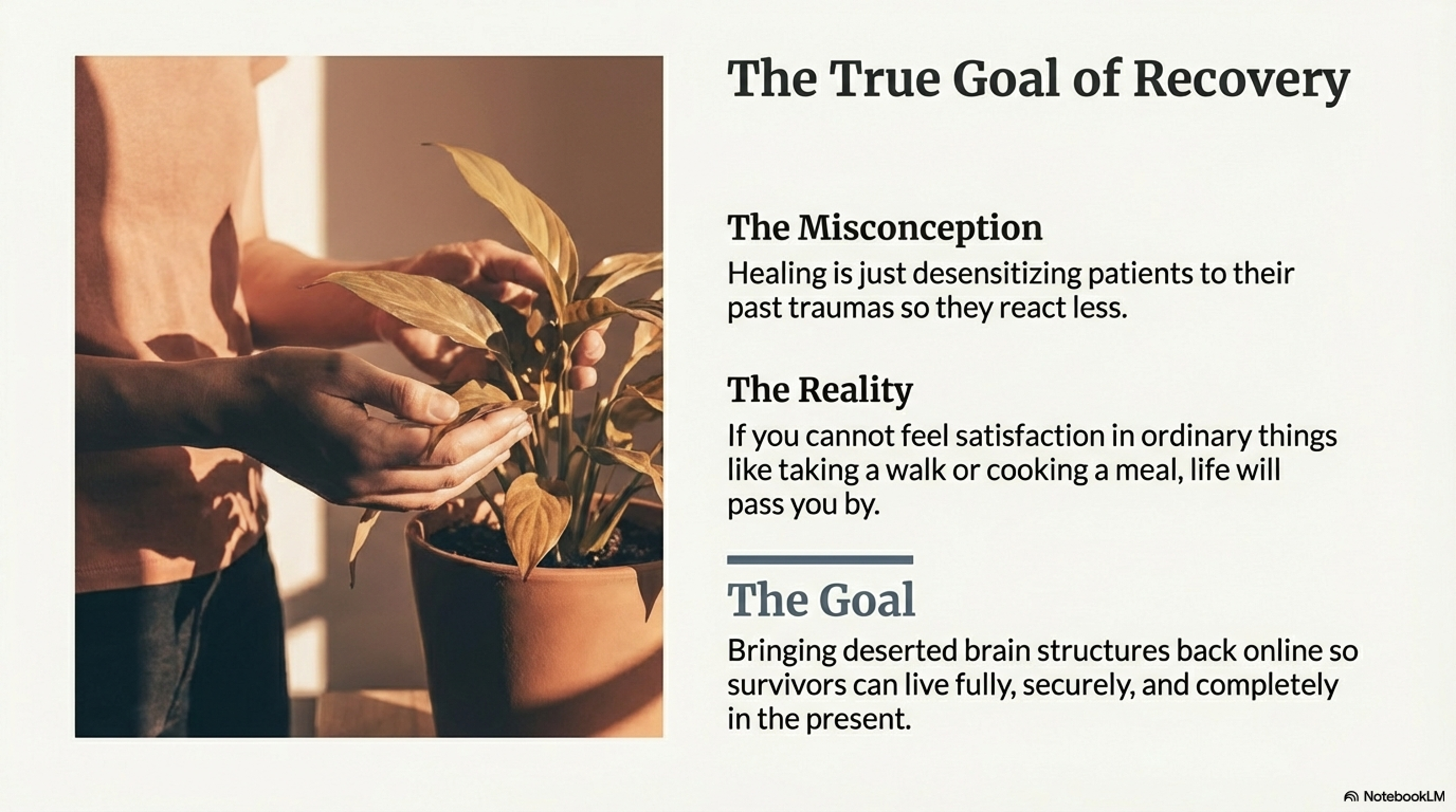
- Beyond Desensitization: True recovery is about reclaiming the capacity to feel pleasure, curiosity, and a sense of safety in the present moment, not just "not being afraid" of the past.
- 호흡의 힘: 호흡은 자율적(자동적)이면서도 수의적(의도적)인 유일한 기능입니다. 이는 감정적인 뇌로 가는 가장 직접적인 다리가 됩니다.
- 둔감화 그 이상: 진정한 회복은 과거에 대해 '두려워하지 않는 것'을 넘어, 현재 순간에 기쁨과 호기심, 그리고 안전함을 느낄 수 있는 능력을 되찾는 것입니다.